Mary Jane Davis, Part 3.

There was a small army of us here growing up here. They were good times. But I suppose the place eventually got too small for us all. Thomas was the first to leave, he went to Canada in 1886, made a good life there for himself, I believe. John left soon after, I was sorry to see him go. Robert joined the Royal Artillery in Derry, came out alive, but poor James wasn’t so lucky. A few years after he signed up he was dead, at 26, we never did hear the right reason for it. William joined up too, in South Africa, came home to get married and we never saw him after that. It was just Alec, me and Richard then, the big house empty.

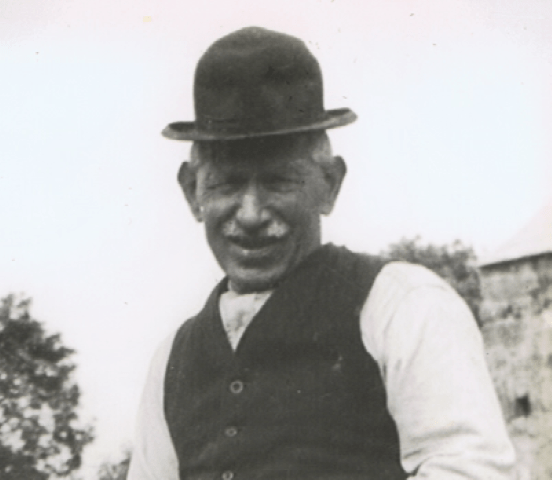
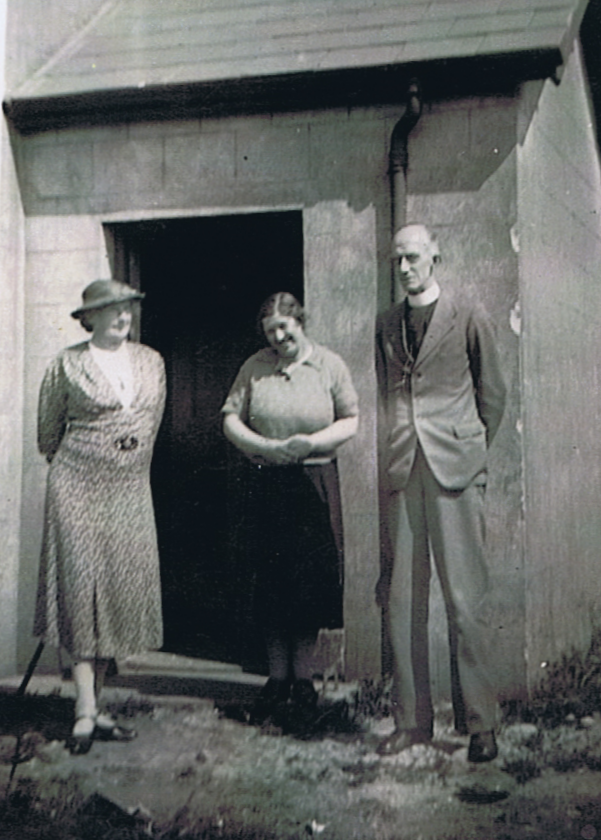
Richard Davis at Larkfield, Boggaun circa 1930.

Before Daddy died, he was buying Frank’s ground. It was the first time we could buy land, the laws had changed. Old Frank McLaughlin wanted to sell, no one left but him. We gave him his time up there, even gave him a stipend to look after the place. A grand man he was, came down often to ceile. It’s poor enough grazing but it mairned our ground, too good an opportunity to pass it up. It was just as the Land Leaguers were getting their way; they couldn’t say we took it away from him.

John, the oldest, was never content with our daubby soils. Him and John McCordock left for spoilt farms in Garradice, the year before Queen Victoria died it was. They were boycotted by the Land League. John moved on with his wife and childer to better lands in County Meath, in the Pale, a better place for the likes of us, maybe. He made a go of it, built up a fine place in no time. Made us feel the poor relation when they would come a visitin here; always well dressed, stories of progress and new houses. I went up to see them once, it was all true, a different country it was, soft rolling green hills as far as you could see, near the famous Boyne river. They took me to see where King Billy crossed on his white horse.

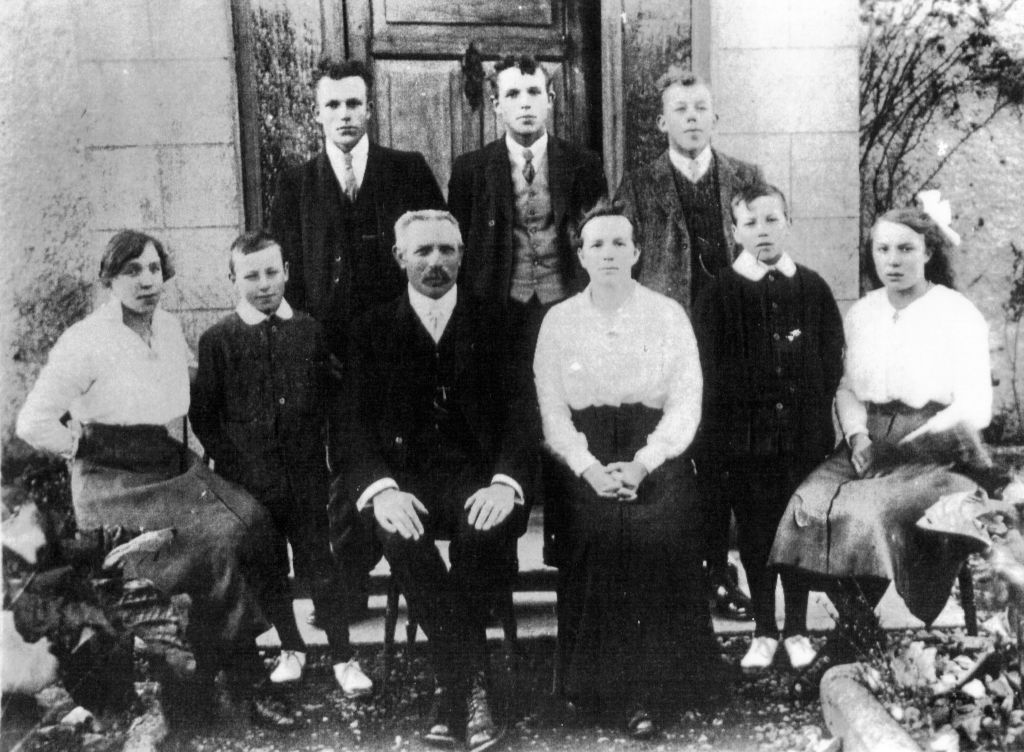
John and Maria Davis with their family at Boyne View Lodge, Corballis, Donore, Co Meath circa 1916.
Back row: Richard, Robert , Alfred
Front row: Maria, Thomas, George, Elizabeth (missing John James in USA)

Alec should have made more of it, no great ambition in him. Liked to ceile too much, he’d stay away some nights. I always thought he was a home bird and he proved me right in the end. John arranged a wife for him. His sister-in-law, Margaret, a widow woman; they were married in Duleek in 1918, a few months before Richard, it was. John, God be good to him, helped set him up in Corballis, beside his own place.  But then back he comes when she dies about 10 years later. Don’t understand it. He was nera one for the straight road, too much devilment in him.

When we got the ass and cart for to take the childer to school, he wanted to be the first up on it, like a child himself. And then Tommy Davis arrived from Meath with the camera, well, sure he couldn’t leave it till he got his picture taken up on it.

Always looked out for me though, after Richard got married and she took over. And wrote to me regular from the County Meath. Maybe he took a pity on us when we got into this trouble, and came back. I think maybe he just prefers it here.

Final Part 4 to follow.

Mary Jane Davis, Part 2

No, I never married, but it could have been different. The first fella, John, came up here lettin on to help out, but I knew Mammy and Daddy had arranged it. He wasn’t too long about when he made a grab at me from behind in the byre door, he got my elbow in his face from the fright of it; left here with an eye goin black. Arragh, a rough fella and they knew it too. Didn’t see him after that.

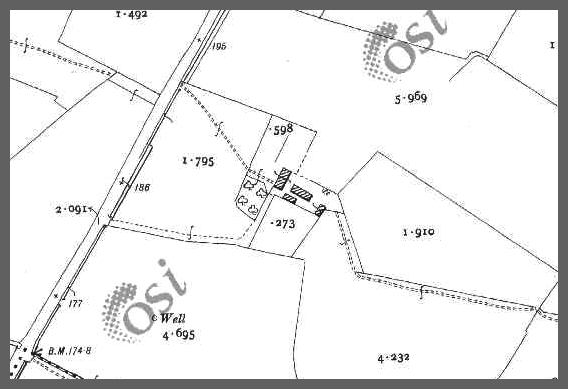
Davis farm Boggaun mapped in the early 1900s.

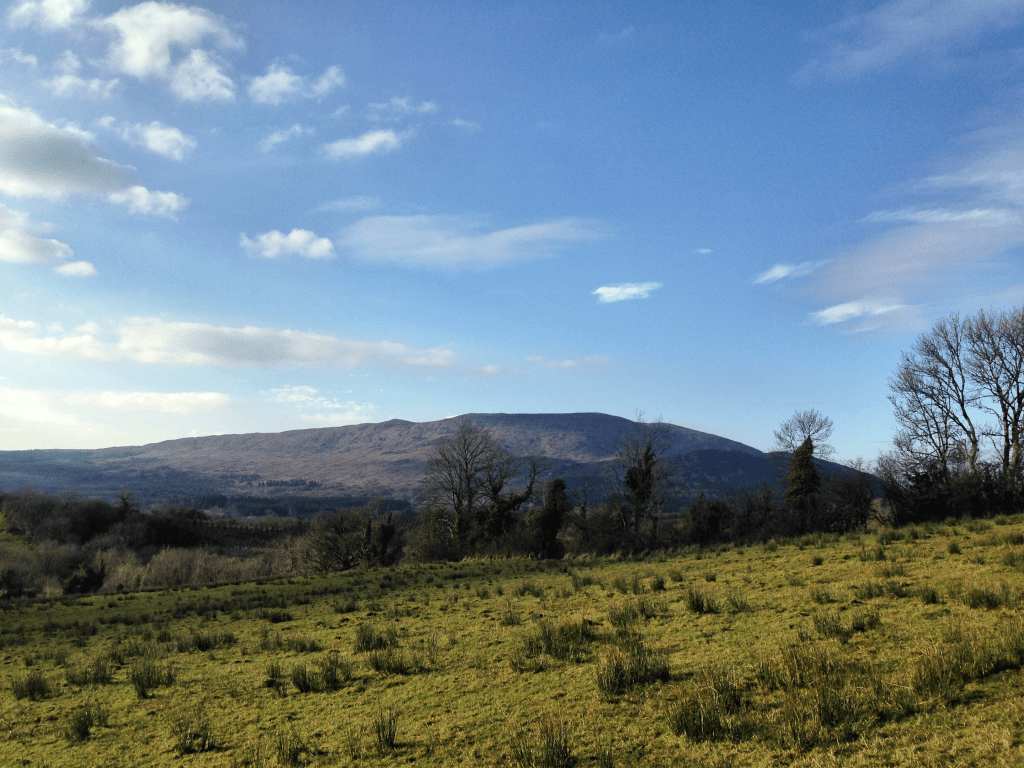
Robert was a thin rod of a young man, smart enough, and they liked him. I saw him at church a few times, smiled my way. He would come up to the house all dressed up, one time with a bunch a wildflowers for me. I walked with him down to the lane a few times. They said he had a goodly farm up on Benbo, but I told them this was as high up any mountain as I would go. Nothing up on that place; they just nodded. Maybe I was too head strong then.

Benbo mountain viewed from near the Davis farmhouse at Boggaun.

But there was a lad, ahh, Henry, tall, we a big round smiling face, and a mop o wild hair, like he’d just stepped out of a gale. He was in the hay field first time I saw him. I brought them their tae, kept his eye on me the whole time. He helped us finish the new house too.  We rolled in the hay one summer when they weren’t lookin, aye, and a let him kiss me too. Like Ruth, I would have followed him anywhere, aye even to Benbo. But then, some ejit of a man took the poor cratur fishing, and my Henry drowned in a deep hole beyond in the Bonet river. A saw him laid out; his wild hair combed flat. I was sore for a long time after that.

I supposed a missed my opportunity or maybe it wasn’t meant to be, but that was the end of it. Anyways, there was plenty to keep my busy here.

Mary Jane Davis 1864 – 1937

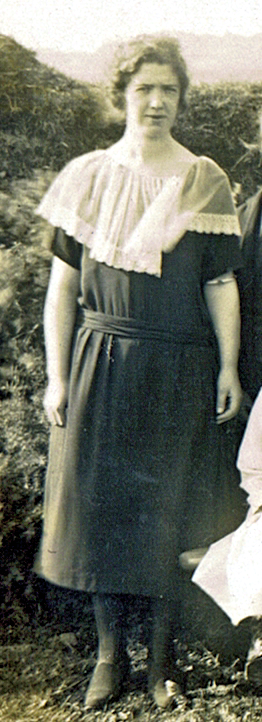
Mary Jane Davis was my grandfather Richard’s sister, my grand aunt. She lived all her life at Boggaun, Co Leitrim. This imagined monologue is in four parts. It is 1934 and she is 70 years old. No photographs of her survive.

Part 1

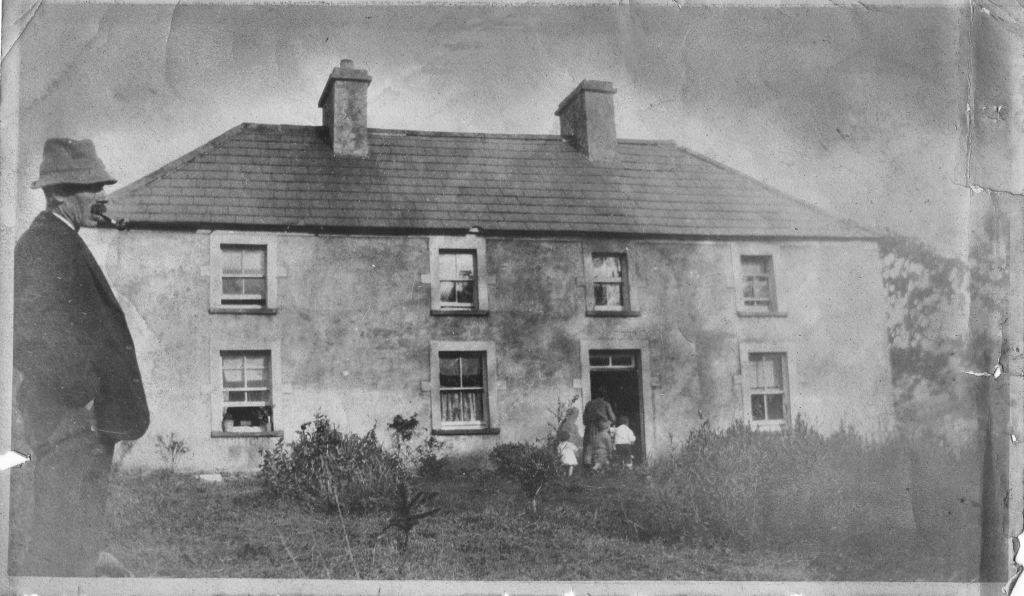
I’m seventy years now, little value to no one. The young ones run wild; there’s too many to remember the names. Nera one listens to me; they pretend to ignore me, think my tongue’s too sharp, but they hear me. I’ve lived here longer that any of them, know it better. Seen it grow from a rough cottage to a fine slated house, the best around, doubled our land too. But now, we’re in a bog-hole of debt, God help us, where will it end. My father always said we got through the Great Hunger without missing a dinner, so I suppose we should manage now; maybe the worst is behind us.

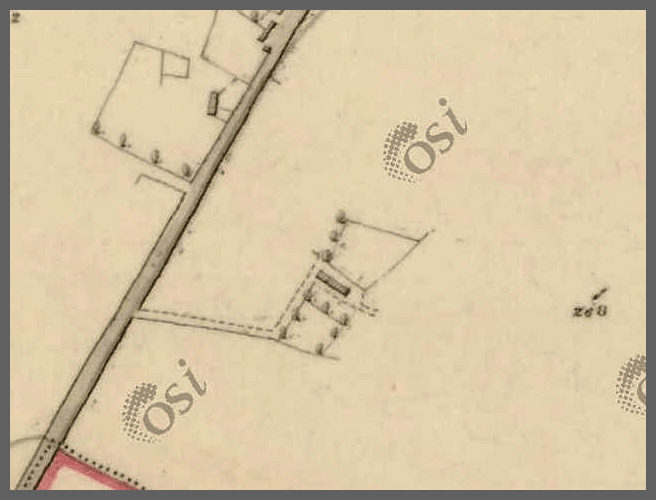
The Davis farm at Boggaun mapped circa 1850s. Source OSI.

I was born here, no, not in this house in the old house, where the byre is now. A rough place when they arrived in the 1840s, I heard them say. Couldn’t pay the landlord. Old Patrick McKay, his family gone and wife long dead, lived out his time in that wee house in the haggard; I used to take a dinner to him was he was near the end.

This place was got by my grandfather, John, for Daddy and his brother Thomas, but Thomas left for Canada a few years before I was born.

It was a grand place though, our old house. I used to sleep beside the big open hearth sometimes; I can still remember the smell and sounds of the kitchen. My mother, Lizzy, kept it tidy and clean, kept us well fed. All of us running around causin mischief. I was happy then. No great rush on me to work, they said. But I did my jobs and went to school over in Cloonaquin; the world seemed so big then. As I got older, I discovered everything changes, nothing stays the same, ye can’t go back.

When I was a young woman my father started building the new house; Patrick was dead then and we tumbled his house for the stone. Everyday there were men about the place, building, cartin stone and the like. Daddy was making improvements to the farm, while buyin and sellin, cattle and horses. He always had some new plan; when the new house was finished he wanted to turn the old house into a byre and stable, with a hay loft over it.

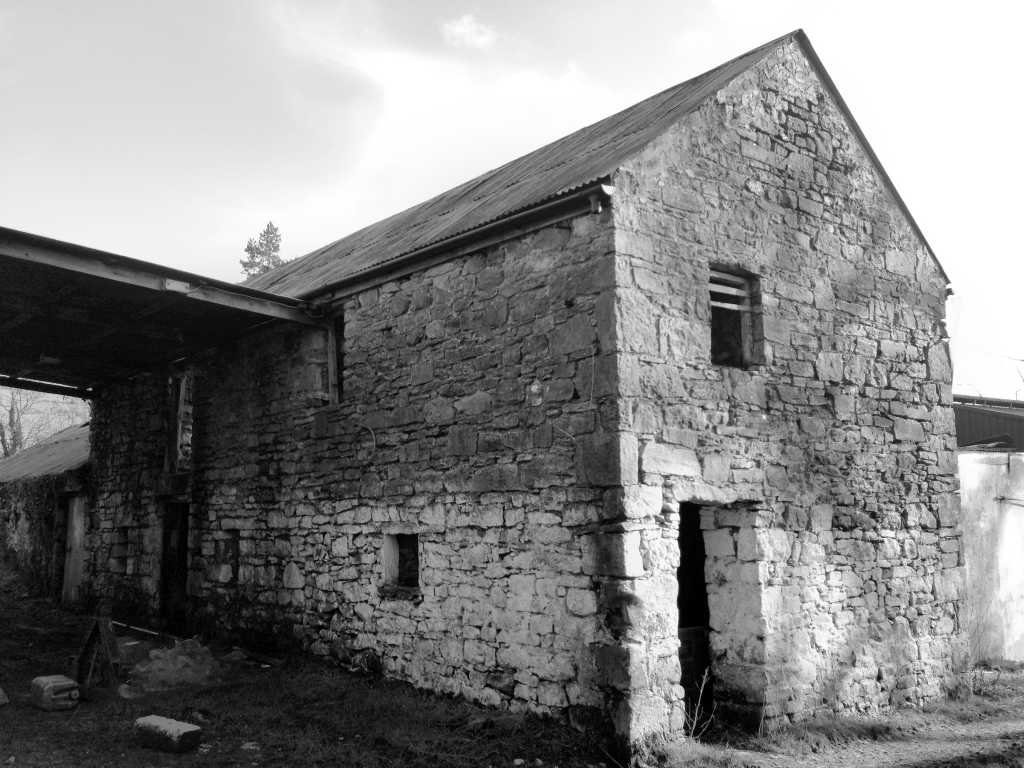
Original thatched cottage where Mary Jane was born in 1864, converted to a byre and stable with a hay loft above.

The workmen quarried stone in the White Field, where the big hole is now; we used to play and hide in there, and in the river beyond at the Alt; I caught an odd fish there too. Daddy built a fine house; all the men worked hard and ate all we could put before them. A fine two-story house built about 40 years after the Great Hunger, the talk of Boggaun and around.

Of the eight of us only Richard was born in the new house, the rest half-grown or gone by the time he knew our names. He was 28, and still the baby to me, when Daddy and Mammy died within six months of each other, and Alex and him took over the farm. Still, when the census man came around the following year, in 1911, I was put down as head of the household.

Notes will appear at the end of the Part 4.

In Awe.

“A blackbird! A blackbird !” I shout pointing to the bird flapping weakly in the grass.

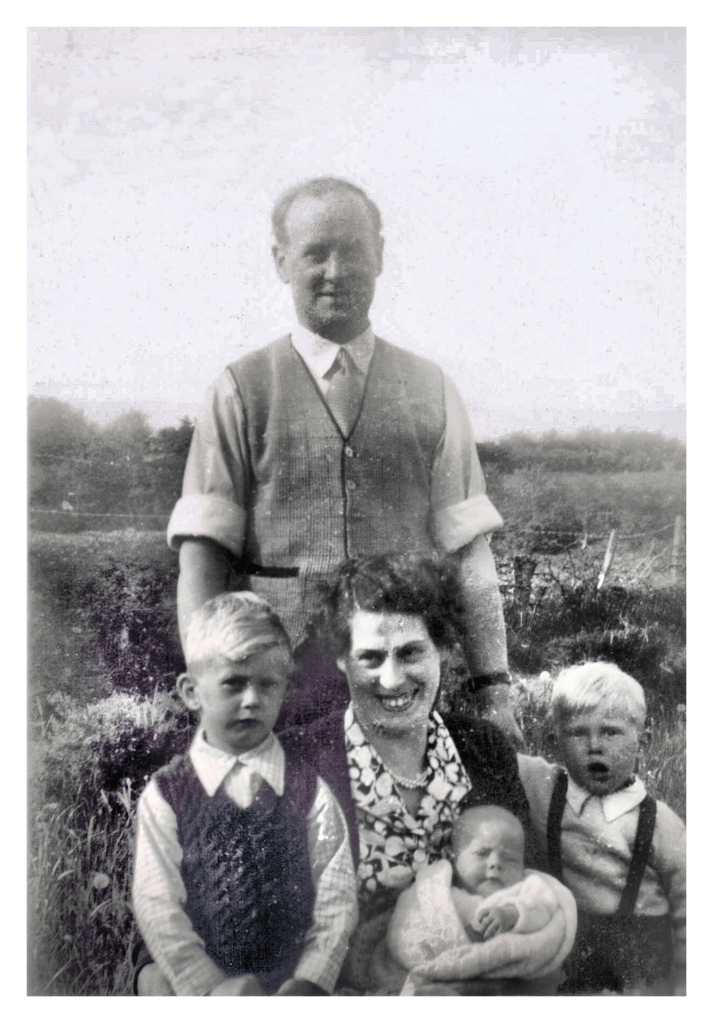
Daddy, rolled-up shirt sleeves, tie and waistcoat, leaves the old lawnmower, comes over and crouches down near the bird.

Tommy and Ena McWilliams with their children, from the left, author, baby Elaine and Ivor in the garden at Carninny Road, Ballymena, 1957.

We are in the garden of our house on the Carninny Road just outside the Ballymena town boundary. Daddy has cycled home from work as a bread man at Morton and Simpson’s bakery, and before our dinner he cuts the grass next to the vegetable plot.

“No, it’s a crow, bigger that a blackbird. Look at its big black beak.” he says, taking it up gently and showing it to me. I hesitantly stroke its feathers. Above the large sharp beak its beady eye blinks.

We have lived here for about two years. Against my father’s better judgement – a fear of debt mostly – he and my mother took out a mortgage on this 1940s bungalow on a large 2-acre site. There’s a big front garden, the lower half, next the road, a boggy meadow. Behind the house where the ground rises, there is a hen house for about 100 laying hens – my mother’s enterprise. A year or two later major cracks will appear in the front walls, the house is sinking on poor foundations.  He panics, believing his worst fears are realised. However, the house sells relatively easily, and they move the mortgage to an urban end-of-terrace house on the Ballymoney Road; it has small garden, back and front, and there is no space for laying hens.

“What’s wrong with it?” I ask.

“It’s a young one, maybe struck a wire, but we’ll fix it.” he says spreading the bird’s wings.

He takes a box of matches from his pocket, carefully holding the bird between his elbow and body, strikes the red top match, blowing it out to wave the sulphurous smoke under the bird’s beak.

Cupping the bird in his hands he rises from the ground slowly. Standing above me, he launches the bird skyward in a graceful arc of his arms. In the air it flutters briefly, catches its rhythm, and flies up and away from us. He picks me up in his arms.  We hear the crow’s call – Caw! Caw! Caw! – and watch until it can no longer be seen in the evening sky.

Two Schools Two Communities -2

The troupe of Gillmor children on their way to Carrigeencor school were always turned out well; with shoes and boots, and clothes clean; numbers varying over the years, they met up their friends from the other school along the way; William, Herbie, Jack, Emma, Stewart, Hilda, Chrisie, with my Grandmother Annie, the eldest, setting an example, keeping order. Their parents felt themselves fortunate that a Church of Ireland school was so close.

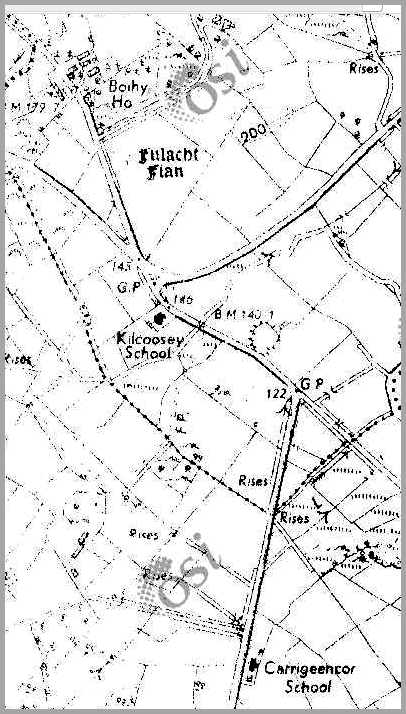
OSI map showing Boihy Ho. and Kilcoosey and Carrigeencor schools.

At the school Múinteoir Annie Gillmor’s contribution to The Schools Collection (1937-38) is significant. As the collector of her school’s entries she notes herself as the source of thirty five of the seventy five listings. She records details of many bird species, which she had clearly studied, over 140 riddles and much more, and displays a good local knowledge, despite being a relatively recent arrival. Her prose is simple and clear, and her contribution is available at this link – Annie Gillmor.

Carrigeencor and Kilcoosey NS operated under 1831 legislation establishing a non-denominational school system that ensured separate religious education. This was to replace the hotchpotch of hedge schools (then legal), church schools and a few official Royal National Schools. However, its primary purpose was the assimilation of the Irish population and as such the curriculum and teaching materials excluded Irish references, a common strategy throughout the colonies of the British Empire. For a variety of reasons, by the late 1800’s and despite the legislation, national schools had become denominational; being managed almost entirely by either the Catholic Church or Church of Ireland.  While the system was tuned to their mission, it facilitated separation and division, and arguably, in 1921 presented the new Northern Ireland state with a template for its own educational system.

Annie Gillmor (centre) with Mrs and Rev Coursey

Both Kilcoosey and Carrigeencor NS collected material for the folklore project, The Schools Collection. The stories and lore recorded by the two neighbouring schools are, as you would expect similar; cures, marriage customs, unusual events and happenings, games played, and folk lore, songs and poems. But there are differences with each school tending to reference their communities and its experience. Carigeencor NS provides one short piece on cholera during the famine, while the Kilcoosey collection has eight stories describing local famine memories. Here is one from James McMorrow, in 1937 then aged 88.

“In the townland of Carrigeen-cor on Dromahair, Roberts Blayers farm there is an old famine house. In the place where the house stood there still remains as big heap of stones and bushes. The name of the people who lived in the house where Bradleys. Two of the girls who lived in the house died from the Cholera and the others were afraid to stay in the house and the went out begging.”

Since my Grandmother was born in 1889 the population of Leitrim has dropped by over 70%, through emigration and resulting low birth rate; for her and those Protestants who remained their schooling helped fostered their sense of difference and advantage; culturally Irish as they were, they remained apart.

Of the nine Gillmor children of this generation who survived at Boihy, William (1892 – 1929) and Bertie (Herbert 1893 – 1960) emigrated to Canada, Jack (John 1895 – 1967) and Alexander (1898 – 1971) to England, Steward (1901-1987) and Chrissie (1906 – 1991) settled in Northern Ireland, while Hilda (1905 – 1971) and Emma (1886 – 1940) married and settled in Co Sligo and Annie, my Grandmother married Richard Davis and lived at Boggaun, Larkfield, Co Leitrim.

Notes

1.  Jane Gertrude Gillmor (August 1984 – Jan 1900) was the fourth child born into this family; she died aged 5 ½ years old. Their parents were William Hunter (1861 – 1926) and Margaret Gillmor (1862 -1933).

2.  My grandmother hung a coronation picture of Queen Elizabeth II in her kitchen in 1953. This has been updated in the previous blog. Thanks to Padraig Fitzpatrick for the correction.

3.  Essays in the History of Irish Education, edited by Brendan Walsh, Palgrave Macmillan Limited, 2016. See Chapter 2, The National System of Education, 1831–2000, Tom Walsh. http://mural.maynoothuniversity.ie/9689/1/TW-National-2016.pdf

4.  Mrs Annie Gillmor’s contribution to The Schools Collection, and a description of Bohey townland by Peggy Maxwell.  https://thecurlewscall.home.blog/extract-from-the-schools-collection-carrigeencor-national-school/

5. Carrigeencor NS contribution to The Schools Collection. https://www.duchas.ie/en/cbes/4602761

5.  Kilcoosey NS school contribution to The Schools Collection. https://www.duchas.ie/en/cbes/4602762

6.  See Gareth Byrne’s article on Carrigeencor and Kilcoosey national schools at Dromahair Heritage https://dromahairheritage.wordpress.com/2018/09/13/two-nearby-country-schools-that-closed/

7.  See Enda O’Flaherty’s entry on Carrigeencor NS, in Disused School Houses. Thanks to Enda for the use of his picture of Carrigeencor school. https://endaoflaherty.com/2015/01/09/carrigeencor-national-school-carrigeencor-townland-co-leitrim/

Two Schools Two Communities -1

When my grandmother Annie Gillmor (1889-1978) and her siblings walked 10 minutes downhill to their Carrigeencor National  School in the early years of the 1900s they passed a new school at the crossroads that none of them would ever attend. They looked in over the wall, in at the big tall windows behind which sat friends and neighbours, the younger ones somewhat confused.

Annie Boyce at school near Killybegs in 1923

“Carrigeecor School was first built by the landlord George R. Lane Fox, Esq. D.L. in the year 1850 for the education of the children of his tenants.” Says teacher Annie (Nan) Gillmor, née Boyce (1898-1944), my Grandmother’s sister in law, in The Schools Collection. The school drew pupils from the surrounding area including the mountain townland of Boihy, where there was a surprising number of small Protestant farms at that time. Today the derelict one roomed Carrigeencor school bears the date of 1857; it closed as a school in 1955.

For a time, there was another smaller Protestant a school in nearby Cloonaquin on the roadside opposite Middleton’s farmhouse, or Tom and Ethel Siggin’s as it is today. Two sisters, the Misses Goldens taught there, with their salaries being paid by Mr Latouche, a landlord in Dromahair. They taught six to eight pupils up to third class.  Alec Davis of Boggaun went there, and most likely his siblings; pupils got a basic education before going to Carrigeencor NS and it was enough, he reported, for anyone wanting to apply to the Constabulary.

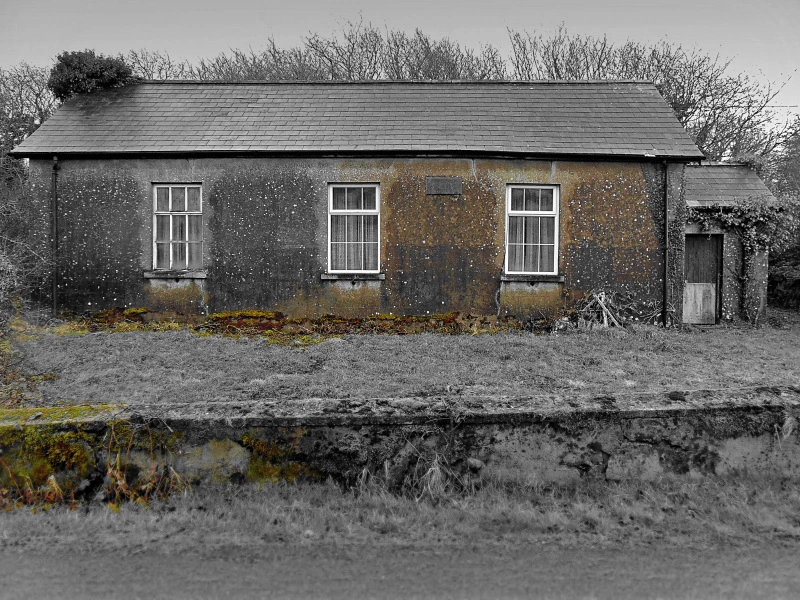
Carrigeencor National School, Enda O’Flaherty, Disused School Houses.

The old Kilcoosey school was about 2km from Carrigeencor, south west towards Dromahair, had been in existence for many years, probably starting as a hedge school.  In 1913, due to overcrowding and poor repair, a new school was built by Fr Peter Galligan at the Kilcoosey crossroads. The new school was about 600 yards from Carrigeencor NS and was the one the Gillmor children passed twice each day. After Carrigeencor NS closed a few local Protestant families went there. Like Carrigeencor school, Kilcoosey took part in the National Folklore Archive, The Schools Collection during 1937-38.

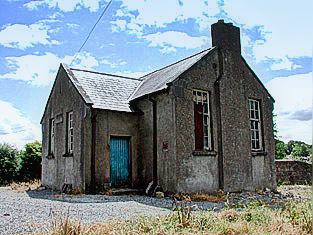
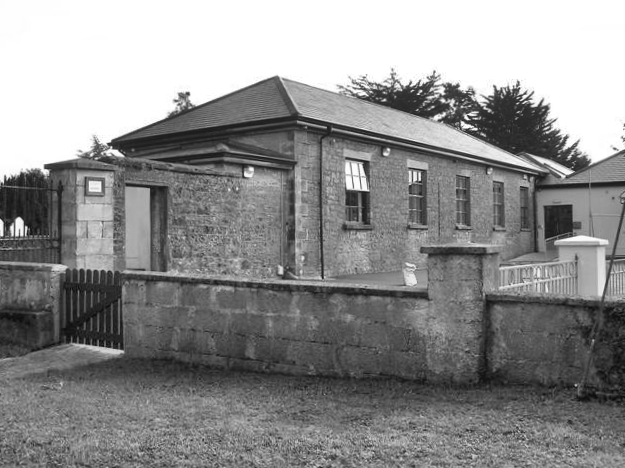
Kilcoosey National School, buildingsofireland.ie

Nan Boyce, taught at Carrigeencor NS from about 1925 and married Stuart Gillmor in August 1928; they lived at Boihy House, my Grandmother’s home. She was a competent and motivated teacher. After the birth of each of her three children Alfred (Freddie, 1930-1992), Edith (Edie, 1932 – 2012) and Margaret (Etta) she was very keen to get back to her pupils. Her youngest daughter Etta, arriving to school with her mother at the age three, recalls her first day when her small school case spilled empty polish tins – her toys – on to the hard school floor to the full laughter of the class.

Tragically, in the summer of 1944 Nan was carrying tea to the workers in a hayfield when she collapsed. She never recovered and died the following December. Nan’s death had severe repercussions for the family. Her husband, unable to cope sent the girls to in-laws in Scotland, and shortly afterwards auctioned the family farm, home and contents, to take up the job of land steward in Co Down. Earlier Freddie, studying at Mountjoy School in Dublin, failed to get a medical scholarship and fell out with his father. Against his father’s wishes he joined the British Navy; after 30 years’ service he resigned and took up the post of a Maths teacher. Brought up in Edinburgh, Edie and Etta struggled with the dislocation from their father and their Leitrim home.

To be concluded in the next blog, with notes following.

On the moon?

On a balmy airless night in July 1969 I sit with my Grandmother on the edge of a concrete water tank looking up at the moon; the crew of Apollo 11 are on their way home.

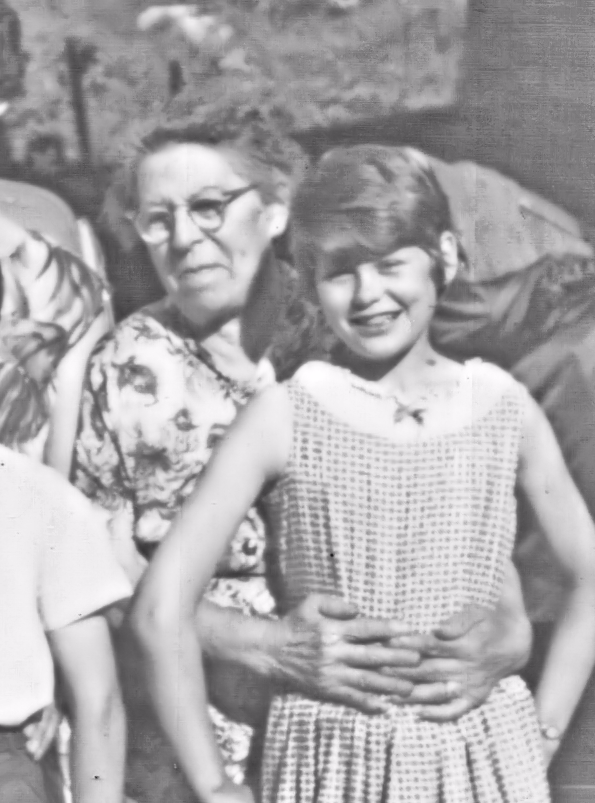
Granny Davis and my sister Elaine circa 1965.

My Grandmother, Annie Davis (1889-1978) was born Annie Elizabeth Gillmor in post-famine County Leitrim, the eldest of eight children. As a young woman she read the poetry of Longfellow, The Romantic Poets and later the War Poets; favourites she copied in her notebook and included the lyrics of Stanley Kirkby’s 1915 song “Somewhere in France.” As the eldest she helped raise her younger siblings in a family with strong Victorian and religious values; a family that expected advancement for their children, primarily by marriage for their three daughters. She carried a sense of responsibility for her siblings, supporting them where she could, and for the culture and values of her shrinking Protestant community.

I am her first grandchild.  When Apollo 11 lifts off to the Moon I am 17, going into my final years at grammar school, the A-level years; dreaming of being an airline pilot, a head full of rock songs and riffs; playing in a small band, in a garage mostly.

We travel to Larkfield on the 12th of July, the start of the Twelfth holidays, avoiding the traffic snarls around main Orange demonstrations. Along the route my father sings a verse or two of “The Sash” to the accompaniment of nearby pipe band.

The sun shines all summer; the hay is fresh and sweet smelling, made without rain and worry. A Sunday afternoon trip to Bundoran is a teenage heaven; the base beats of “Mony Mony” and “Baby Come Back”, drive out above the lights in the packed arcade; girls in short skirts lounge in the summer heat.

News filters through of escalating conflict since the 12th of July; the first deaths of the Troubles, riots in Derry and Belfast, families fleeing their homes in fear.

I follow the progress of Apollo 11 from Cape Canaveral to the Moon and back. RTE’s daily coverage and Kevin O’Kelly’s commentary taking me to the heart of it; like millions across the world awestruck by images of spacemen at a human frontier. The scratchy voices and broken fuzzy images adds to the drama. I’m rolling with the orbiter, weightless at the thought of it, falling for the managed presentations, mesmerised by its magic.

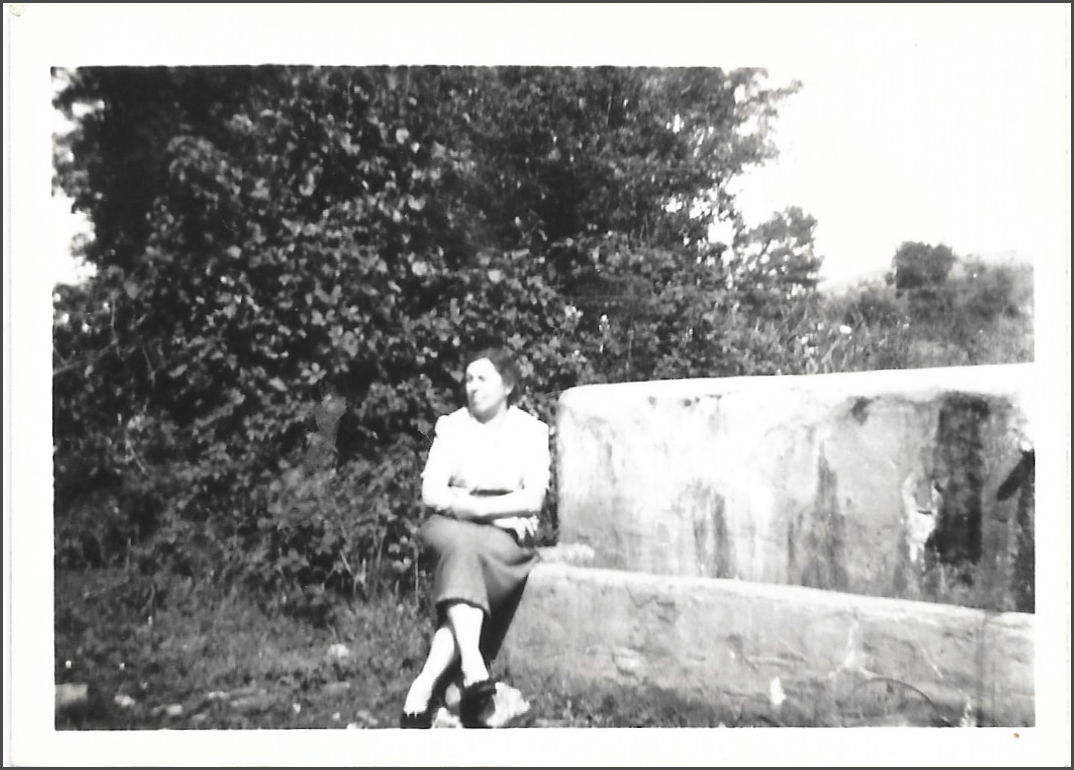
Granny Davis sitting at the water tank circa 1955.

Late one evening after the Apollo 11 programme ends Granny asks me to go with her to fetch water; the large kettle and pot on the range are all but empty. There is no indoor plumbing; drinking water comes from the well below in the meadow, the rest is drawn from a large open concrete storage tank at the top of the yard fed from a distant spring. We take two buckets apiece. Granny is now 80 has had osteoporosis for years; she gets smaller each time we visit. The moon, nearly full, lights the farmyard and surrounding landscape. We walk the 25 yards up to the tank, our buckets clinking, breathing in the warm air of a long summer dusk.

Do ye hear that? She asks. Listen!

I hear it, faint in the distance, a cuckoo, soft and velvety as the evening.

I pull out the wooden stopper from a pipe protruding from the tank and fill the buckets from the spout of water; Granny’s I only half fill. She sits on the edge of a small tank where the cattle drink, and when I finish, I sit down beside her.

The beauty of God’s world. she says with a sigh, as our gaze is drawn to the sky.

You’re enjoying it? The Moon on TV? She asks me after a time.

I am. It’s a great adventure.

Well, she replies dryly, Whatever I’ve seen on that box in there, I don’t believe they’re up the there.

And with that she picks up her buckets and walks towards the farmhouse.

As the end of the holidays approach and our return to Ballymena is imminent, the news brings word that violence continues to spiral. There is widespread sectarian rioting; British troops are on the streets of Belfast and Derry, taking control from the Stormont Government.  At Boggaun there is an undertow of tension as we think about getting home.

Notes

1.  Stanley Kirkby “Somewhere in France”, 1915 https://www.youtube.com/watch?v=q96UruVGIT4

2.  “Mony Mony” by Tommy James and the Shandells, 1968 https://www.youtube.com/watch?v=pkMgs3lFwkQ

 3.  “Baby Come Back” by the Equals, 1968 https://www.youtube.com/watch?v=yPVRzKCWlGI

4. For a summary of events on the island of Ireland in 1969 see https://en.wikipedia.org/wiki/1969_in_Ireland

5.  Samuel Devenny, who had been severely beaten by the RUC in his home in April 1969 subsequently died on 17th July, becoming the first victim of the TheTroubles. Francis McCloskey (aged 67) died one day after being hit on the head with a baton by a member of the Royal Ulster Constabulary (RUC) during street disturbances in Dungiven, County Derry, on July 14th.

6. For an alternative view on the Moon landing here’s a link to Gill Scott Herron’s “Whitey’s on the Moon.” https://www.youtube.com/watch?v=goh2x_G0ct4

Masterson National School

At Masterson National School Ena, Phyllis, and Cecil contributed to The School’s Collection, now part of Ireland’s national archives.    

Masterson National School. Photo © Kenneth Allen (cc-by-sa/2.0)

The journey to school on the ass and cart takes just under an hour, and on the metalled road it isn’t too bumpy.  In the town they walk up the steep Church Lane to the school as Herbie or Reco go off to do some errands before returning home.

At first Ena, Cecil, and Phyllis find the new school strange. They were all in one room with their new teacher Muinteoir Gobnait deBúit; the newish desks all have ink pots and they have books apiece. But there is the familiar smell of the turf fire – turf which they still must bring each day. As they expect, their new teacher can be cross and sometimes the senior pupils, like Ena, have to take care of the youngest ones when they become unsettled or unruly. The subjects, including twice-daily Irish and religious instruction haven’t changed, and the weekly visit is now from their local clergyman. The school days soon fall into the usual pattern.

By 1937 they have been joined by Wallace aged 10 and Alf, 8; Ena is in her final year and is cycling to school; Jack will start the following year. They know a number of the pupils through family and church connections and have made new friends. The school numbers have now grown to some 35 pupils as smaller rural protestant schools, like Glenboy, closed during the 1920s and 30s.

The school, located in the grounds of Manorhamilton Parish church is most likely the former dispensary at the 17-century military garrison, where the church was built in 1783.  In 1809, John James Masterson, a local parishioner gave a £900 endowment towards the education of the parish children, particularly their religious education, and the school took his name.

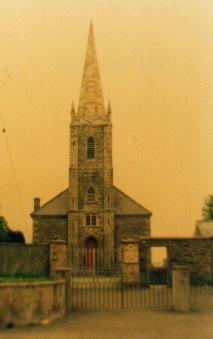
Manorhamilton Parish Church (Cemetries Ireland) Masterson National School is to right.

Between October 1937 and the end of 1938, the school pupils took part in the collection of folk lore and tradition which has been recorded as The School’s Collection, part of Ireland’s National Folklore Collection archives. It includes bound volumes of teacher’s transcriptions of the children’s story and sources, and the original exercise books. The Davis family feature significantly in the Masterson school records. Ena, Phyllis and Cecil collected stories, riddles, lore, games and songs from their father Richard (1882-1961), Grandmother Margaret Gillmor (1862-1933), Uncle Alec (1869-1941) and neighbours Pat Lonigan (1861- 1945) and Peter McManus (?-1946).

The contributions give a fascinating insight to the family and to the wider culture, just over eighty years ago; they can be viewed at the link – Davis contributions records here.

Most notably the recording by Ena or Phyllis of their uncle’s version of “The Rocks at Bawn” is arguable most interesting, placing the song’s debated origins at Bawn near Dromahair, and citing its popularity 100 years previous. The first verse from the recorded ballad goes:

Come all ye loyal heroes
Wherever that ye be
Don’t hire with your master
Till you know what your work will be.
For you must rise up early
From the clear daylight till dawn
And I fear you won’t be able
To plough the rocks of Bawn.

Finally, here is an entry from Phyllis: “Fairy Fort” There is a fairy fort in a field beside my land. A man called Peter MacManus owns it, and it is in the townland of Buggawn. It is a round fort and is fenced round with a hedge there is a big stone in the middle of it where the fairies used to sit all night when they came out to play. There is a hole under the big stone for them to go out and in, but the people who own the field never heard of anyone going down into this fort. The owners of the field never disturbs the fort when ploughing or moving. Lights have often been seen at the fort, and there was also music heard in it.  Ends.

At the end of the school day they stack their books at the front of the room. An Muinteoir waits for the class to fall silent.

“Téigí abhaile anois. Slán agus beannacht.” 

And they are up and out as fast as they can squeeze through the door.

Notes:

1. Only Phyllis and Jack went on to The Technical School (The Tech) in Manorhamilton. This was the first post primary school in North Leitrim and opened in 1935.

2.  Masterson National School, see website http://www.mastersonns.com/

3.  The School’s Collection is searchable although not all entries have been transcribed. https://www.duchas.ie/en/cbes

4. The Davises extracts from the Masterson NS contributions are at this link. Davis – The School’s Collections.

5.  Frank McNally discusses the origins of the ballad “The Rocks of Bawn” in the Irish Times and refers to Ena and Phyllis’s entry in The School’s Collection. https://www.irishtimes.com/opinion/classic-rock-frank-mcnally-on-tracing-the-origins-of-a-famous-irish-ballad-1.3634782

6. Thanks to Wills O’Malley, Padraig Fitzpatrick and Dominic Rooney for their comments and review.

Changing Schools, Imagined – 2

Ena (Helena) Davis with a teacher at Mullaghduff NS 1931.

On the open turf fire inside the house a large pot of potatoes and a small skillet of meat hang from the crane, cooking; other small pots sit in the heat of the fire. On the table is a large bowl of cold potatoes, a smaller one with pieces of cooked pork and cups of water. The returning children grab the food and stand around the table eating.

“Take something quickly and then get your jobs done. I’ve to start salting the sides of bacon.” says Ena’s mother Annie lifting the lid on the potatoes.

“Oh, yes! I’ve good news for ye all! ” she says brightly.

“You’re going to a new school, Mastersons. We’ll have a donkey and cart next week and I have made ye new clothes.” she continues.

“What!” exclaims Ena, “Leave our School? Why?”

Phyllis is now listening intently, watching her big sister. Herbie and Reco have gone outside to bury the pig’s guts and waste.

“Enough of that, Ena. Books and desks with ink, and the school is very well kept. There’s too much Irish in Mullaghduff, it’s wastin your time.” says her mother.

“But I like Irish! The Master says that if I keep working at it, I’ll get a medal.”  Ena is shocked.

“Don’t cross me now, girl. We’ve our minds made up. You’ll all be starting next week. You’ll know many of them there too.”

“If I spoke to me mother like that, I’d feel the lash of the birch afore the words fell from me mouth. The Divil’s standing up in her.” scolded her Aunt coming into the house.

“But how will we get to school. Walk? It’s over 3 miles?” says Ena ignoring her aunt.

“I told you already we’ll have an ass and cart by the weekend, and Herbie will take you all there and back.” counters Annie.

“Herbie? He goes to school too.” Ena says, now realising that Herbie and Reco already know about this.

“No, he’s finished, he’s needed around here.”

“But Mammy …”

“Stop it now! Before I do reach for the birch.”  her mother says firmly.

“Ena, see if Jack needs changed. And get the bissim to these floors, then give them a wash. Phyllis! Water from the well! And take Cecil with you.”

The table is quieter than usual despite the tasty meal.

“Have you heard the news yet? A new school next week, you’re all off to Mastersons, at last!” says their father breaking the silence.

Ena nods and looks at him blankly.

“Ye’re not excited girl?”

“No. I’ll miss my friends.” she says quietly.

“Your friends will still live in the same place. And you’ll make new ones. What did you learn in that place anyway?”

“Irish, Daddy, and”

“Irish!” he cuts across her.

“Nothing! That’s what you’ve learned. Could any of you could tell me when to plant the spuds or set the cabbage plants, or sow the turnips? No! I have to teach ye that myself. The Irish won’t fill your belly, girl. You’ll do better in Mastersons. You’ll see, you’ll like it.” And he continues his eating.

They eat in silence until Ena points and quietly asks,

“Bainne, Please.”

They all look up. Her father stops eating, puts his fork down, pauses and laughs. He shakes his head and passes her the milk. Uncle Alec winks at her, as her Mother and Aunt scowls across the small table. She knows her father well.

Notes:

1. Ena got her medal for achievement in Irish.

2. The story is set in 1934, when Herbie would have been 14, Reco 13, Ena 11, Cecil 10, Phyllis 8, Wallace 7 and Alf 5.

3. Thanks to Padraig Fitzpatrick for his review of the story details and his confirmation that the arrival of the ass and cart was key to the change to Masterson National School, and of my Grandfather and Grandmother’s attitude to the Mullaghduff school.

4. Reference: The Deserted School Houses of Ireland Book by Enda O’Flaherty from The Collins Press – September 2018. There is a wealth of information on schools such as Mullaghduff, on the authors website and blog. Thanks to Etta Kerr (nee Gillmor, Boihy House, Dromahair) for the pointing me to this book. https://endaoflaherty.com/2016/11/04/drumreilly-national-school-drumreilly-townland-co-leitrim/

Changing Schools, Imagined – 1

Mullaghduff NS – OSi Cassini 6inch raster mapping dated 1830s to 1930s.

At the end of the school day they stack their clean slates at the front of the room. The Master waits for silence; they know his routine and fall quiet.

“Téigí abhaile anois. Slán agus beannacht.” 

(You all go home. Goodbye and blessings)

And they are up and out as fast as they can squeeze through the door.

“Bí ciúin!”

(Be Quiet!) he shouts as the last of them exit the room and the small yard next to the road explodes in a high-pitched cacophony of children’s screams and voices.

Ena and Phyllis play tig with a group on the road until, panting they fall down in the grass at the side of the road and pick summer flowers. Herbie and Reco, with the older boys talk in a huddle outside the low school wall while one of them plays with a handball. Cecil is with the younger boys throwing stones across the recently tarred road. Gradually the children drift off in various directions, homeward.

“Lets go!” shouts Ena to her siblings.

“They’ll be wondering where we are.  Maybe there’ll be boxty.” she says as she runs off but remembers that a pig was killed that morning and there would be tasty bits of pork for dinner, and black pudding. She was glad to be at school that day of all days; she hated the squealing of the pigs being killed, it went on and on, there was no hiding from it and then there was that awful smell. Ah, now she remembers, the extra jobs waiting for them, we’ll be in trouble.

They walk up the lane, Herbie, Reco, Ena, Cecil and Pyhllis, the girls trailing behind. Their Aunt, Mary Jane is waiting for them at the head of the lane, hands on her hips.

“Wha kept ye all? Year mother told ye not to delay! Ye childer knew there’d be extra work wid the men off at Brannan’s roof? At tha school all day and there’s not a brain between ye. Arragh will ye come on! Herbie ye should know better!” she says waving her arms after them like she is gathering hens.

“Look at the state of ye girls, cover in dust and dirt. Com‘ere and I’ll give ye a brush down afore ye go inside”

“No, no. I’ll do it.” Ena says brushing herself down quickly. She’s a bit afraid of her aunt who is old and sometimes very cross. Her spinster aunt had been there as long as she can remember, like her Uncle Alec; she was regularly at odds with her mother and always seemed to be complaining; her Uncle Alec was different.

Wallace and Alf come running to meet them, chewing on bits of meat with greasy hands and mouths. Wallace has stayed at home for the day to look after Alf, who grabs Ena by the waist wanting to play, but the eleven-year-old shakes him off.

“Not today young cub! I’ve got jobs to do.”

Continued in next blog.