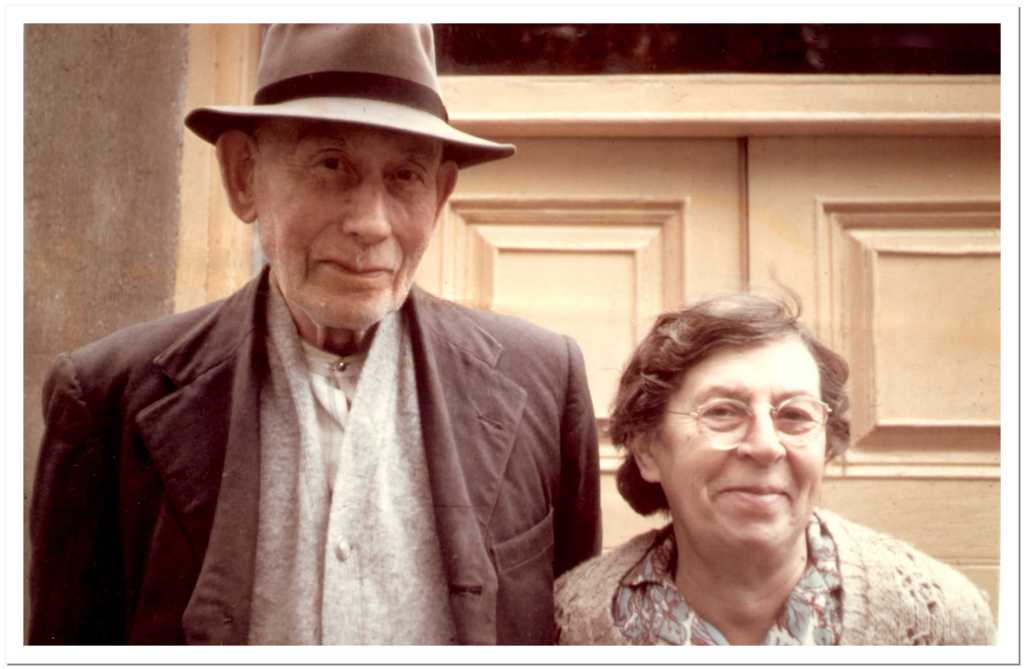
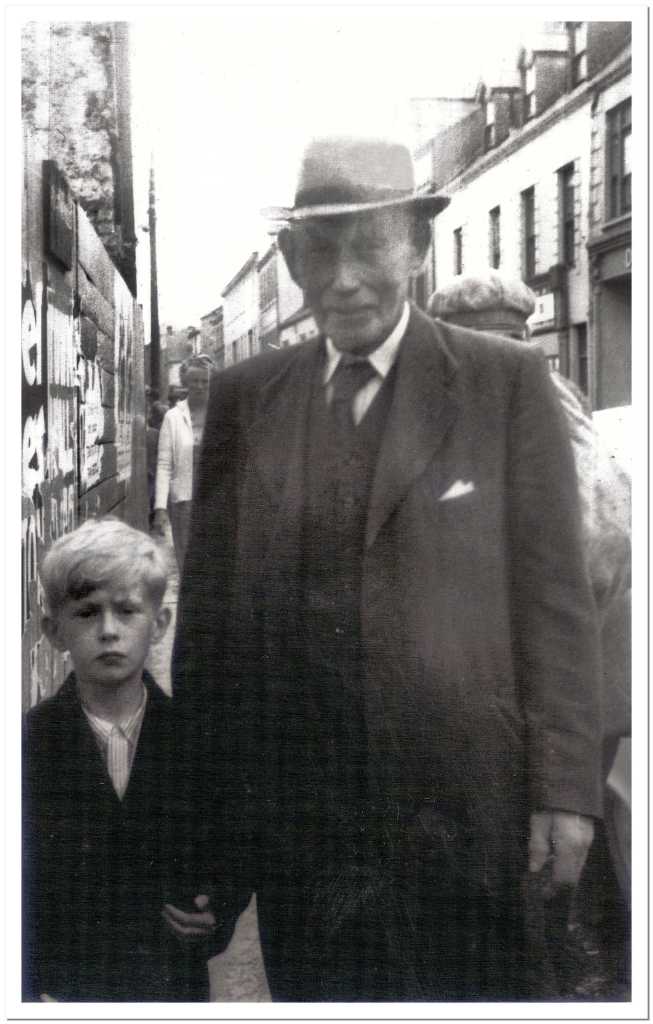
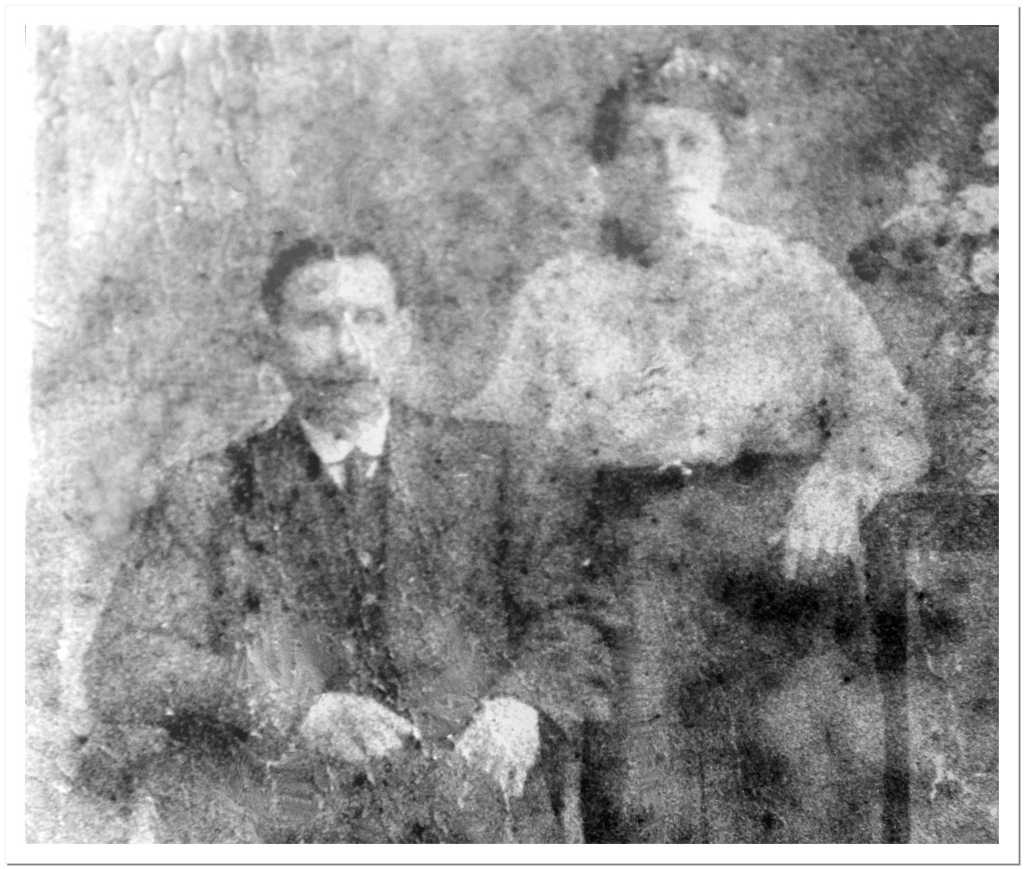
Cecil

Of his generation Cecil was the one who remained farming at Larkfield while his siblings emigrated or moved away. The harshness of the times and his mother’s disapproval of his girlfriends, left him a lifelong bachelor. Cecil is at the centre of many of my enduring teenage memories in County Leitrim; incidents and adventures that I share with my brother Ivor, being of a similar age. My sister Elaine and youngest brother Nigel recall him slightly differently, but nonetheless warmly. Stories involving Cecil have already appeared in this blog and others will no doubt follow.
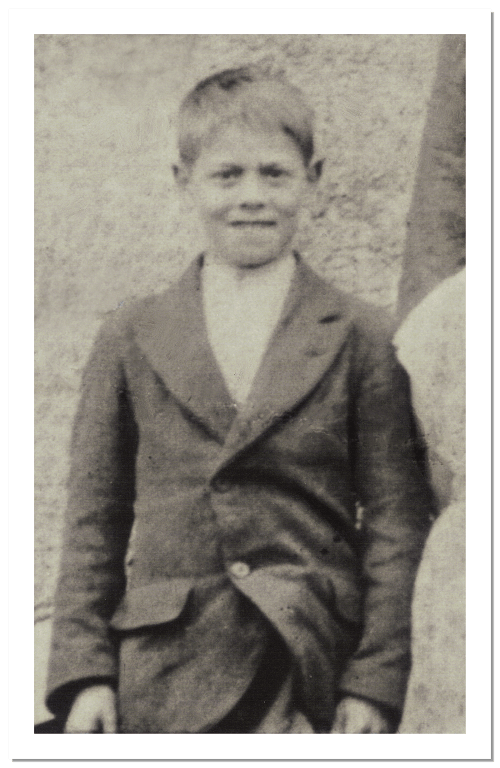
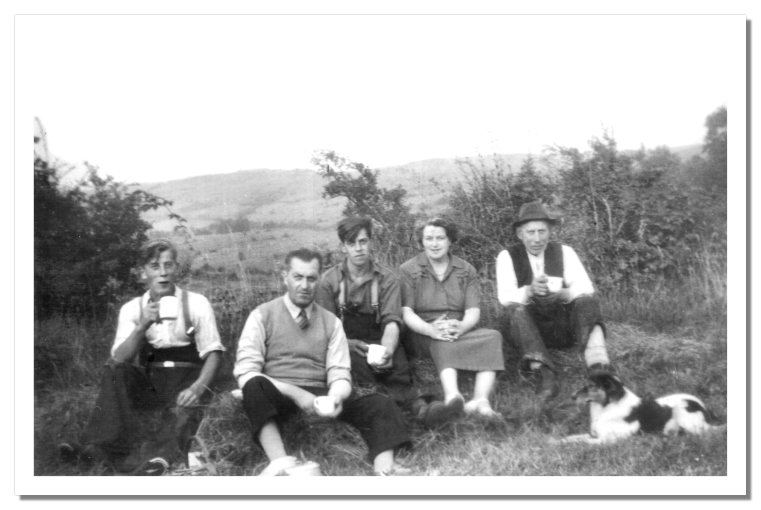
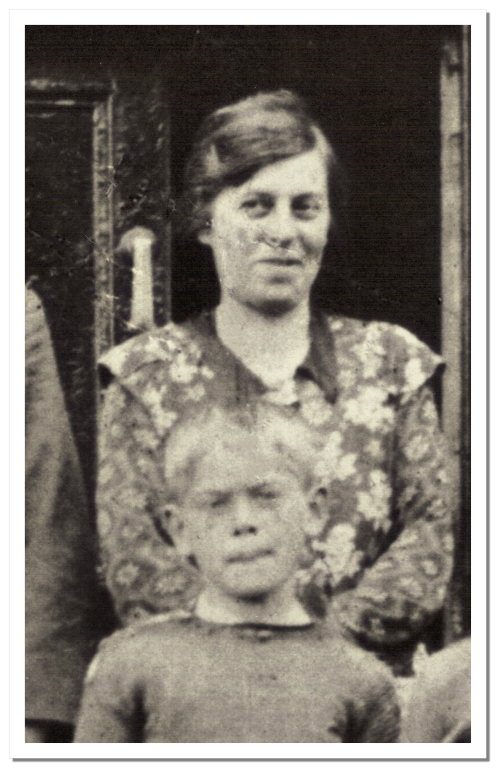
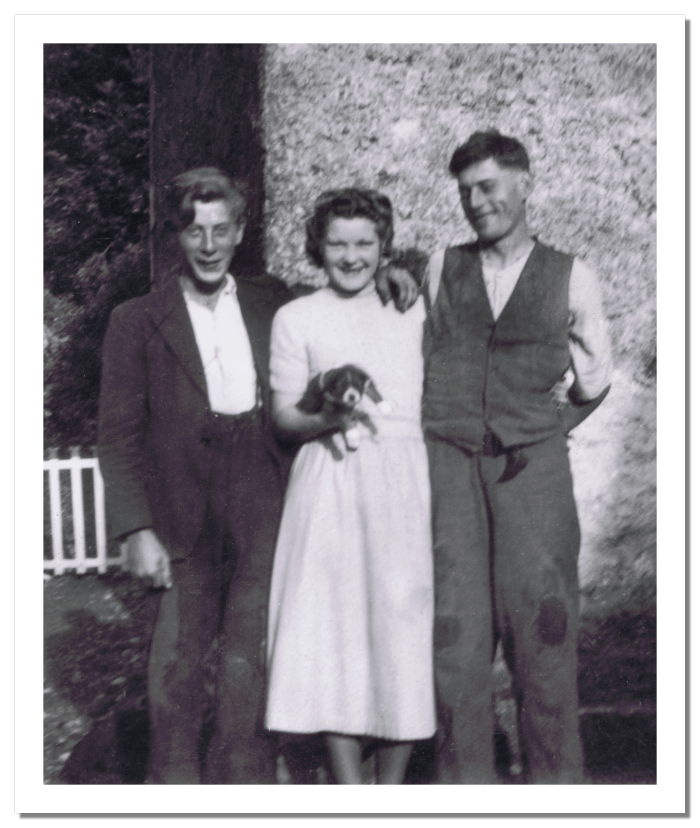
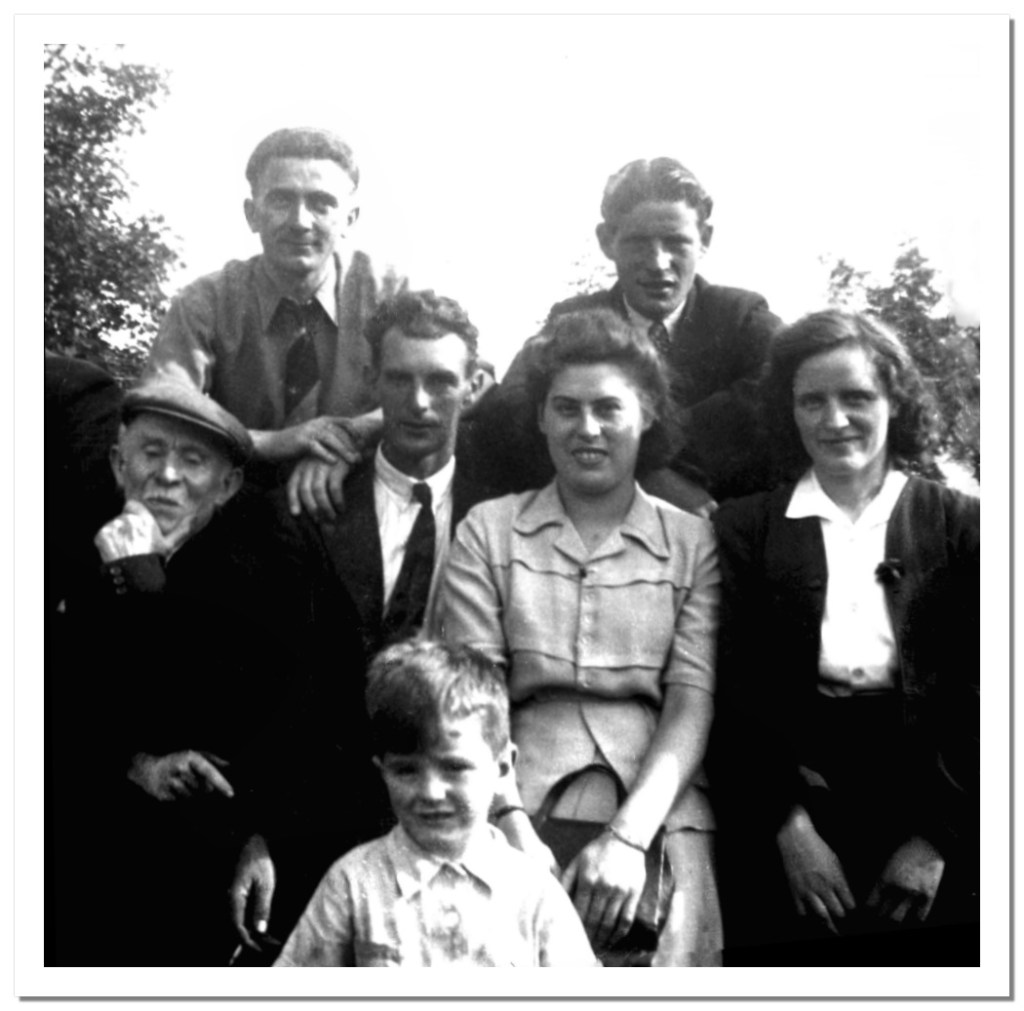
Cecil about 12 years old, cropped from family group photograph c1935.

Cecil was the third surviving child of seven. After Herbie died Reco became his father’s golden boy and Cecil fell into the role as Reco’s workmate. He was not keen on national school and had no interest in going on to The Tech; perhaps his father was happy to see another set of hands on the struggling farm with its burden of debt.

After Mullaghduff National School he went to Masterson’s in Manorhamilton with his sisters Ena and Phyllis.  His contribution to The School Collection is sparse, unlike his two sisters.  His Uncle Alex, who had returned penniless from County Meath, gave him three short pieces which he copied into his special homework book. Done. Given Alex travels they are interesting:

“Praise the young and they will come to you. Hills are green far away. A stitch in time saves nine.”

Through the 1940s and 1950s Cecil worked on the family farm as it gradually threw off its debt. With his father, and brothers Reco, Alf and Wallace, they put in long days of hard work in all weathers.

He had been going strong with a local girl in the mid-1940s. Their plans, however, were stymied by his mother Annie who disapproved of the relationship, despite the religious affinity.  Perhaps Annie felt that the struggling farm could not sustain another family at that time, or that she feared a re-run of the long struggle with Cecil’s Aunt, Mary Jane, when Annie arrived at Larkfield as a young bride a generation earlier. But for decades to come Cecil would get a regular Christmas card from his former girlfriend.  

He had other girlfriends, but none that would get his mother’s blessing. Annie had made similar interventions in the lives of Reco and Wallace; Wallace’s effective banishment being the most extreme. Despite her husband’s more liberal attitude Annie’s force of will on such matters would hold sway into the mid-1950s. Cecil’s choice was between the farm or the road, to join the stream of unskilled emigrants leaving for England at that time. He never did leave and never married.
Cecil, his Aunt Hilda and father Richard c1945.

After my Grandfather, Richard died in 1961 we kept up our regular holiday visits, three or four times a year. Cecil and Granny would greet us warmly, a welcome after the long car journey, the table set in the farm kitchen.  Cecil had taken over the running of the farm with his mother keeping a sharp eye on all transactions. He was quieter more reserved that his father, but like his father found ways to involve us in the life of the farm, affirming Larkfield as our second home.

We would follow him around like lap dogs, watching him work, giggling uncontrollably when he lost his temper, cursing. And trying to carry out the small jobs we were offered. As we got older, we worked with teenage effort and at the end of the summer holidays would leave with a roll of notes pressed into our hand.  During the 1960s and into the early 1970s we became vital part of summertime’s hay making and farm work.

On both sides of my family honest physical work was valued and carried an expectation of progress; at Boggaun this was most likely elevated further after the collapse of Cecil’s father’s  business years earlier. While I had no great strength, I developed a stamina for work and with Cecil garnered much of the practical skills of running a farm and managing stock that would stand me in good stead in years to come; all bound to a love of the farm’s fields – the White Field, the Angle, The Well Meadow – and the surrounding streams and hazel wood scrub, crisscrossed with tracks of rabbit, badger and fox.

Cecil drew us to a world that was fast disappearing; a time of paraffin and Tilley lamps, of horsepower, of cycling and walking cattle on empty roads to fair days in open streets, of bachelor farmers living in two-roomed thatched cottages that doubled as outhouses, a lifestyle little changed for generations.

We became more aware of lives of Cecil and Granny.  Weekdays Cecil was up as we slept in the nearby bed, the rattle of buckets from the yard outside the small window our alarm clock, while from downstairs came the soft warm sounds of Granny preparing breakfast. Weekends Cecil would often return in half light of an early summer’s morning to skip, jump into his bed still buzzing from the revels of the night. Of course, he would then sleep in until we heard Granny’s hand on the squeaky brass door handle in the room below.

“Cecil! Cecil! Do you know what time it is! Get up!”

Which was repeated every five minutes until he groaned out of bed and pulled on his clothes.

Once or twice during the summer he would drive us to Bundoran on a Sunday afternoon. His father and mother had for many years taken a week’s holiday in a boarding house there, but a holiday was not on Cecil’s calendar. The buzz of the packed amusements in the crowded town was a teenager’s heaven.  We sometimes ended up at a small, cramped table in the lounge of the Holyrood Hotel. Cecil would inevitably fall in with some friends at the bar as we sat sucking on minerals and listening to a Country and Western band play over the hum of the packed room.

Reco with author, Ena with Ivor, and Cecil c1953.

When his mother died in 1978, he was forty-four and on his own. He accommodated the changes taking on cooking and limited housekeeping, falling into a routine suited to his own patterns and favour. There was talk that he should get someone in to help with the house, that it was not too late to find a partner.

He could have married, the house was free for a woman to take over, and there were attempts to make a match. At the time rumours abounded as he was judged a fine catch for the right woman.

During this time John James Davis, Cecil’s cousin from Daysville in Alberta, Canada made his only visit there with his cousin Tommy Davis from County Meath.  They arrived at what they took to be the right lane and enquired of men working there if this was Cecil Davis’ farm.

“You’re in the right place boys.” They were told.

“In fact, Cecil has just married a widow with 4 children, and they are all above in the house now. They’ll be glad to see you.”

Of course, only Cecil was in the house, and he would have laughed with them. However, none of these arrangements, real or imagined worked out and Cecil remained a Leitrim bachelor all his life.

On the farm the meitheal – communal work, reciprocated in turn by neighbours – had disappeared by the mid-1970s. Emigration had reduced the numbers living on the land and those who remained often had part time jobs. As a result, farm help was hard to come by, although the work was eased somewhat by the introduction of tractors; Cecil bought his first one in 1970.  Like many farmers at that time he had moved over to a more extensive suckler cow breeding enterprise and had bought two additional out-farms.

While I would continue to visit him regularly, by the time we had all moved on after secondary school, the summer-long family exodus to Larkfield had come to an end.

Ends

Finding a friend of Bertie Gillmor

A year ago, I wrote the blog “Finding Bertie Gillmor” about locating the grave of my Granduncle from Boihy, Co Leitrim. A shot-in-the dark email found an extremely helpful Steve Logan from Oliver’s Funeral Services in Grand Prairie, Alberta, Canada. Oliver’s had undertaken Bertie’s funeral and burial in 1960 and within two hours of my email to Steve, he found and visited Bertie’s snowy unmarked grave in Grand Prairie cemetery.

An advert in the Leitrim Observer 20th Feburary 1904

Since then I sent out a few emails searching for anyone who might have known Bertie but until now I have drawn a blank.

Recently, I have been emailing Tina Wolfe, at the same Oliver’s Funeral Services, to arrange a small marker for Bertie’s grave. Tina asked me where he was buried, unable to locate him at the small cemetery near his home outside Goodfare, but this was quickly followed by another email from her, with the line that got my attention.

“I found someone that knew him and he told me where to look”

Later that night I phoned Walter Pfau (pronounced Fow) in Goodfare where he farms with his wife, Thelma, and looks after the small Lutheran cemetery, the connection with Tina. Goodfare is a hamlet of some 8 homes, a community hall, an outdoor ice hockey rink and a mailbox; the nearest large town Grand Prairie is 61km east.

“Oh ya. I knew Bert well. He used to come here regular, to buy cattle, when I was a young fella. Lived about 3 mile away. Nice guy, true farmer. Good fun too. He grew grass, wheat, oats and tall sweet white clover. I heard him say a few times in his funny accent – I love the sound of a field of rippling golden oats in the fall.” Said Walter.

He told me a lot more. I will talk to him again and fill out Bertie’s story. In the 1920s Walter’s father and Bertie were among the first white settlers in that part of Alberta.

Today the small community of Goodfare have messaged on Facebook saying that they have members who knew Bertie and will be in touch.

Goodfare is 8 hours behind our GMT. There is 4 inches of snow on the ground. With daytime temperatures around  -6°C dropping to -16°C at night, Walter’s cattle are housed for the winter. Walter and Thelma don’t travel too far because of Covid-19.

19th November 2020

Ends

John (Jack) Davis

John Christopher Davis was the youngest of the family. He emigrated to England in 1952, aged 20 and then on to New Zealand in 1957, but returned to Ireland seven years later. At home and with his family he was Jack, as he was in New Zealand and it is Jack that I use here. On returning to Ireland from New Zealand he used John.

At a break from saving hay, from left, Jack, His Uncle Alex (Gillmor), brother Cecil, Aunt Hilda and his father Richard, circa 1949.

Jack was born the seventh surviving child into a household of eleven, ten years after the worst of the family’s financial crisis.  The novelty of a new baby had worn off by then and a good deal of his care fell to his sisters Ena and Phyllis.  Jack’s aged aunt Mary Jane and uncle Alex were living at the time and it is easy to imagine the household into which Jack arrives, throbbing with life and activity; the busy mealtimes, hectic mornings as some go off to school the others to farm work, long bedtimes gradually filling the three upstairs rooms, some partitioned off, full of beds and cots.

By the time he went to Masterson National School in Manorhamilton he travelled on the family ass and cart, the only one not to walk to school. A year or two later on an errand to the town, on the same ass and cart he was stopped by the Guards as the poor ass was unshod. His age got him off and he carried home the verbal warning.

He laboured on the farm like the rest of them producing the crops and livestock that would eventually help settle the farm’s debt, but Jack was not destined for a life on Leitrim’s dauby clay. At The Tech he was an eager student and was soon applying what he learned. He expanded the vegetable garden, planted more apple trees and set up a small apiary. With an aptitude for carpentry he made furniture and cabinets for the farmhouse. But at a time with few employment opportunities and when emigration was peaking again, he set his sights on England as his best hope for the future.

Jack left home in 1952 for London with a small nest egg from his parents, like the rest of the family’s emigrants. In London it was relatively easy for him to get work among the many Irish arriving there at that time. His skills were quickly evident and with his attitude to work he was welcomed on many building jobs.  Among these were the renovation of London’s historic buildings including Buckingham Palace where he further developed his craft. By comparison to Ireland busy central London offered the young man work, money in his pocket and plenty of ways to spend it. However, he had an eye on distant shores. 

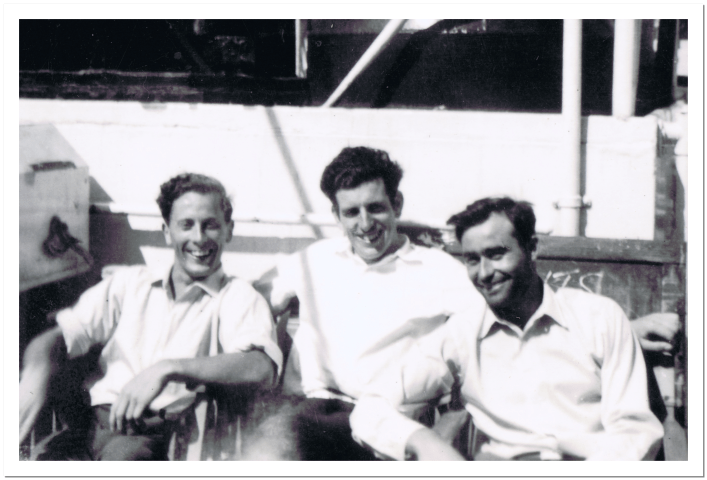
Jack with friends John Gallagher and Denis Coffey on the SS Captain Cook on route for New Zealand 1957.

In 1957, along with a group of London friends, he bought a passage on the MV Captain Cook, a New Zealand government-owned emigrant ship bound on a 33-day voyage from Glasgow to Wellington. He was excited, saw adventure ahead of him, his appetite whetted by the hubbub of the 1000 passengers or so, most emigrants like himself. A brief stop in tropical Panama before crossing the equator, and he was on his way to a new life far from County Leitrim.  

Palmerstown was his final destination on the north island where the New Zealand embassy had given him contacts for work and accommodation.  He worked on a variety of construction projects including extensions to the hospitals in Rorotua and Wiaroa in Hawke’s Bay.  He enjoyed the outdoor lifestyle, the warm seas and temperate climate, and with his outgoing nature made many friends. 

There were whispers at home that he left in a hurry. Whether pursued by the taxman or string of broken hearts was never made clear, but Jack left Auckland for Southampton in April 1963.  This time the ship, the MV Fairsea, navigated in the opposite direction calling into Singapore, Colombo, Aden, Suez, Port Said and Naples, an exotic trip in itself.

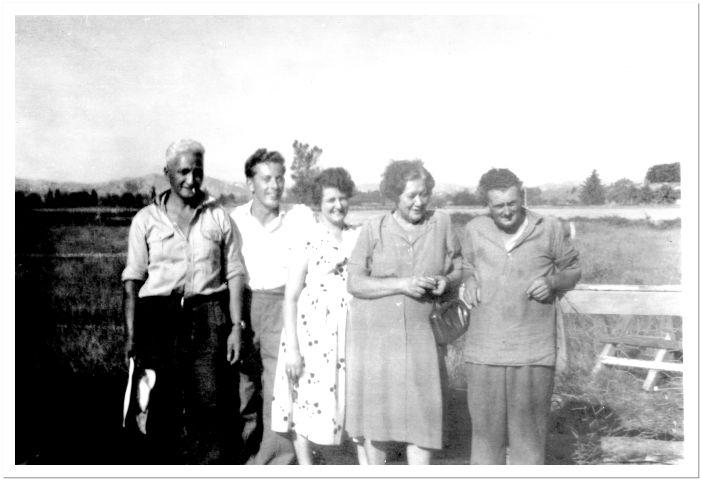
“Jack, Francis and Maori friends Wairoa” as scribed on the back of this photograph by Jack, circa 1960.

I first set eyes on Jack, my youngest uncle when he returned from New Zealand.  He was tanned and healthy, travelled and modern, and carried himself with a certain swagger, perhaps feeling he had outgrown Boggaun and Leitrim. He kept himself tidy, his hair groomed to a natural wave.  

Jack returned to his old bedroom, the one used by Cecil, and myself and my brother on holidays; its two iron-framed small double beds with sagging springs and mattresses. His heavy-duty suitcase sat on the floor for a year or more, eventually rummaged, it was half full of exotic gifts, Maori trinkets and discarded personal effects.

Jack brought back a small reel tape recorder and a portable radio. It was on this I discovered Radio Luxembourg and its Sunday night Top 20 Hits and with Jack’s help I was soon recording some of my favourites on the tape recorder. 

He returned from New Zealand bubbling with antipodean experiences and a head full of ideas. It appeared to him that his brothers were farming the same land, growing the same crops, and burdened by the same damp concerns. But just as a friend’s holidays snaps that can quickly glaze the eyes, Jack’s stories and notions soon fell on deaf ears.

That same summer he organised a trip to the Galway races; he enjoyed a flutter on the horses, and on stocks and shares. We were there at Larkfield on our holidays and, unusually, my father was there too. After a long drive in two cars, the last section between miles of grey stone walls, we spilled out into the sunny grass car park at the racecourse. Horse racing and gambling were considered a great sin by my father’s family; however, this was easily forgotten on this memorable day at the races. The biggest winnings that day was my find of a £20 pound note, tumbling in the breeze near the bookie’s stalls, lonely and looking for a dark pocket.

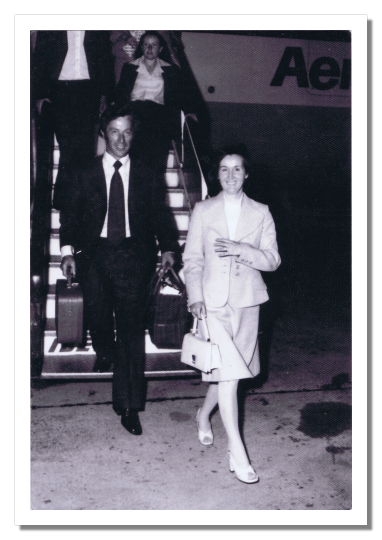
John and Carmel returning from their honeymoon 1976.

Initially Jack helped around the Boggaun farm, which by then had passed to his mother and would later pass to Cecil, who had managed it since their father’s death. Jack had known for some time there was no future for him here, nor, I think did he want it. Taking up work at Collooney’s Gowna Wooden Industries making windows and doors, he soon felt over used and undervalued. After a year he made a move to Dublin via a short spell in Limerick. In and around Dublin he worked for The Georgian Society and its founder Desmond Guinness whom he got to know well. He found this restoration work most satisfying, exercising his considerable skills and experience. On the outskirts of Celbridge he built his home, “The Bungalow”, with a large vegetable garden, fruit trees and beehives and in 1976 he married Carmel Wylie. 

Jack, as Phyllis did, would often offer his advice and wisdom, particularly after he returned from New Zealand. Like his philosophy of a fairer share for the common man, much was unfortunately lost by his brash manner.

“I’m not listening to Jack anymore!” my exasperated mother once said.

On visits back to his Leitrim home Jack’s farming and financial advice also tended to be unwelcomed and unheeded; Cecil, nonplussed, would often fall silent.

His father was swindled, by a Protestant business partner, out of a significant sum of money some ten years before he was born and when the family were still straining from the near bankruptcy. Whether referring to this or his own similar experience, he carried a bitterness against his own kind for displaying such opportunism and deceit. He often warned us with words to the effect that you “trust them at your peril”.

In Celbridge, where he had a wide circle of friends, he was exclusively known as John. Outside of his work he took great pleasure in tending his garden and beehives. When I started to travel around Ireland, mostly hitching a ride, Jack and Carmel were always generous in putting me up for the night and collecting me from whatever godforsaken spot I had landed.

End

Phyllis

Phyllis was the first of her family to go to secondary school and the only one to take up a professional vocation. She left home at nineteen to study nursing in County Antrim. Fifteen years later a personal tragedy changed the course of her life and she emigrated to Canada.

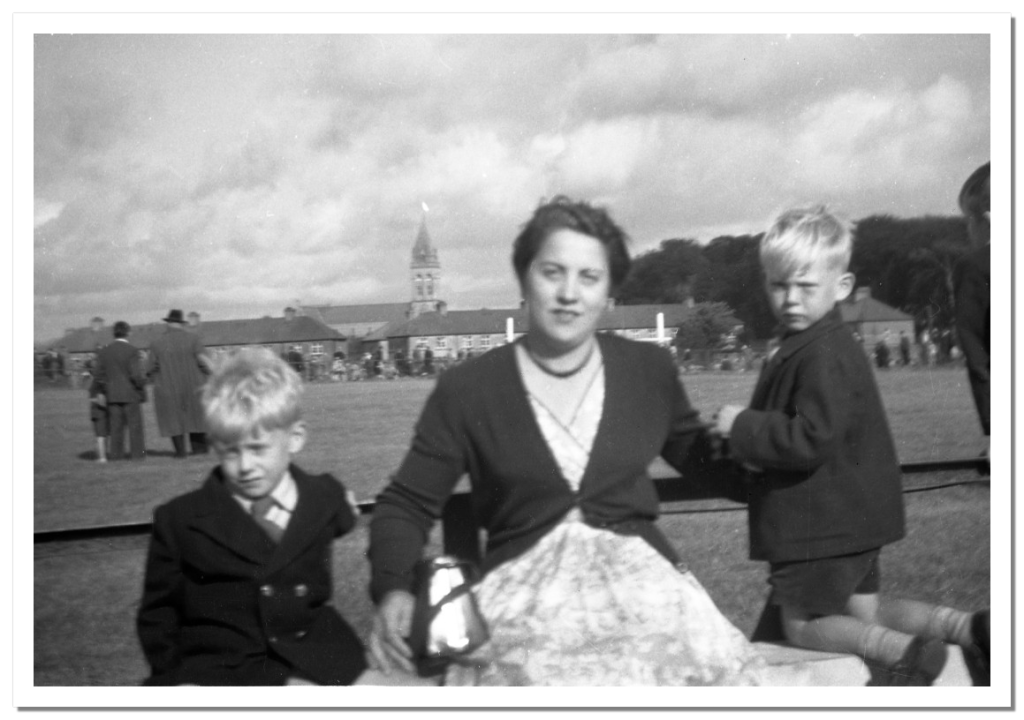
Phyllis with author right and brother Ivor at Sligo Showgrounds circa 1957.

Phyllis started school at six years of age walking the mile or so with her brothers, sister and neighbours to their nearest school, Mullaghduff National School. The arrival of a donkey and cart in 1934 provided regular school transport allowing her parents to move their children to Masterson National School beside the Parish Church in Marorhamilton, making the longer journey each day.

She was a keen pupil eager to learn, exemplified by her significant contributions to The Schools Collection, a compilation of folklore and stories which became a National Archive, that includes her original copy books. Gathered from family and neighbours the contribution reveals over ten individuals that Phyllis badgered to collect the impressive range of stories, lore and riddles.

The Technical School opened in Manorhamilton, in 1936. Referred to as The Tech, Phyllis moved there a few years after it opened its doors. Like her older sister Ena, she liked Irish and was awarded a Silver Fainne Medal despite her parent’s misgivings about time spent learning Irish. The medal was a circular silver collar pin showing a proficiency and love for the language.

Her teachers encouraged her to consider a career. Phyllis had known of the early death of her older sister Maureen at a few months old, and experienced the family’s anguish during the illness and lingering death of her brother Herbie. Phyllis never forgot a throwaway remark made during her brother’s illness that she brought his diphtheria into the house, the infection that eventually killed Herbie. Given this, nursing was not a surprising choice.

Her grades at The Tech were good and she easily achieved the entrance standards for nursing. In 1945 she started as a trainee Mental Health Nurse at Purdysburn Mental Hospital on the outskirts of Belfast.

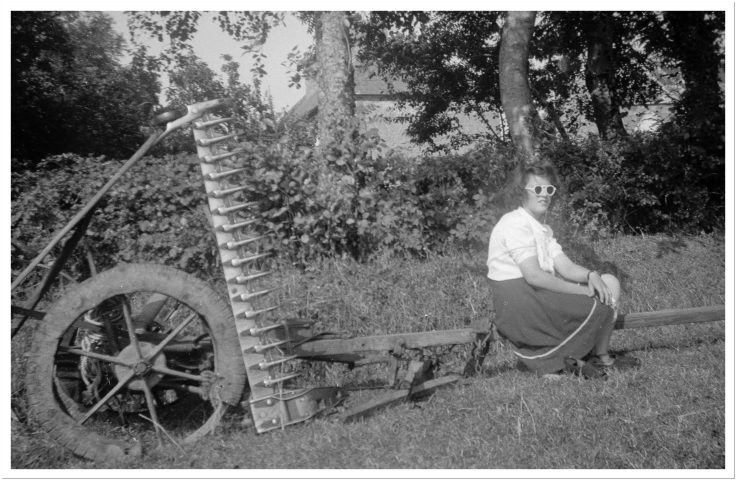
Phyllis at Larkfield sitting on a horse drawn grass mower circa 1951.

Of all our Davis aunts and uncles only Phyllis and Jack – the two who went to secondary school – would regularly dispense their knowledge and advice with great vim. Perhaps the experience of secondary school gave them a confidence, or it was the impact of what they learned there.  Phyllis would frequently remind us, her young nephews and nieces, how to brush our teeth, of the best foods to eat, to take time and chew you foods properly, and the benefits of learning and doing your lessons well. I recall a long lecture from her while brushing my teeth, endlessly it seemed, at the bathroom sink, probably at the time my teeth were damaged from too many sweets.

Phyllis had an independent streak influenced, undoubtedly by the strong will of her mother in steering the family through very challenging times, and by the opportunities opening up for women. When Phyllis was established in her nursing career, she bought her first car. On weekend visits home to Boggaun she was in great demand by her brothers and sister whose weekend exploits were usually limited by their bicycle or “shanks’ mare”.  

One Sunday they planned a trip to the Park Cinema in Manorhamilton. Annie, her mother was against it believing such entertainment was not only morally dubious but certainly inappropriate for a Sunday evening. However, Richard, her father saw little harm in it saying that they should go and take Padraig Fitzpatrick who was in the house at the time. Padraig is a regularly informant for these stories. So, Wallace, his leg in a cast after a recent car accident, Ena, Cecil and Padraig piled into the Morris Minor with Phyllis and they drove off down the lane for an evening’s entertainment. 

Perhaps they saw Deborah Kerr and Burt Lancaster in full technicolour, in the war drama “From Here to Eternity” or Jane Russell and Marilyn Munroe in the lighter musical comedy “Gentlemen Prefer Blondes”, both box office hits at the time.  Unusually, Padraig does not recall the film, but does remember the evening and driving home to Boggaun, leaving the limping Wallace behind as he had other interests in town.

During these years whether in Ballymena or Larkfield, Phyllis took us on day trips and when she worked at Magheramorne Hospital in the late 1950s we took Sunday drives from Ballymena to see her there, Phyllis cutting an impressive figure in her Matron’s uniform.

In 1951 Phyllis was a Registered Medical and Surgical Nurse in Belfast City Hospital Belfast, and by the end of the 1950s she was the Matron of the small Magheramorne Hospital, near Larne.  In 1959 she was engaged to be married to Tommy when he tragically drowned in an accident. Phyllis was distraught with the loss, her world and plans turned upside down and she began to look in different directions.  Having seen the adverts for nurses in Canada she decided on a fresh start there.

In 1960 she followed Alf, her brother to Toronto albeit by the easier air route – much had changed in the 12 years since Alf emigrated. There she took up a nursing post and was soon a fully Registered Nurse working in Toronto General Hospital. She missed her parents and wrote that she would “Love to get dad to go Canada, if I can only convince him that Ireland won’t move when he is away.”  Unfortunately, he fell ill in 1961 when she came home to nurse him in his final weeks, stirring memories of Herbie’s death almost thirty years earlier. Her mother Annie would visit her in Toronto a few years later.

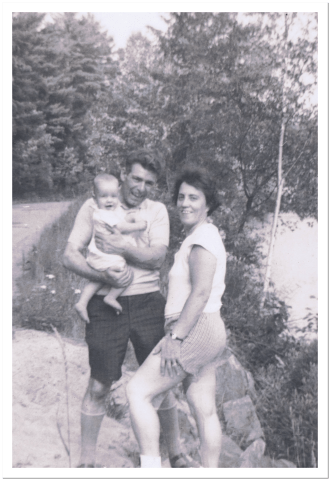
Frank and Phyllis with son Graham taken by author north of Toronto 1963.

Not long after arriving she met Frank McBride and they were married in September 1961.  Frank was a Scot via Merseyside and, like Phyllis was a recent arrival.

Two years later she encouraged my parents to send me to Toronto for the summer where I spent the time between Aunt Phyllis’ and Uncle Alf’s family. When Phyllis was not working she took me and her young son Graham on many trips around the city, memorably to see a live stadium-show of The Three Stooges and my first cinema experience seeing Danny Kaye in the comedy “The Man from the Diner’s Club”.  At weekends we all travelled out of the city, to Niagara Falls, Muskoka Lakes, and up to the annual Davis reunion near Orangeville, among other destinations.

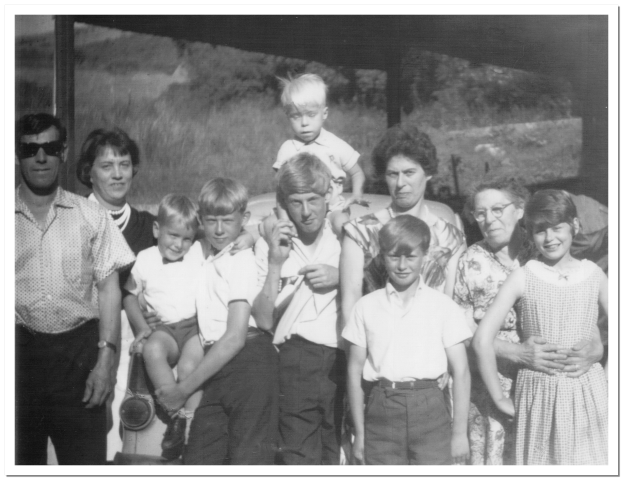
Cecil (brother), Phyllis, Graham (son), Ivor, author with Phyllis’s son Ian on shoulders, Ena (sister), Nigel (front, Annie (mother) and Elaire 1962 at Larkfield farm.

Using her first Brownie box camera Phyllis left a great store of photographs. Many of the ones used in this series of stories dating from the 1950s are most likely hers, and with others they provide a great family record of that time. Over the many visits she made back to Ireland we are grateful to Phyllis for corralling us into family photographs which would otherwise not have been taken.  The one above is typical and was taken on the family’s visit to Larkfield about 1972, behind is the hay shed and almost hidden is Cecil’s Skoda car.

END

Alf Davis

During 1947 and 1948 three Davis siblings left the Boggaun farm, Ena, Phyllis and Alf. Alf was nineteen when he departed and was to make the longest journey to what became his new home. I knew my aunts and uncles to varying degrees. Those who settled in Ireland I knew best and the others less so, only meeting them occasionally over the years. Alf left Ireland before I was born and my first memories of him were on his visits home.

Alf with his mother Annie, from a family photograph circa 1935, taken outside the Larkfield farmhouse at Boggaun., Co Leitrim.

Born in 1929 Alf grew up on the farm and worked hard in those lean years when the family finances were severely stretched. He left Masterson National School at about thirteen to spend a few years on the farm before going out to work in T.R. Armstrong’s hardware shop on Main Street in Manorhamilton.   Four years later he was making plans for the long emigrant’s journey to Canada. Unfortunately, he just missed the excitement of the town’s first cinema. It was opened by the same T.R. Armstrong bringing novel picture house entertainment which my mother and her contemporaries regularly enjoyed.

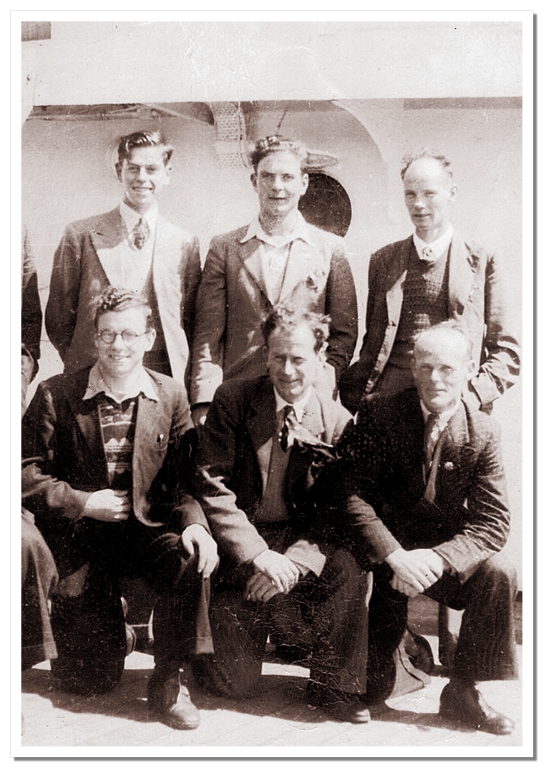
In 1948 Alf, full of trepidation and excitement, was photographed with several Manorhamilton friends onboard a ship leaving Liverpool for Canada. His parents aware of the harsh reality of Ireland at that time encouraged him to go despite reluctant parental bonds. When he landed on America’s shore Alf made his way to Toronto.

Toronto had been the destination of Alf’s Great-uncle Thomas, the first Davis born at Boggaun to emigrate there 1861. He claimed a pioneer’s plot at Amaranth, north of Toronto, clearing forest for farming land; Thomas’ brother John, a Methodist preacher left for the same region two years later, although he finally settled in Iowa. A generation later Alf’s Uncle Thomas emigrated to Toronto in 1886 where the family prospered in the newspaper and real estate business.  They all remained in contact with their Boggaun roots. Other families from the Manorhamilton area had also settled there making it an attractive destination for the new arrival.

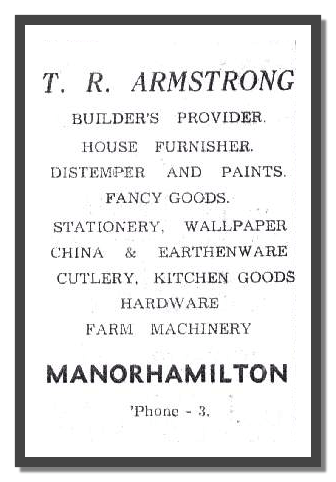
Advert fot TR Amstrong’s hardware shop, Alf’s first employer.

Alf first worked in a menswear shop but within a few years, through hard work and ambition, he had set up Alf’s Menswear store on The Queensway.

Libby Smyth, originally from Derry, married Alf in 1952.  As their family grew and the business thrived, they bought a farm near Shelburne, north of Toronto, with friends Elward and Jean Burnside – the Burnside and Davis families in Canada are related.  Alf and his family spent working weekends at the farm, an echo of his upbringing, although not all looked forward to the end of the week.

While Alf returned home many times, at first on his own and then with his family, he probably felt at more and more at a remove from his early years at Boggaun. He carried a quiet generous way about him. When Alf first visited us in our Ballymena home, the tall stranger with a deep voice and strange accent, brought a suitcase of clothes for us; two little bomber jackets for my brother and I kept us stylish for months.

In the summer of 1963, I arrived at Toronto’s Pearson International Airport in sweltering heat wearing my heavy black school blazer and grey trousers. At the age of twelve I had travelled across the Atlantic on a Boeing 707, a substitute for my mother and father, unable to take time off for a summer visit. I was collected at the airport by Uncle Alf and my cousins. In the spacious back seat of the big car, with the warm air blowing through the windows, I was stripped of the heavy layer and then a stop at Alf’s Menswear store turned me into more suitable shorts and T shirt, followed by my first taste of ice-cold coke.

Alf, back left, with friends from Manorhamilton on route from Loverpool to Canada in 1948.

Ten years later as working students, three friends and myself, spent a summer picking tobacco on a southern Ontario farm. Flying into New York, we had arranged to drive to Toronto on a return-delivery before starting work – this was a cheap way to get around North America at the time.  We were welcomed by Alf and his family and spent a few days around the city.  

Alf generously offered to take us on the two hour drive to the tobacco farm. Leaving the city on the 12-lane Gardiner Expressway we sped west for miles along the populated north shore of Lake Ontario. With the city of Hamilton and Lake Ontario behind us we drove south through rich summer farmland. An hour later we headed out of Tillsonburg on dusty flatland dirt roads towards the shore of Lake Erie, finally arriving at the red clapperboard homestead of Marty Weiss, its high wooden drying kilns and large barns set in a wooded landscape.

Many Canadians visited their ancestral home at Boggaun over these years, but returning children got special treatment. When Alf and his family were due Granny led great efforts to make ready the house and farm in welcome; road and garden gates were painted, as were window frames and doors, yards were tidied and cleaned, the garden weeded.

But sometimes events would thwart her enthusiasm.  On one such occasion when the street around the back door had been cleaned and scrubbed, a large creamery can of fresh milk was accidentally spilt by the farm help who was hung over from the previous night’s revelries. Seeing her clean yard white with milk, Granny lashed him with her tongue and the unfortunate man fled the street threatening to do away with himself. He was found lying up on a dry ditch in the Well Meadow by my mother, Ena, who took the good part of an hour to talk him back to the yard. And tensions went higher when a beautiful salmon tickled out of the Bonet River, plated on the deep sill of the slightly-opened parlour window, was found with the upper side missing after a cat squeezed in to devour it.

Alf Davis and his brother Wallace were the only ones in their Boggaun family to carry the name forward, and after three generations of emigration to Canada most descendants carrying this Davis name are now Canadians.

END

Reco

Reco (Richard) Davis was born in 1921 and died in 2011. He was the eldest surviving son of Richard and Annie Davis born at Larkfield, Boggaun, County Leitrim.  Other than his brother Cecil, who would remain on the farm throughout his life, he was the last of his generation to leave.

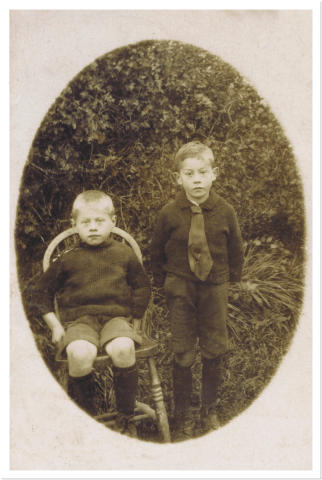
Reco and brother Herbie, a school photograph circa 1930.

I first remember Uncle Reco in the kitchen at Larkfield, a day’s work done, his elbows on his knees, talking over some story or other, thumb dancing around the end of a cigarette cupped in his big hand, skimming ash to the floor, flicking the butt to the open fire.

As a young boy he looked up to his older brother Herbie, who seemed to be his father’s favourite. Herbie and Reco left school in the early 1930s to work on the farm, taking on more responsibilities than they already had. A few years later just after they had gone out to work, bringing in much needed funds to the cash-strapped household, Herbie contracted diphtheria.

A doctor attended Herbie, but his condition continued to worsen.  After weeks of nursing he suddenly became gravely ill and Reco was sent off on the horse and cart to Manorhamilton with express instructions not to return without the doctor. Their doctor refused to come saying that he could do nothing more. A short time after Reco’s return Herbie died. Traumatic as this must have been for Reco, that time was seared in the memory of all the family.

Jack (John) and Reco with their cousin Corrie Gillmor circa 1940.

Reco, now the eldest, continued to work with the family horse and cart on the Land Commission’s construction of the Rock Road, the only significant local employer at that time. Like his father he took on ploughing and mowing grass in the area and he became known as a skilled ploughman. He would maintain a love of horses and horse breeding throughout his life.

In the early 1900s the family bought a neighbouring hill farm from the landlord of Frank McLoughlin, “Frank’s Ground” they called it. Frank lived there until his death and in the early in 1950s the house and outbuildings were scavenged for stone, carted down to Larkfield by Reco and Cecil to build a new cow byre. This was no great distance but the steep climb up and down through untracked fields was not without challenge and mishap. The stone was loaded and unloaded by hand. Reco and Cecil were brought up with such heavy work, the lot of the farmers at that time.

His marriage was arranged by his parents, at a time then this custom was coming to an end. Reco had been going out with a local girl but his mother did not approve of the union. With high rates of emigration, a wife was difficult to find. It is likely that the match was arranged through his Grandmother’s family, Grahams from County Sligo. Reco was introduced to Dorothy McElroy and in 1957 they married in Ballymote Parish Church. Reco moved from Boggaun and they settled into Dorothy’s family farm at Woodhill near Bunnanadden in County Sligo.

“What kind of a farm did Reco get?” neighbours would ask, and if the question was ever answered directly it was,

“A farm of good Sligo land, better than what he left.”

Reco and Dorothy circa 1970.

Reco’s was dedicated to Dorothy and with long days and hard work they built up a small dairy herd and improved their farm significantly; there were no children. Ned Stenson, hired to the farm before Reco arrived, was to become his lifelong friend and helper, remaining at the Woodhill farm until his death.

On and off the farm Reco was valued for his judgement and wisdom. When he retired, he passed the farm over to his niece and her husband, Isabel and John and he lived out the rest of his life amid the hurly-burley of their growing family.

End

Notes.

There are a number of previous blogs that relate to this story. Two links are provided in the text above: firstly, on the short life of Herbie Davis and secondly on Reco and the construction of the Rock Road, Connor’s Line”.

Leaving home.

The next series of blogs will focus on my mother and her siblings as they outgrew their Boggaun home, Larkfield, in County Leitrim and moved away. Growing up in Ireland in the 1930s and 1940s offered little by way of opportunity and like the previous two generations of Davises born here, many would emigrate.  This piece is by way of an introduction.

Author with Granny Davis circa 1954.

The regular visits of my brothers, sister and myself to our grandparent’s farm at Boggaun were formative.  We were captivated by the place, and for a few years the confines of the farm were a limitless space to play in and to explore, where grandparents and uncles lavished us with attention. As we got older and began to help around the house and farm, moving further afield, we were to discover that north County Leitrim was remarkably different from our home, the busy market town of Ballymena.   

On tip toes at the kitchen window, you could look down and count the few cars on the main Manorhamilton to Carrick-on-Shannon road, perhaps watching out for Granny returning off the bus from her weekly shopping trip. A bike ride to McNulty’s shop in Killargue encountered few cars, or people. Sometimes it seemed as if we had the place to ourselves. Indeed we saw very few other children, neither in neighbouring houses nor in the family circle.

Other than Manorhamilton, the towns were small and drab, and full of pubs, we were told. On Sundays the congregation at Manorhamilton Parish Church was very small, even with a scattering of summer visitors like ourselves; the brave voices from the pews easily countering the small choir.

The farmhouse had no running water and no inside toilet.  There was a “long drop” toilet down in the haggard, which the men never seemed to use, and which was flushed by seasonal floodwater in an underground drain. Everything was more basic, simpler than we were used to.

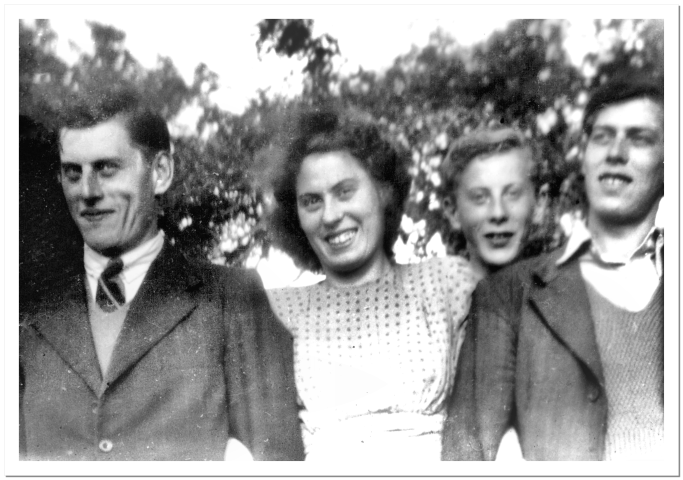
Reco, Ena, Jack and Cecil Davis circa 1945

When my mother and her siblings grew up during the 1930s and 1940s there were many other young families in Boggaun and neighbouring townlands: the McManus’, Fitzpatricks, McGoortys, McTigues, Gaffneys and others. The children of these families were their friends. They knew their farms and farmhouses and walked together to National School.  With no education beyond primary level many of the family stayed there as long as they could, and only Phyllis and Jack went on to secondary school, “The Tech”, when it opened in Manorhamilton in 1935.

It was a tough time to be setting out on life.  With few rural jobs and no transport to employment in the larger towns of Carrick on Shannon or Sligo, many from these townlands left home and emigrated. And during these years the Davis family had their own financial problems, living on the edge of bankruptcy when the farm was regularly put up for sale by a bank seeking repayment.

During these years Leitrim was emptying; abandoned hill farms, where dauby gley soils yielded little for the years of backbreaking work; lonely farmhouses occupied mostly by the elderly and single men; a damp drumlin land seeping emigrants.

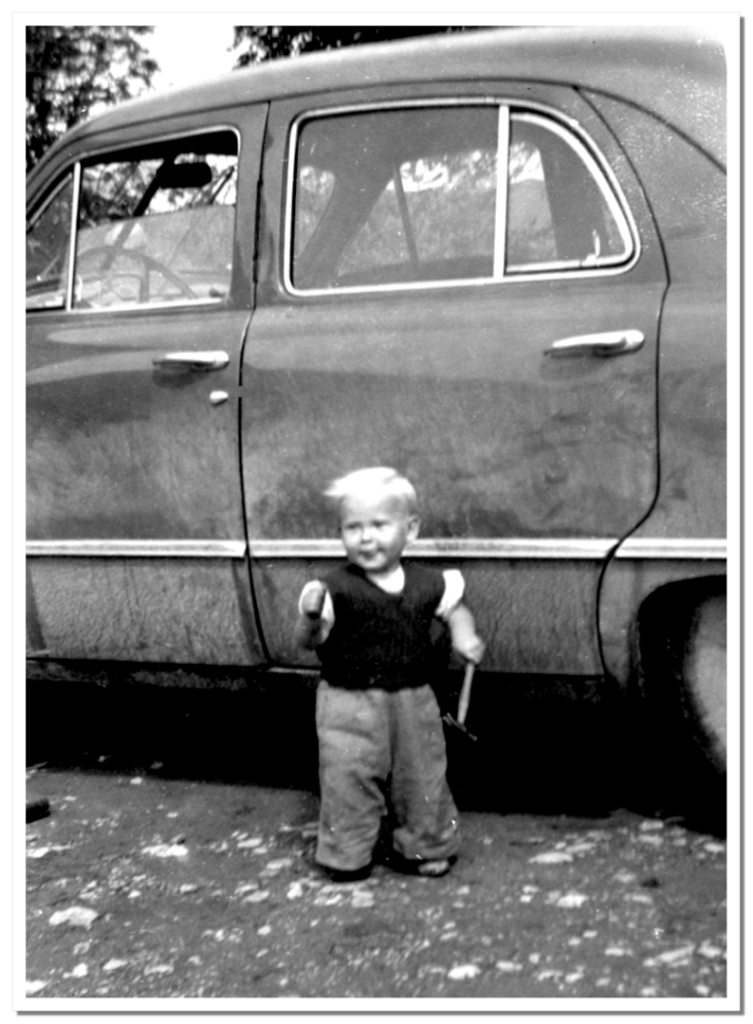
Ivor, author’s brother learning to use a hammer at Larkfield.

By the time we were playing around Larkfield, only Granny, Granda and Uncle Cecil remained. The others, Reco, Wallace, Alf, Phyllis, Jack and Ena, my mother, had gone, or were leaving to new lives.

They may have felt pushed by their parents, or lured by distant opportunity, or both, but despite their love for family and home they had little choice.

I don’t know how much of this we sensed at the time, but as the car bumped down the lane on our return to Ballymena we were often heavy and tearful, looking out the back windows waving at the solitary figures of Granny and Uncle Cecil at the gable of the farmhouse, their arms raised in farewell, until we could no longer see them through the thickening roadside trees and hedges.

End

Granda’s Riddle

My Grandfather, Richard Davis left behind an unsolved riddle, the answer to which should uncover the 18th century roots of his family. Before the advent of radio and TV, riddles were a popular source of entertainment. I have included one told in the Davis household of that time.

A group including my mother, then Ena Davis, centre right, likely taken by her sister Phyllis aroung 1945.

Elward Burnside, a Canadian cousin, was working on a Davis family genealogy when he met my grandfather in the 1950s.  Richard became one of his primary sources. Years later when Elward heard that I had an interest in the family’s past he sent me part of his original material, including some handwritten notes, wherein lies the riddle.

Elward’s brief notes are from an undated interview with Richard and include the lines:

“Grandfather John Davis born about 1803 had brothers Abraham and Robert

Richard named after a brother of his father Richard Abraham

Had lots of property in Northern Ireland, Antrim

Illegitimate

Father could have fought for the property but stood to lose everything. Grand uncle pulled yoke? out of sled to keep from partner”

While some of this is consistent with fact, most of it is obscure. There are, however, some intriguing resonances with another Davis family living in the north Leitrim area at that time.

In his final document Elward did not include or comment on the potential import of “illegitimate” or “could have fought for property”. However, here surely are the bones of a story of sex, money and power in the late 1700s.  With some more research and a little luck, hopefully the riddle will be solved.

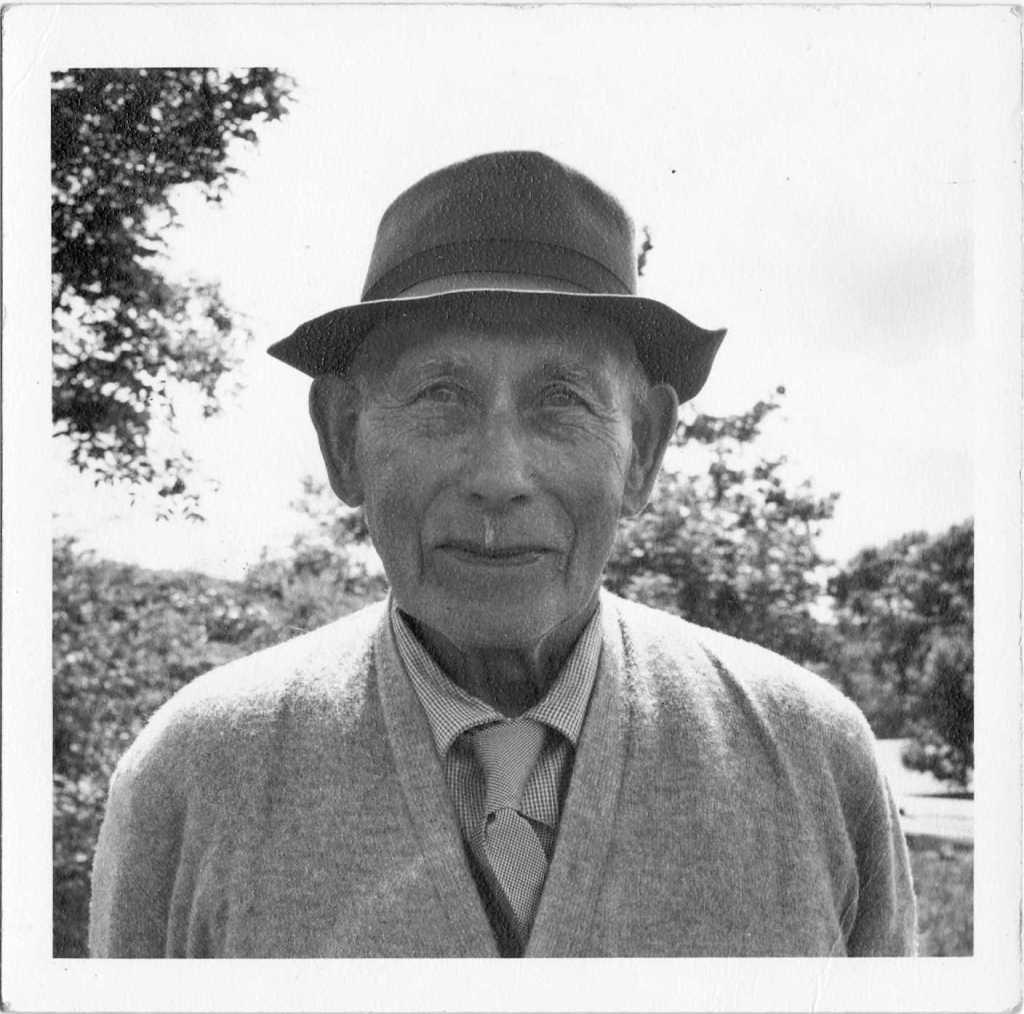
Richard Davis circa 1960.

Here is a simpler riddle taken from the Davis contribution to The Schools Collection, 1937:

In comes two legs carrying the one leg

Lays it down on three legs

In runs four legs snatches up the one leg

Back comes two legs snatches up the three legs

Throws it after four legs to get back the one leg. 

What is it?


Answer. A man comes into his house with a leg of mutton and lays on a three-legged stool. A dog runs in and steals the leg of mutton. The man returns, picks up the stool and throws it at the dog, to get back the leg of mutton.

End

Richard Davis, Boggaun, Part 2.

The Davis family in Glenboy and Boggaun, had been known for their activity in the Orange Order, and for their determined opposition to Home Rule and impending Independence.  When the events of First World War and the Easter Rising overtook the gradual political change, their opposition, like that of the Protestant community generally, melted away.

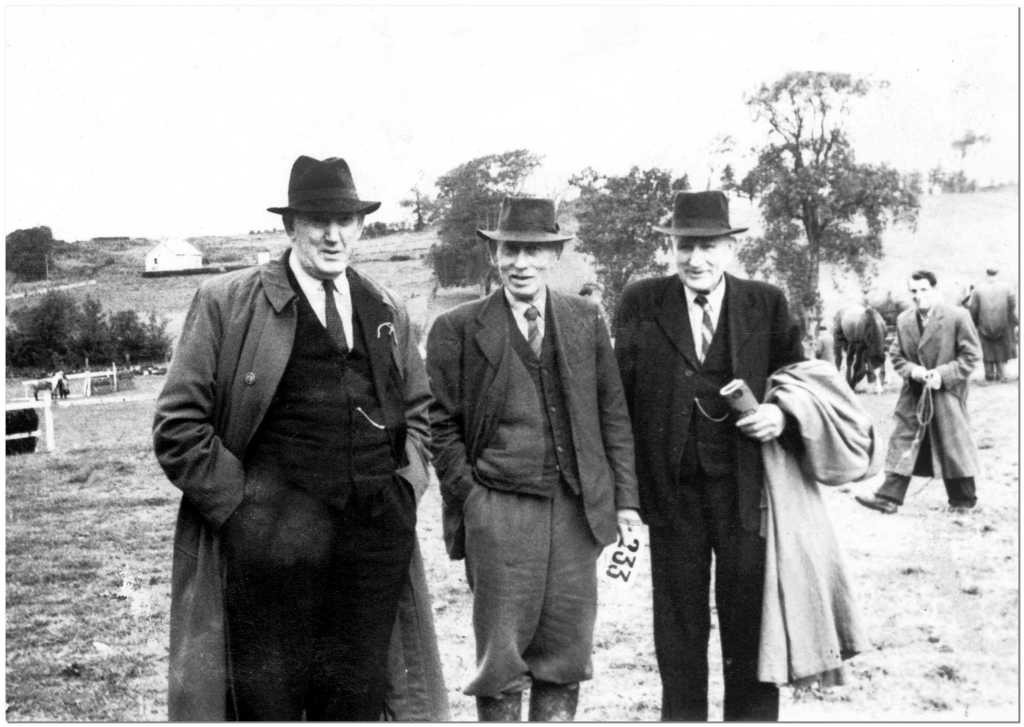
Richard Davis, middle, and friends at the Manorhamilton Agricultural Show circa 1959.

There is no doubt that Richard and his family, certainly harbouring reservations, threw their lot in with the new Irish state. Throughout the worst of the turbulent and uncertain times they emerged relatively unscathed and were targeted on only one occasion by an IRA group searching for guns.

In the fifteen years up until 1926, the Protestant population in Co Leitrim fell by almost a third, compared to just over five percent in the Catholic population, although there is no single factor that can explain the decline. While a good number left for nearby Co Fermanagh, many, like the Davises who had put down deep roots, probably felt, on reflection that they did not belong anywhere else.

A significant factor in the fortunes of the Davis family at this time, was Richard’s response to the collapse of his cattle shipping business, precipitated by his runaway business partner. He decided to pay all debts owed to his farmer suppliers at whatever personal cost.

This engendered considerable sympathy and support for the family, and the wider community saw to it that Richard and his family would not be evicted by the Bank seeking payment. Each year when the Bank re-advertised the farm’s sale, there was the same staunch refusal to bid. Given the families recent Orange activism such widespread community support and generosity must have been affirming, and humbling. And the community would rally round again some years later during another family tragedy when Herbie, Richard’s favourite son, became ill and died from diphtheria.

He had been comfortable borrowing from banks to buy land and for his business, but now Richard was now forced to sell. He disposed of one farm and cut spending to the bone; the family tightened their belts, and depended on what they had historically relied on, their labour, paying the bank whatever they could. When Reco, in 1939, at sixteen years of age went out to work drawing stone with their horse and cart, it marked the turning point in the family’s fortunes.

Despite his difficulties during the 1920s, Richard stood in the Leitrim Council election of 1926, proposed, and seconded by his neighbours, James Maguire and James MacGowan. He canvassed under the Ratepayers Defence Association, focusing on taxation and farming issues. The party would later, through a series of moves merge into the centre right party, Fine Gael. He polled a significant number of first preference votes but was eliminated on the 10th count.

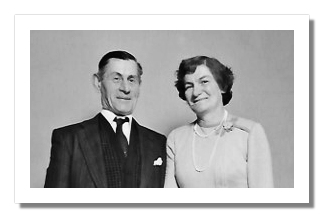
Richard and Annie Davis circa 1960.

My grandmother, Annie with more middle-class aspirations – and the backbone of family in that time of turmoil, as Richard readily acknowledged – was forced to give up any hopes of a Sligo Grammar education for her seven children. The hoped for jump out of their small farmer, peasant roots, although she would never have entertained such a description, was now abandoned.  Their neighbours remarked that with Annie’s support, Richard remained surprisingly calm through this lean and stressful time.

—00—

Granda took me to fair days, showed me off on the counters of crowded pubs, then with a bottle of Cidona, left me, temporarily forgotten amid dark trousers and wellington boots. Above the clink of glasses, as mediums of stout eased the humid talk of cattle and weather; boots shuffled in the white sawdust on the floor, turning it the colour of cow dung.

He introduced me to the world of men and made me feel at home amid the work and clabber of the farm; told me stories of his encounters with the fairies up at the gap into Frank’s ground, his horse and cart stuck, leaving saucers of milk in return for their favour.

When he died in the winter of 1961, I remained at home with my aunts, sensing exclusion from some vital event, while my mother and her family grieved, waked and buried my grandfather in the graveyard of Manorhamilton Parish Church, within the walls of the fortified seventeenth century garrison.

Ends

Notes

1.  The Davis lease of the 47 acre farm at Bogguan is first noted in the Griffith’s Valuation (1856-57), and it was here that the brothers James – Richard’s father – and Thomas Davis moved from nearby Glenboy where they were born on an 18 acre farm. The Boggaun farm was purchased in 1901. The neighbouring farm of Frank McLoughlin, of 23 acres was purchased in 1907, and that of Pat Lonegan, of about 20 acres in the 1940s, when Richard’s bank debts had been settled. Richard put at least one farm up for sale in 1934, but it may not have been sold. In the context of Irish agriculture and the land quality in that part of Leitrim, the Davis farm in the 1920s was probably above average size but not particularly large.

2  “Protestant and Irish, The minority’s search for place in independent Ireland.” ed Ian D’Alton and Ida Milne. A good reference to this period of change, particularly the introduction, Content and Context, and Chapter 3, Defining Loyalty, 1926-30, Brian Hughes.

Richard Davis, Boggaun.

These next few blogs tell a little of the story of my Grandfather, Richard Davis (1882-1961). He died when I was ten. I recall what others told of him, and some discoveries I have unearthed.

Richard with his grandson (author) circa 1959.

I was his first grandchild. He sat me on his knee, on his coarse woollen trousers, and gave me bread with sugar. He smelled of tobacco, and turf smoke, sitting by the open fire with its hanging blackened kettle. I watched intently as he filled his pipe with rubbed plug tobacco, an index finger bent with Carpal Tunnel, but made for the purpose, I thought.

In my Ballymena family I was surrounded by the busy lives of women. Granda’s farmhouse in Leitrim was very different. Outside, Reco and Cecil, his remaining sons, worked, argued, smoked and cursed; strong young men, they turned from no task. In the evenings in the small crowded kitchen, they told stories, laughed and flicked their cigarette butts like bullets into the glowing fire, their boots scrapping off the stone flag floor. On weekend evenings and Sundays, they were gone.

I saw in him occasional flashes of anger and frustration, perhaps sensing his failing strength or lost dreams, saw pride in his farm and stock; a working man in his late 70’s who dressed up for a fair day and Sunday church.

His time was almost gone then and not long after my 10th birthday he was dead. In those short years we had developed a bond that would connect his distant past to my present.  I knew nothing then of the tribulations of his life or of the monumental changes he had lived through.

—00—

Richard was born thirty five years after the worst ravages of the Famine; the Protestant Ascendancy was in decline; land laws were changing rapidly and tenants would for the first time be able to purchase land; political and Land League agitation grew, and violence increased; then came the Easter Rising, the War of Independence and the Civil War marking the height of the turmoil; the British left and new independent Ireland became culturally Gaelic and Catholic, women having a vote for the first time; and not 25 miles away from Richard’s Boggaun farm, the border with Northern Ireland marked the boundary to the new Protestant state. It was a period of rapid change, full of uncertainty and challenges for Richard and his family.

The Davis family were descendants of C17 planters who serviced the stranded enclave of the Manor of Hamilton; a buffer against the colonised natives. As small tenant farmers they depended on their labour and the sale or barter of their produce, while their advantaged position yielded opportunity, most often taken to accrue land. However, in 1852 they did not have enough property to vote in the election of that year, after which the male franchise was significantly expanded.

Richard’s home place at Boggaun was first leased by his grandfather, during the time of the potato Famine, probably when the family of Patrick McKay emigrated or dwindled to just Patrick, who remained there as sub-tenant until his death in the late 1800s. This was typical of the time when the multitude of very small farms, growing potatoes and oats, were abandoned or subject to eviction, to be taken up by those with spare resources and an eye to an opportunity.

Richard and Annie Davis on their wedding day November 1918

When John, Richard’s eldest brother acquired a similar farm in Garradice in south Leitrim 30 years later, he was boycotted, sentiment having turned against those who were then seen as “land grabbers”; these boycotts were organised by the Land League, seeking to achieve a more equitable system of land distribution.

In changing circumstances, Richard would continue to purchase small farms whenever he could, until misfortune changed the path of his life.

Continues next blog.