Reco

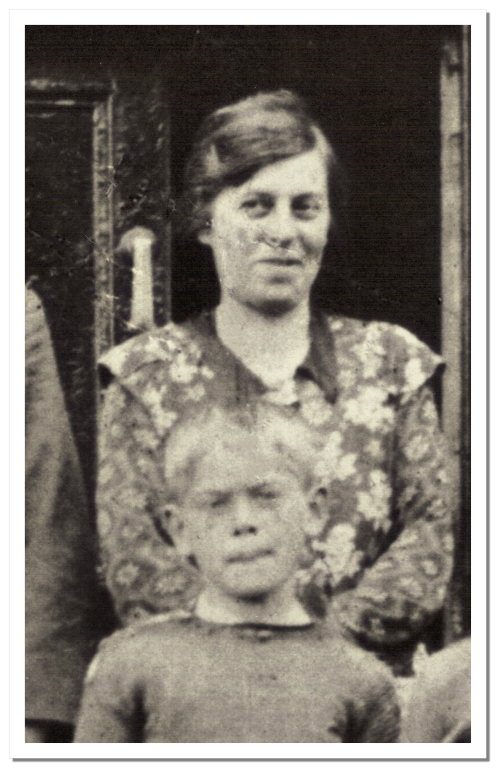
Reco (Richard) Davis was born in 1921 and died in 2011. He was the eldest surviving son of Richard and Annie Davis born at Larkfield, Boggaun, County Leitrim.  Other than his brother Cecil, who would remain on the farm throughout his life, he was the last of his generation to leave.

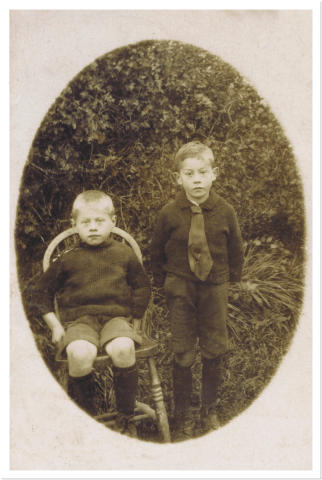
Reco and brother Herbie, a school photograph circa 1930.

I first remember Uncle Reco in the kitchen at Larkfield, a day’s work done, his elbows on his knees, talking over some story or other, thumb dancing around the end of a cigarette cupped in his big hand, skimming ash to the floor, flicking the butt to the open fire.

As a young boy he looked up to his older brother Herbie, who seemed to be his father’s favourite. Herbie and Reco left school in the early 1930s to work on the farm, taking on more responsibilities than they already had. A few years later just after they had gone out to work, bringing in much needed funds to the cash-strapped household, Herbie contracted diphtheria.

A doctor attended Herbie, but his condition continued to worsen.  After weeks of nursing he suddenly became gravely ill and Reco was sent off on the horse and cart to Manorhamilton with express instructions not to return without the doctor. Their doctor refused to come saying that he could do nothing more. A short time after Reco’s return Herbie died. Traumatic as this must have been for Reco, that time was seared in the memory of all the family.

Jack (John) and Reco with their cousin Corrie Gillmor circa 1940.

Reco, now the eldest, continued to work with the family horse and cart on the Land Commission’s construction of the Rock Road, the only significant local employer at that time. Like his father he took on ploughing and mowing grass in the area and he became known as a skilled ploughman. He would maintain a love of horses and horse breeding throughout his life.

In the early 1900s the family bought a neighbouring hill farm from the landlord of Frank McLoughlin, “Frank’s Ground” they called it. Frank lived there until his death and in the early in 1950s the house and outbuildings were scavenged for stone, carted down to Larkfield by Reco and Cecil to build a new cow byre. This was no great distance but the steep climb up and down through untracked fields was not without challenge and mishap. The stone was loaded and unloaded by hand. Reco and Cecil were brought up with such heavy work, the lot of the farmers at that time.

His marriage was arranged by his parents, at a time then this custom was coming to an end. Reco had been going out with a local girl but his mother did not approve of the union. With high rates of emigration, a wife was difficult to find. It is likely that the match was arranged through his Grandmother’s family, Grahams from County Sligo. Reco was introduced to Dorothy McElroy and in 1957 they married in Ballymote Parish Church. Reco moved from Boggaun and they settled into Dorothy’s family farm at Woodhill near Bunnanadden in County Sligo.

“What kind of a farm did Reco get?” neighbours would ask, and if the question was ever answered directly it was,

“A farm of good Sligo land, better than what he left.”

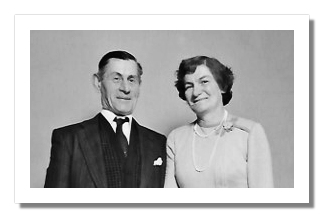
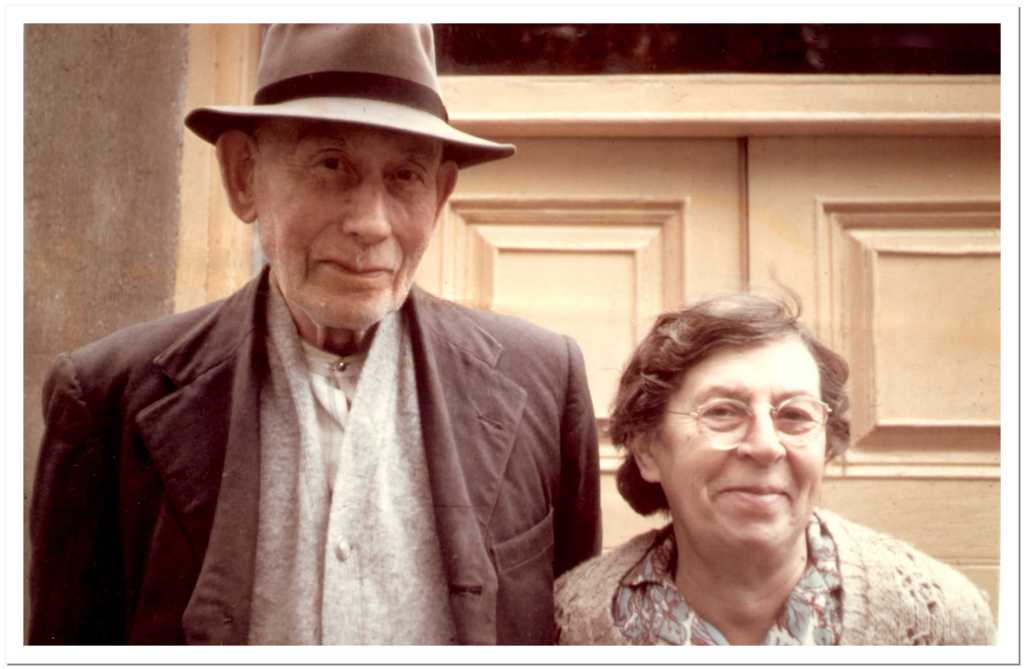
Reco and Dorothy circa 1970.

Reco’s was dedicated to Dorothy and with long days and hard work they built up a small dairy herd and improved their farm significantly; there were no children. Ned Stenson, hired to the farm before Reco arrived, was to become his lifelong friend and helper, remaining at the Woodhill farm until his death.

On and off the farm Reco was valued for his judgement and wisdom. When he retired, he passed the farm over to his niece and her husband, Isabel and John and he lived out the rest of his life amid the hurly-burley of their growing family.

End

Notes.

There are a number of previous blogs that relate to this story. Two links are provided in the text above: firstly, on the short life of Herbie Davis and secondly on Reco and the construction of the Rock Road, Connor’s Line”.

Leaving home.

The next series of blogs will focus on my mother and her siblings as they outgrew their Boggaun home, Larkfield, in County Leitrim and moved away. Growing up in Ireland in the 1930s and 1940s offered little by way of opportunity and like the previous two generations of Davises born here, many would emigrate.  This piece is by way of an introduction.

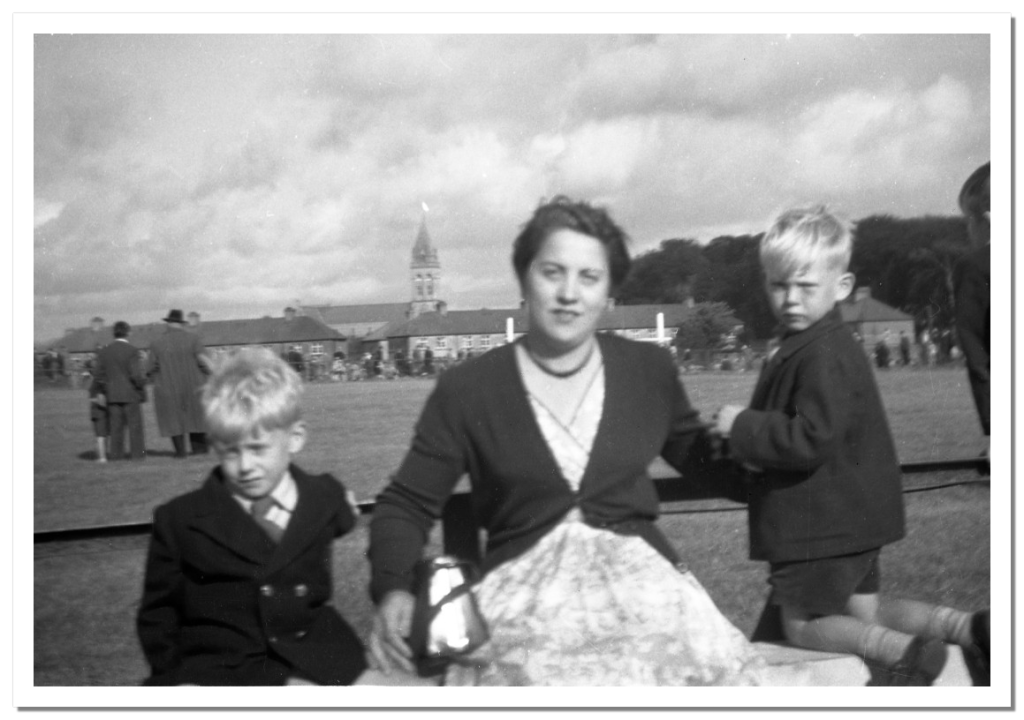
Author with Granny Davis circa 1954.

The regular visits of my brothers, sister and myself to our grandparent’s farm at Boggaun were formative.  We were captivated by the place, and for a few years the confines of the farm were a limitless space to play in and to explore, where grandparents and uncles lavished us with attention. As we got older and began to help around the house and farm, moving further afield, we were to discover that north County Leitrim was remarkably different from our home, the busy market town of Ballymena.   

On tip toes at the kitchen window, you could look down and count the few cars on the main Manorhamilton to Carrick-on-Shannon road, perhaps watching out for Granny returning off the bus from her weekly shopping trip. A bike ride to McNulty’s shop in Killargue encountered few cars, or people. Sometimes it seemed as if we had the place to ourselves. Indeed we saw very few other children, neither in neighbouring houses nor in the family circle.

Other than Manorhamilton, the towns were small and drab, and full of pubs, we were told. On Sundays the congregation at Manorhamilton Parish Church was very small, even with a scattering of summer visitors like ourselves; the brave voices from the pews easily countering the small choir.

The farmhouse had no running water and no inside toilet.  There was a “long drop” toilet down in the haggard, which the men never seemed to use, and which was flushed by seasonal floodwater in an underground drain. Everything was more basic, simpler than we were used to.

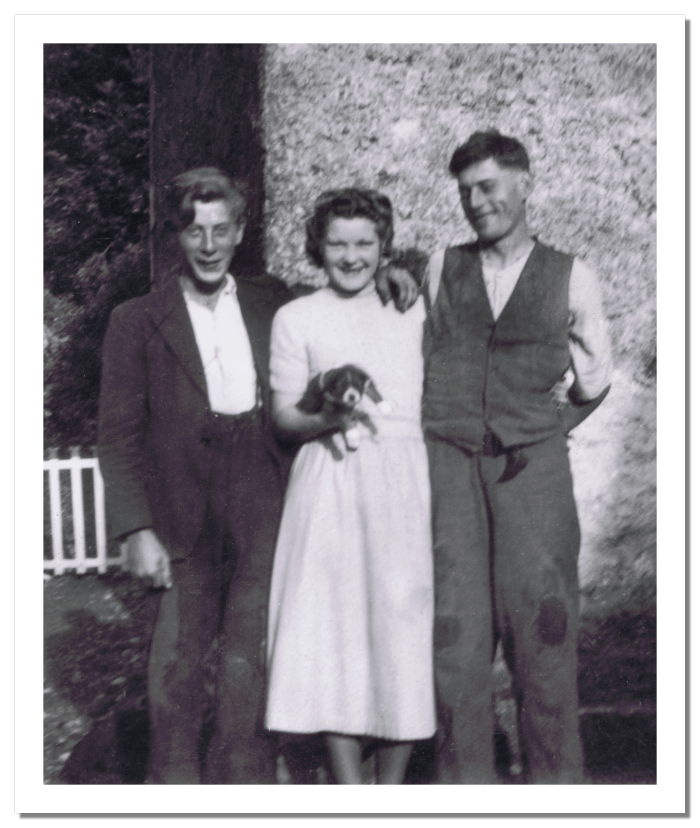
Reco, Ena, Jack and Cecil Davis circa 1945

When my mother and her siblings grew up during the 1930s and 1940s there were many other young families in Boggaun and neighbouring townlands: the McManus’, Fitzpatricks, McGoortys, McTigues, Gaffneys and others. The children of these families were their friends. They knew their farms and farmhouses and walked together to National School.  With no education beyond primary level many of the family stayed there as long as they could, and only Phyllis and Jack went on to secondary school, “The Tech”, when it opened in Manorhamilton in 1935.

It was a tough time to be setting out on life.  With few rural jobs and no transport to employment in the larger towns of Carrick on Shannon or Sligo, many from these townlands left home and emigrated. And during these years the Davis family had their own financial problems, living on the edge of bankruptcy when the farm was regularly put up for sale by a bank seeking repayment.

During these years Leitrim was emptying; abandoned hill farms, where dauby gley soils yielded little for the years of backbreaking work; lonely farmhouses occupied mostly by the elderly and single men; a damp drumlin land seeping emigrants.

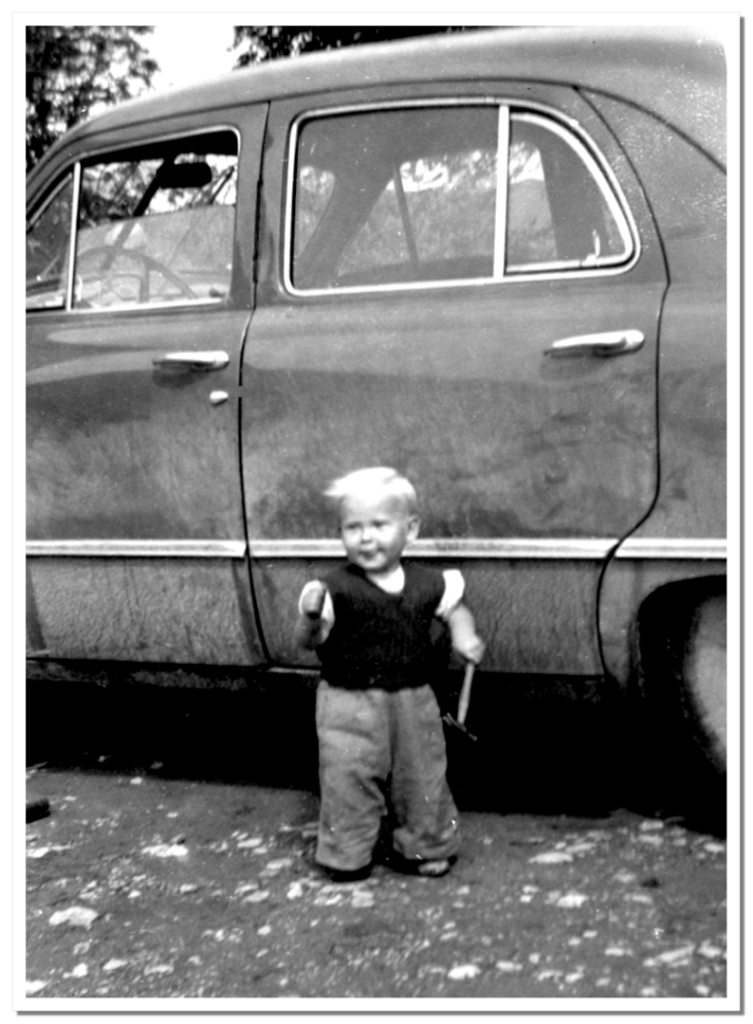
Ivor, author’s brother learning to use a hammer at Larkfield.

By the time we were playing around Larkfield, only Granny, Granda and Uncle Cecil remained. The others, Reco, Wallace, Alf, Phyllis, Jack and Ena, my mother, had gone, or were leaving to new lives.

They may have felt pushed by their parents, or lured by distant opportunity, or both, but despite their love for family and home they had little choice.

I don’t know how much of this we sensed at the time, but as the car bumped down the lane on our return to Ballymena we were often heavy and tearful, looking out the back windows waving at the solitary figures of Granny and Uncle Cecil at the gable of the farmhouse, their arms raised in farewell, until we could no longer see them through the thickening roadside trees and hedges.

End

Granda’s Riddle

My Grandfather, Richard Davis left behind an unsolved riddle, the answer to which should uncover the 18th century roots of his family. Before the advent of radio and TV, riddles were a popular source of entertainment. I have included one told in the Davis household of that time.

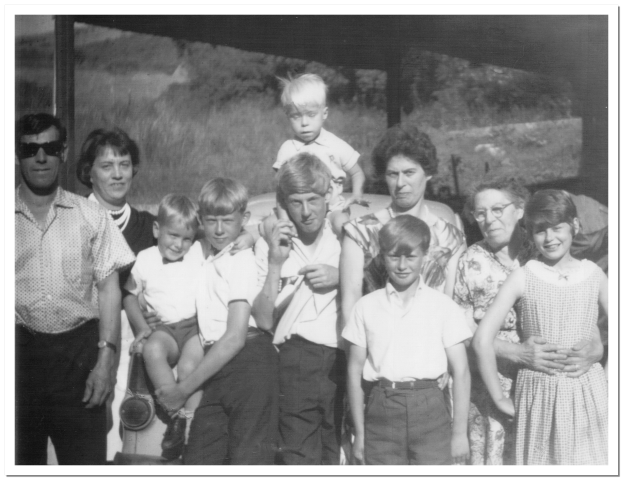
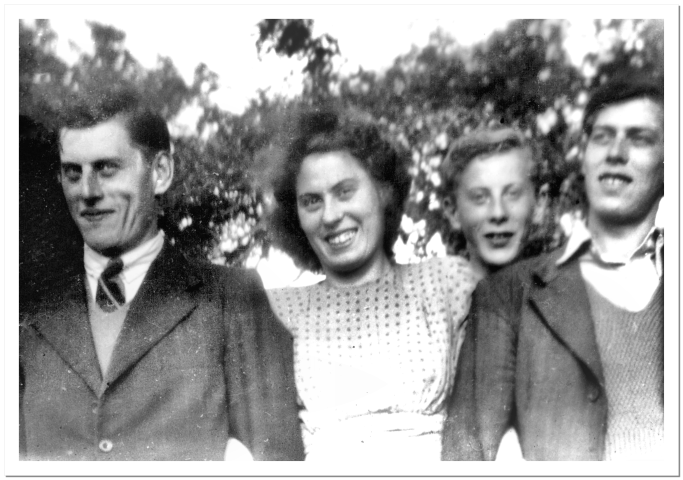
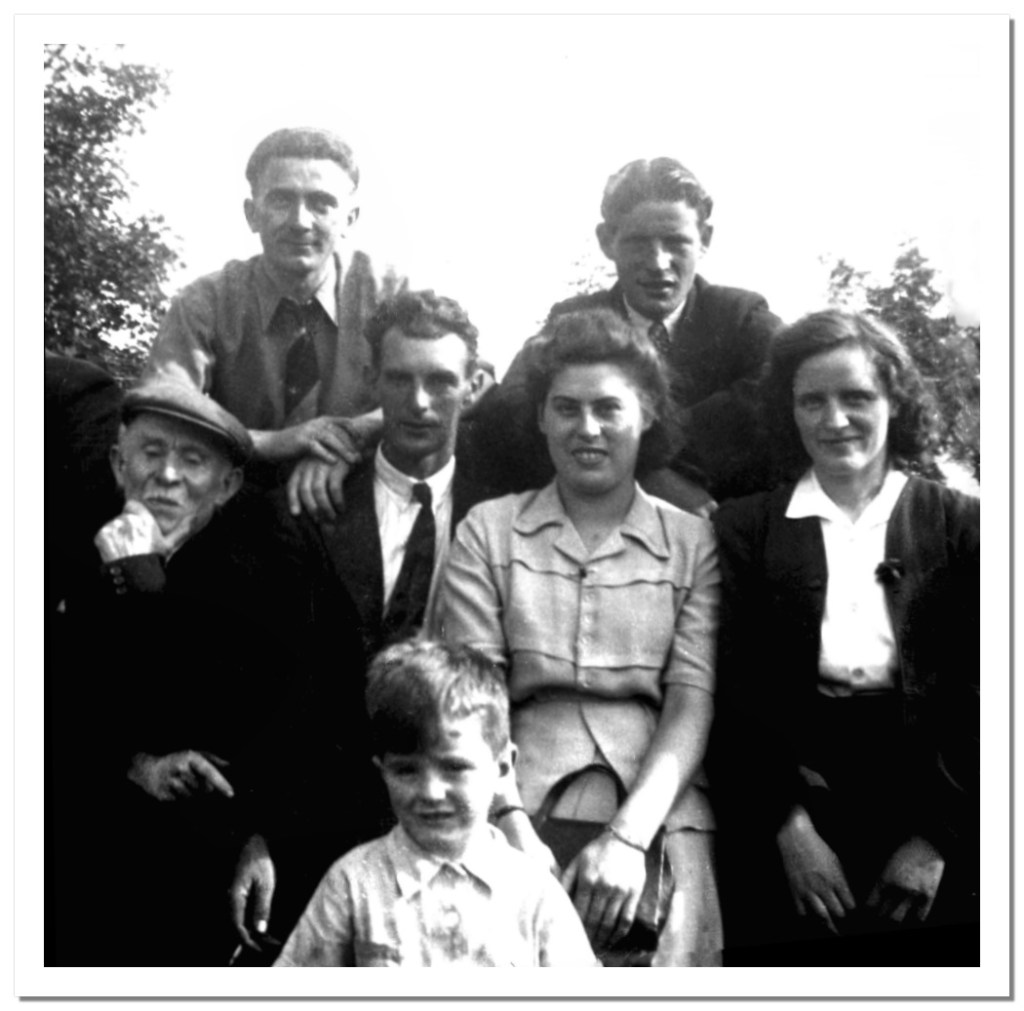
A group including my mother, then Ena Davis, centre right, likely taken by her sister Phyllis aroung 1945.

Elward Burnside, a Canadian cousin, was working on a Davis family genealogy when he met my grandfather in the 1950s.  Richard became one of his primary sources. Years later when Elward heard that I had an interest in the family’s past he sent me part of his original material, including some handwritten notes, wherein lies the riddle.

Elward’s brief notes are from an undated interview with Richard and include the lines:

“Grandfather John Davis born about 1803 had brothers Abraham and Robert

Richard named after a brother of his father Richard Abraham

Had lots of property in Northern Ireland, Antrim

Illegitimate

Father could have fought for the property but stood to lose everything. Grand uncle pulled yoke? out of sled to keep from partner”

While some of this is consistent with fact, most of it is obscure. There are, however, some intriguing resonances with another Davis family living in the north Leitrim area at that time.

In his final document Elward did not include or comment on the potential import of “illegitimate” or “could have fought for property”. However, here surely are the bones of a story of sex, money and power in the late 1700s.  With some more research and a little luck, hopefully the riddle will be solved.

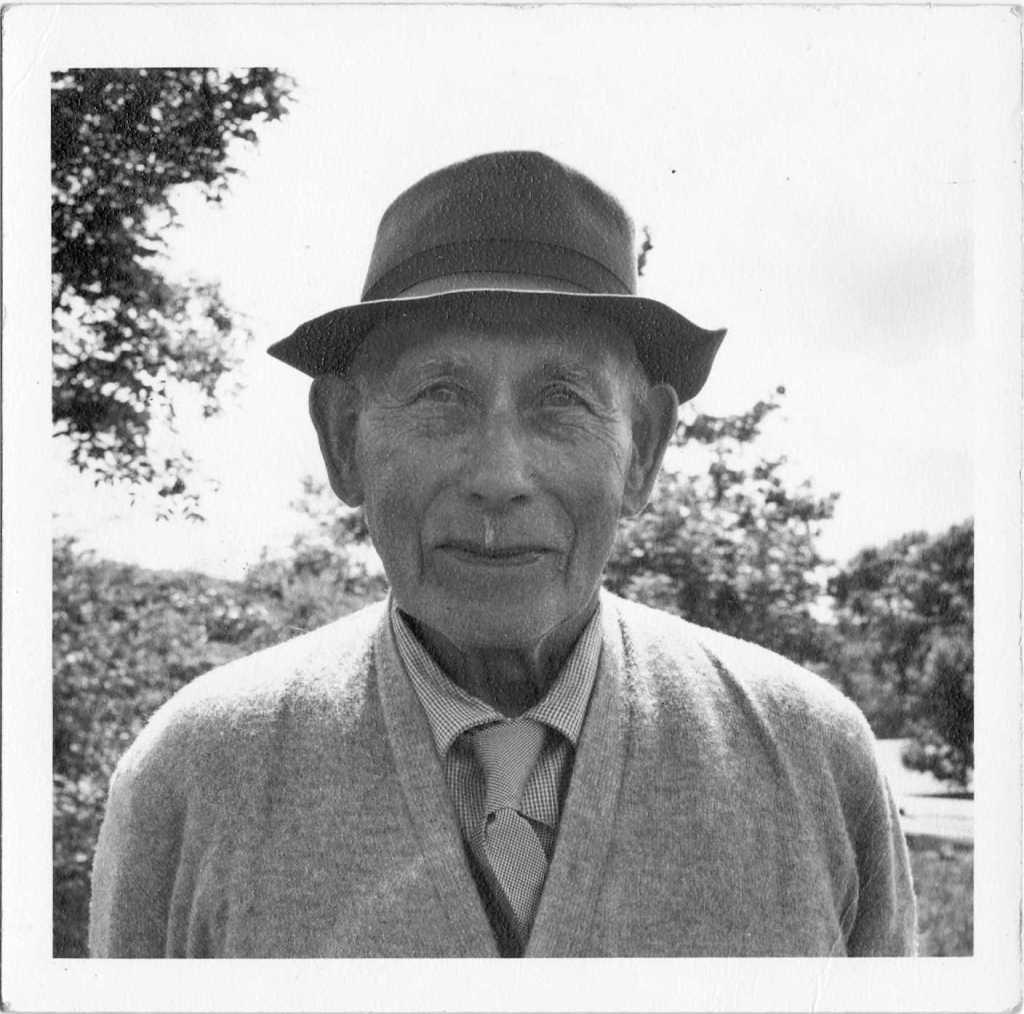
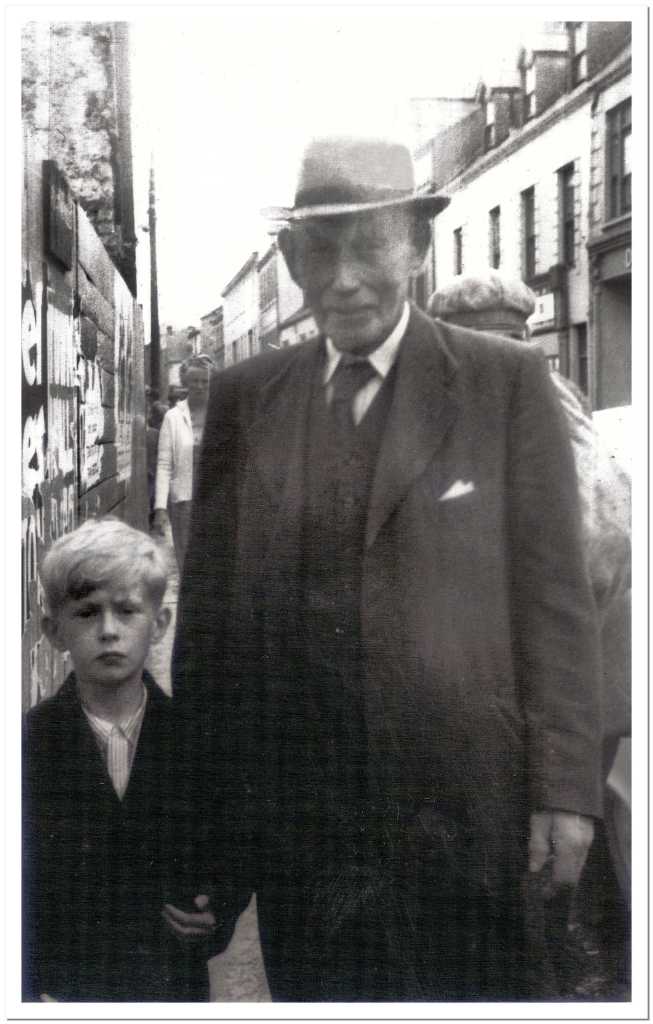
Richard Davis circa 1960.

Here is a simpler riddle taken from the Davis contribution to The Schools Collection, 1937:

In comes two legs carrying the one leg

Lays it down on three legs

In runs four legs snatches up the one leg

Back comes two legs snatches up the three legs

Throws it after four legs to get back the one leg. 

What is it?


Answer. A man comes into his house with a leg of mutton and lays on a three-legged stool. A dog runs in and steals the leg of mutton. The man returns, picks up the stool and throws it at the dog, to get back the leg of mutton.

End

Richard Davis, Boggaun, Part 2.

The Davis family in Glenboy and Boggaun, had been known for their activity in the Orange Order, and for their determined opposition to Home Rule and impending Independence.  When the events of First World War and the Easter Rising overtook the gradual political change, their opposition, like that of the Protestant community generally, melted away.

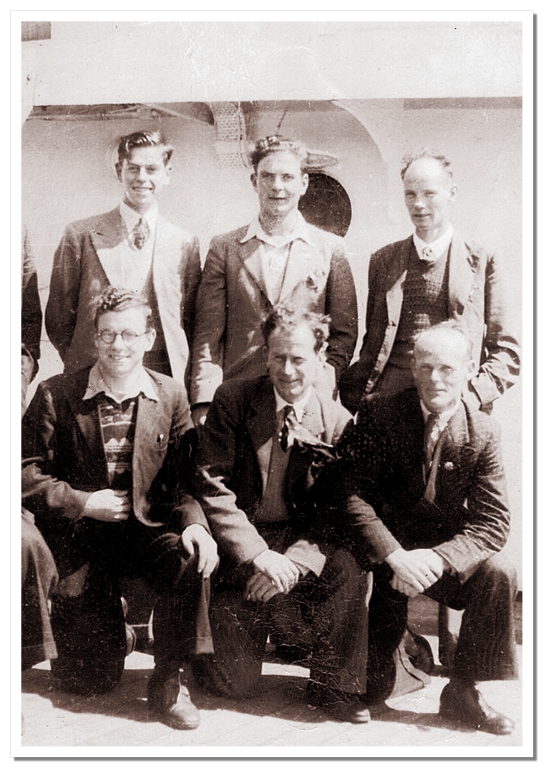
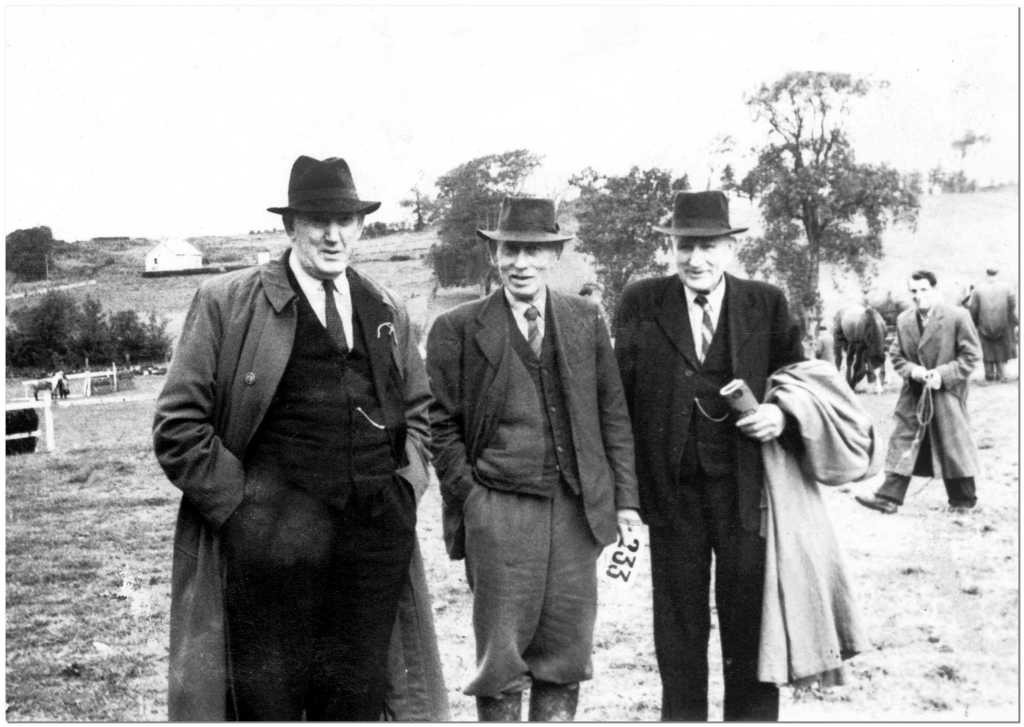
Richard Davis, middle, and friends at the Manorhamilton Agricultural Show circa 1959.

There is no doubt that Richard and his family, certainly harbouring reservations, threw their lot in with the new Irish state. Throughout the worst of the turbulent and uncertain times they emerged relatively unscathed and were targeted on only one occasion by an IRA group searching for guns.

In the fifteen years up until 1926, the Protestant population in Co Leitrim fell by almost a third, compared to just over five percent in the Catholic population, although there is no single factor that can explain the decline. While a good number left for nearby Co Fermanagh, many, like the Davises who had put down deep roots, probably felt, on reflection that they did not belong anywhere else.

A significant factor in the fortunes of the Davis family at this time, was Richard’s response to the collapse of his cattle shipping business, precipitated by his runaway business partner. He decided to pay all debts owed to his farmer suppliers at whatever personal cost.

This engendered considerable sympathy and support for the family, and the wider community saw to it that Richard and his family would not be evicted by the Bank seeking payment. Each year when the Bank re-advertised the farm’s sale, there was the same staunch refusal to bid. Given the families recent Orange activism such widespread community support and generosity must have been affirming, and humbling. And the community would rally round again some years later during another family tragedy when Herbie, Richard’s favourite son, became ill and died from diphtheria.

He had been comfortable borrowing from banks to buy land and for his business, but now Richard was now forced to sell. He disposed of one farm and cut spending to the bone; the family tightened their belts, and depended on what they had historically relied on, their labour, paying the bank whatever they could. When Reco, in 1939, at sixteen years of age went out to work drawing stone with their horse and cart, it marked the turning point in the family’s fortunes.

Despite his difficulties during the 1920s, Richard stood in the Leitrim Council election of 1926, proposed, and seconded by his neighbours, James Maguire and James MacGowan. He canvassed under the Ratepayers Defence Association, focusing on taxation and farming issues. The party would later, through a series of moves merge into the centre right party, Fine Gael. He polled a significant number of first preference votes but was eliminated on the 10th count.

Richard and Annie Davis circa 1960.

My grandmother, Annie with more middle-class aspirations – and the backbone of family in that time of turmoil, as Richard readily acknowledged – was forced to give up any hopes of a Sligo Grammar education for her seven children. The hoped for jump out of their small farmer, peasant roots, although she would never have entertained such a description, was now abandoned.  Their neighbours remarked that with Annie’s support, Richard remained surprisingly calm through this lean and stressful time.

—00—

Granda took me to fair days, showed me off on the counters of crowded pubs, then with a bottle of Cidona, left me, temporarily forgotten amid dark trousers and wellington boots. Above the clink of glasses, as mediums of stout eased the humid talk of cattle and weather; boots shuffled in the white sawdust on the floor, turning it the colour of cow dung.

He introduced me to the world of men and made me feel at home amid the work and clabber of the farm; told me stories of his encounters with the fairies up at the gap into Frank’s ground, his horse and cart stuck, leaving saucers of milk in return for their favour.

When he died in the winter of 1961, I remained at home with my aunts, sensing exclusion from some vital event, while my mother and her family grieved, waked and buried my grandfather in the graveyard of Manorhamilton Parish Church, within the walls of the fortified seventeenth century garrison.

Ends

Notes

1.  The Davis lease of the 47 acre farm at Bogguan is first noted in the Griffith’s Valuation (1856-57), and it was here that the brothers James – Richard’s father – and Thomas Davis moved from nearby Glenboy where they were born on an 18 acre farm. The Boggaun farm was purchased in 1901. The neighbouring farm of Frank McLoughlin, of 23 acres was purchased in 1907, and that of Pat Lonegan, of about 20 acres in the 1940s, when Richard’s bank debts had been settled. Richard put at least one farm up for sale in 1934, but it may not have been sold. In the context of Irish agriculture and the land quality in that part of Leitrim, the Davis farm in the 1920s was probably above average size but not particularly large.

2  “Protestant and Irish, The minority’s search for place in independent Ireland.” ed Ian D’Alton and Ida Milne. A good reference to this period of change, particularly the introduction, Content and Context, and Chapter 3, Defining Loyalty, 1926-30, Brian Hughes.

Richard Davis, Boggaun.

These next few blogs tell a little of the story of my Grandfather, Richard Davis (1882-1961). He died when I was ten. I recall what others told of him, and some discoveries I have unearthed.

Richard with his grandson (author) circa 1959.

I was his first grandchild. He sat me on his knee, on his coarse woollen trousers, and gave me bread with sugar. He smelled of tobacco, and turf smoke, sitting by the open fire with its hanging blackened kettle. I watched intently as he filled his pipe with rubbed plug tobacco, an index finger bent with Carpal Tunnel, but made for the purpose, I thought.

In my Ballymena family I was surrounded by the busy lives of women. Granda’s farmhouse in Leitrim was very different. Outside, Reco and Cecil, his remaining sons, worked, argued, smoked and cursed; strong young men, they turned from no task. In the evenings in the small crowded kitchen, they told stories, laughed and flicked their cigarette butts like bullets into the glowing fire, their boots scrapping off the stone flag floor. On weekend evenings and Sundays, they were gone.

I saw in him occasional flashes of anger and frustration, perhaps sensing his failing strength or lost dreams, saw pride in his farm and stock; a working man in his late 70’s who dressed up for a fair day and Sunday church.

His time was almost gone then and not long after my 10th birthday he was dead. In those short years we had developed a bond that would connect his distant past to my present.  I knew nothing then of the tribulations of his life or of the monumental changes he had lived through.

—00—

Richard was born thirty five years after the worst ravages of the Famine; the Protestant Ascendancy was in decline; land laws were changing rapidly and tenants would for the first time be able to purchase land; political and Land League agitation grew, and violence increased; then came the Easter Rising, the War of Independence and the Civil War marking the height of the turmoil; the British left and new independent Ireland became culturally Gaelic and Catholic, women having a vote for the first time; and not 25 miles away from Richard’s Boggaun farm, the border with Northern Ireland marked the boundary to the new Protestant state. It was a period of rapid change, full of uncertainty and challenges for Richard and his family.

The Davis family were descendants of C17 planters who serviced the stranded enclave of the Manor of Hamilton; a buffer against the colonised natives. As small tenant farmers they depended on their labour and the sale or barter of their produce, while their advantaged position yielded opportunity, most often taken to accrue land. However, in 1852 they did not have enough property to vote in the election of that year, after which the male franchise was significantly expanded.

Richard’s home place at Boggaun was first leased by his grandfather, during the time of the potato Famine, probably when the family of Patrick McKay emigrated or dwindled to just Patrick, who remained there as sub-tenant until his death in the late 1800s. This was typical of the time when the multitude of very small farms, growing potatoes and oats, were abandoned or subject to eviction, to be taken up by those with spare resources and an eye to an opportunity.

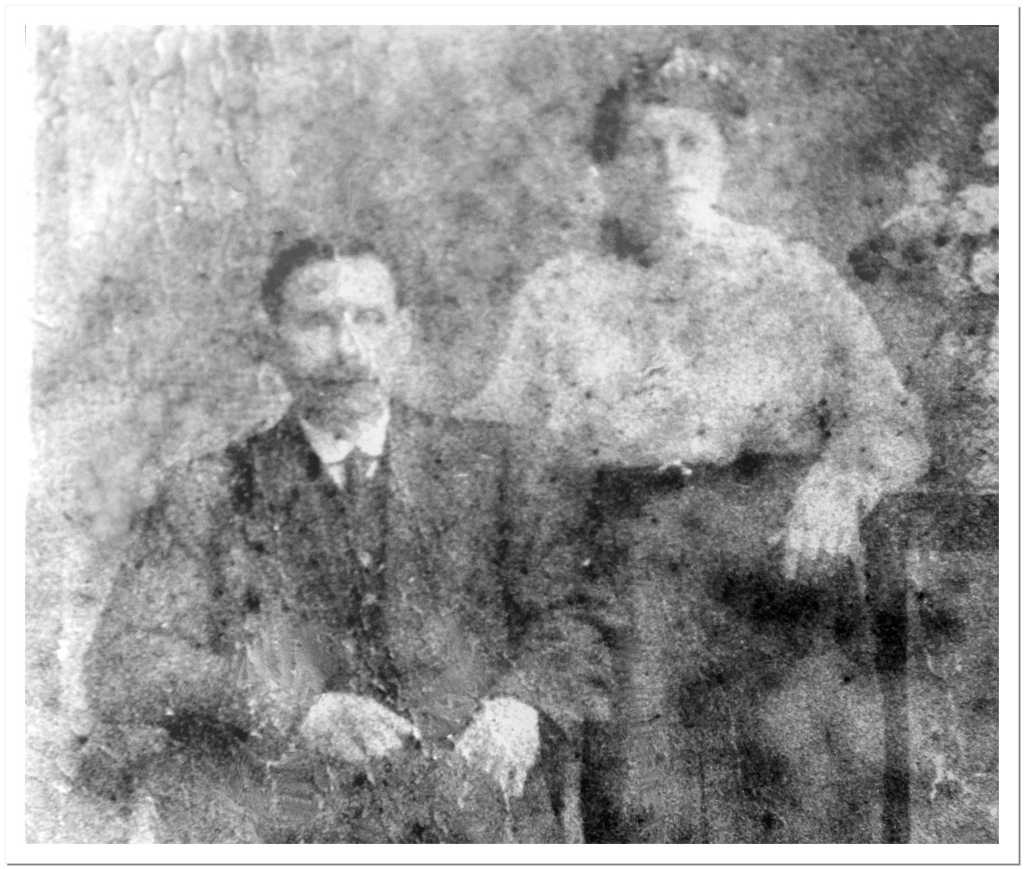
Richard and Annie Davis on their wedding day November 1918

When John, Richard’s eldest brother acquired a similar farm in Garradice in south Leitrim 30 years later, he was boycotted, sentiment having turned against those who were then seen as “land grabbers”; these boycotts were organised by the Land League, seeking to achieve a more equitable system of land distribution.

In changing circumstances, Richard would continue to purchase small farms whenever he could, until misfortune changed the path of his life.

Continues next blog.

The Glenade Police Hut

While preparing a story on my Grandfather, Richard Davis, I recently came across three newspaper articles which describe a relatively minor incident in North County Leitrim in 1902, when Richard was twenty.  The incident of “The Glenade Hut” illustrates the major political fault line of that time, local community tensions, and Richard’s family involvement. I post this by way on an introduction to the next blogs on my Grandfather.

Portable RIC hut Co Mayo (Mary Evans Picture Library)

Seven years after this incident Richard’s father, James died suddenly, leaving the farm, and the future, to his sons, Richard and Alex.

To help follow the newspaper articles below here is a summary of what was said about “The Glenade Hut” and those involved:

In 1902 in Glenade near Manorhamilton a claim of intimidation was made by an individual there, by inference, a Protestant. The authorities responded by planning to increase the police presence in the area, and to locate an additional hut near the existing barracks. Richard’s father, James Davis (called Jas in the article) was part of a group of Orange activists who transported the new police hut to Glenade, against local wishes. The incident was raised in the House of Commons in London. James lived in Boggaun and his family from nearby townland of Glenboy were also active in the Orange Lodge.

—–000—–

The Sligo Champion, Saturday, February 22, 1902

Correspondence – Removal of the Glenade Hut

To the editor of the Sligo Champion

Dear Sir

A paragraph in last week’s “Champion” re the above omitted to give credit to the following loyal gentlemen who were engaged in the removal of the hut to Glenade, viz: Tom Anderson, Donaghmore, who some time ago kept an Orange Lodge, at the meetings of which the stentorian voice of Tom, and the rounds of ‘Kentish fire’ would bear favourable comparison to the brethren in Sandy Row; Jas Davis, Buggaun, whose son grabbed the evicted farms in South Leitrim; C Dennison, Meenymore; Edward Trotter, alias the ‘Evangelist’ of Tullyskerney. Some of these men are the descendants of the Pound Peelers who, in days of yore, cut the cravats off the necks of their Roman Catholic neighbours on their return from Mass at the R.C. Church of Glenfarne. Those and several acts of Orange brutality, perpetrated on inoffensive Roman Catholics of both sexes, are fresh in the memory of some of the old inhabitants of the district today. At the formation of Pitt’s Police (circa 1790_smcw) which were exclusively composed of Orangemen of the most rampant type, the Orangemen about Glenfarne were subsequently known by the name of ‘Pound Peeler’ on account of their atrocious conduct towards Roman Catholics. I am, dear sir, etc

Signed: An anti Pound Peeler

From the same edition

Leitrim County Council, Quarterly meeting. (excerpt)

Extra Police in Glenade

A resolution was received from the KInlough District Council protesting against the action of the Government in drafting in extra police to Glenade.

The Chairman said it was an outrage to see police brought in there. There was a Police hut in Glenade, and that should be sufficient, for it was one of the most peaceful districts in Ireland. When neighbours fell out it was no reason why the Government should levy a tax on the people by sending extra police.

Mr McGuiness- and the hut is erected within a mile of the barracks.

Chairman- a copy of this resolution should be sent to the member for North Leitrim (hear, hear)

Mr Fallon said at the meeting of the Asylum Board one of the Committee bragged that there was one man in North Leitrim had the backbone to give land for the erection of the police hut. The hut was conveyed from the Manorhamilton railway station to the barracks by four or five boycotts, and it now remained there. He was glad to hear the chairman speak as he did. Mr O’Donnell was a J.P. for the county and one of the heaviest ratepayers in their district and he knew there was no necessity for this hut or these extra police.

Mr Gaffney asked would the County Council have to pay for the extra police.

The Secretary said that he got no account of it.

Mr Gaffney understood that the hut was erected in the district on the requisition of a certain individual. It was most unjust that they should be called on to pay. The council should adopt the resolution.

Mr Kearney- as a matter of fact the man whom they were supposed to protect refused them the site.

A councillor asked what was the party who gave the site of this in Glenade.

Mr Fallon said it was Mr Corscadden

Mr Keane- And his son is a solicitor in Ballinamore (oh!)

The resolution was unanimously adopted.

—–000—–

Donegal Independent 14 March 1902

Extra Police in Leitrim

In the House of Commons,

Mr PA McHugh – I beg to ask the chief Secretary whether his attention has been directed to a letter recently addressed to him by Mr Tottenham, of Glenade, County Leitrim protesting against the extra taxation about to be imposed on the people of Glenade by the introduction of extra police; is he aware that the Ballyshannon Rural District Council and the Leitrim County Council have recently passed resolutions against the imposition of extra police in Glenade; will he inform the House of the number and character of crimes committed in Glenade during the past nine years; and will he have the extra police withdrawn.

The Attorney-General – Representations have been made, as stated against the employment of an additional force was sent for the protection of individuals who were subject to intimidation, and the preservation of public peace. It will be withdrawn when no longer required. I am inquiring as to the number of outrages committed in the district during the period mentioned.

Ends

Notes

“Kentish fire” is vehement and prolonged derisive cheering. The practice is so called from indulgence in it in Kent at meetings to oppose the Catholic Emancipation Bill (when passed Catholic Emancipation Act 1829). Source: Wikipedia.

“Pitt’s Police” – The bill (Pitt’s 1785 Police Bill_smcw), though withdrawn in England was successfully introduced in Dublin the following year, to widespread acclaim from the governing class. It was here that Sir Robert Peel encountered the new system of police during his tour of duty as Chief Secretary of Ireland, 1812-18. As Emsley notes, “the uniform, the discipline, and the organization of the new force suggest that Peel had imported into London many of the policing policies developed in Ireland to deal with civil disorder”. Source: Wordsworth’s Vagrants: Police, Prisons and Poetry in 1790s. Quentin Bailey.

RIC portable hut: Stock Photo thumbnail Mary Evans Picture Library – Portable hut for police in County Mayo, Ireland. A Royal Irish Constabulary policeman stands outside a portable hut used for temporary lodging when the armed constabulary are sent into a district where there has been unrest. This one is in Newfield, near Newport in the county of Mayo, overlooking Clew Bay. Published Illustrated London News, May 1870

“A Great Jumper” at O’Donnell’s, Larkfield.

My Great Grandfather James Davis (1833 -1909) told this story about the O’Donnells of Larkfield in County Leitrim, which was recorded with the title “A Great Jumper” for The Schools Collection in 1937 by my mother, Ena. Larkfield is the neighbouring townland to Boggaun where the Davis farm was located. The incident was said to have taken place in the mid-1800s. To start there are a few paragraphs on the history of the O’Donnells. I include this story here as it relates to the last blog “Connor’s Line”, describing a trek up O’Donnell’s Rock, which takes its name from the family.

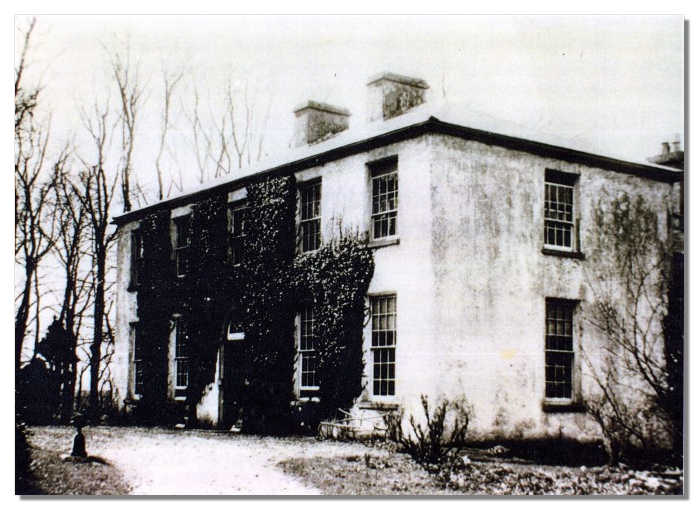
The O’Donnells house at Larkfield.

The O’Donnells of Larkfield were descendants of Red Hugh O’Donnell who died in Valladolid in Spain in 1602 and whose burial site and remains are currently, June 2020, the scene of an archaeological dig in that city. 

Following Red Hugh’s death and failure to raise support for the war with the English, his brother Rory O’Donnell, the Earl of Tyrconnell, with Hugh O’Neill, the Earl of Tyrone fled these shores at Lough Swilly in 1607 in what became known as the Flight of the Earls. This effectively marked the end of the resistance to the English conquest, and the Gaelic Earls would never return home.

Red Hugh was famous for having been kidnapped as a sixteen-year-old from his Donegal home and taken to gaol in Dublin Castle. After five years he escaped, having been recaptured on an earlier attempt, and went on to lead the Nine Year’s War against the English. He was buried in Valladolid as an Irish hero and with great pomp and ceremony.

Since Hugh O’Donnell arrived in the parish of Cloonlogher just outside Manorhamilton in the early 1700s, after being forced out of Donegal, the family have tenaciously held onto their small Leitrim estate.

Hugh adopted the title of “Earl” as the head of the Irish family, but as a Catholic he could not own property, but only lease the lands to which he gave the ‘fancy name’ of Larkfield. However, marriages into Ascendancy families, then and in future generations, secured their tenure.

While the Larkfield townland is the second largest in County Leitrim and the likely extent of their lands, their estate was a meagre one, being mostly unproductive mountain.  It is not improbable that the allocation of such lands was intentional in those times of Penal Laws.

Hugh’s first wife Flora, née Hamilton planted over 70,000 trees, suggesting aspirations to a colonist’s estate. Their sons, John and Con were soldiers of fortune in European wars during the 1700s, part of a group referred to as The Wild Geese.

Hugh, a scholar, and a patron of the arts, most famously befriended Turlough O’Carolan, the great harpist and composer and the modest estate house hosted many great occasions.

The last resident at Larkfield was Captain John O’Donnell, a WWI recruiting officer known to harangue many a young man on a Manorhamilton a fair day, was buried in 1932 in the graveyard at the old Franciscan Abbey at Creevelea near Dromahair. The large crowd of mourners, the Davises included, followed the coffin, eased and guided through tight turns around the ruins, to the family plot at the base of the abbeys walls, where they stood among the mounds of unmarked graves and in the open fields alongside. The last of this line would be buried here some 60 years later, the Earldom passing to the Spanish O’Donnell family.

Following the sale of the estate to the Land Commission in the 1930s, there was an auction of the house contents in October 1932. It was disrupted by the attending crowd who demanded acceptance of a bid by Captain O’Donnell’s son, on behalf of his mother and sisters, which had been initially refused. The crowd was addressed thus:

“The O’Donel so by the disgraceful proceedings … was the descendant of the great Tirconnell Chieftain in Queen Elizabeth’s time. Chasing chieftains from their Irish homes might have been a popular pastime in Elizabeth’s day but times had changed. This was the O’Donel’s day, this was the O’Donel’s property and his property it would remain.”

The speaker and O’Donnell were roundly cheered by the crowd and the auction abandoned.

“A Great Jumper” – James Davis

Years ago, The O’Donnell in Larkfield laid on a big dinner for the gentlemen of the area. These O’Donnells were the direct descendants of Red Hugh O’Donnell, famous in history.

After the dinner they retired to the drawing room where they began bragging and boasting of the super strengths and deeds that their men could do.

Old O’Donnell finally wagered five pounds that he had a man who could perform a great feat, that none of the others could match. If anyone could better his man, then the wager would be theirs.

O’Donnell sent for his man Lawrence Gallagher, who lived nearby in Larkfield.

In the meantime, the long dining room table had been arranged for the next dinner, deep decanters and glasses set all around.

When Lawrence Gallagher arrived, they went into the dining room, and in his bare feet he leapt high over the table leaving every glass standing.

The men cheered at the spectacular jump, knowing that none of their men could offer any challenge to match this, and thereby lost their bets.

End

Notes

1. The Schools Collection, Duchas, part of the National Archive. https://www.duchas.ie/en/cbes/4602749

2. Transcripts of the Davis contribution to The Schools Collection at this link.

3. The O’Donnell family:  The O’Donnell Brothers from Larkfield Manorhamilton, Leitrim Guardian, Dominic Rooney.

Hugh O Donnell of Larkfield – Patron of Gaelic Literature (1691-1754), Breifne 1986, Proinnsíos Ó Duigneáin

4. “Abortive Auction” The Sligo Champion, Saturday October 22, 1932.

5. Red Hugh O’Donnell, Valladolid archaeological dig. Irish Times 1 June 2020 https://www.irishtimes.com/news/ireland/irish-news/carrier-of-o-donnell-flame-waits-as-search-for-red-hugh-continues-1.4266976

https://www.irishtimes.com/culture/heritage/who-was-red-hugh-o-donnell-the-fiery-symbol-of-gaelic-resistance-1.4266919

Connor’s Line

In the late 1960s on regular summer holidays at my Grandmother Davis’s farm in County Leitrim, Uncle Cecil gave my brother Ivor and myself the job of leading a string of donkeys up to the turf bog on O’Donnell’s Rock, it forms the basis of this story. My mother, Ena, her brothers Cecil, Herbie, Reco and Wallace Davis feature.

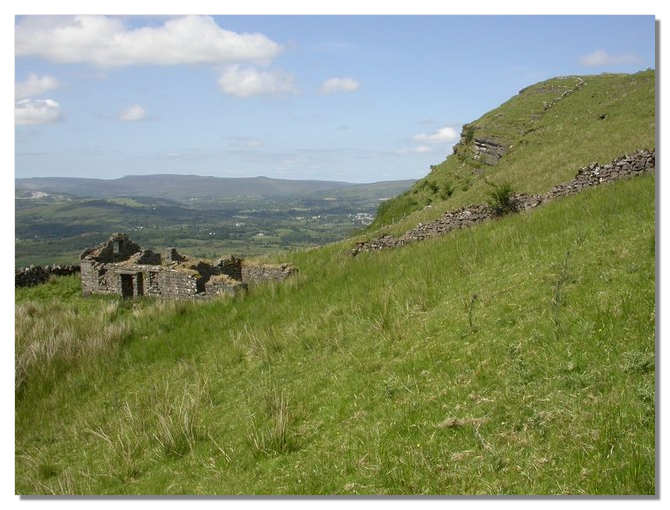
A ruin of one of the homesteads on O’Donnell’s Rock (The Rock)
Photo credit: Mike Simms, Georgaphy Ireland.

At Connor’s Line we lead the donkeys off the road and into a field to get our last instructions.

Sarah O’Connor’s house, is abandoned, the lights not long gone out, where the road twists into a series of dangerous bends. It was here the destitute Famine-starved on relief work, cut straight the bends, unfinished in the chaos of that time, and visible now, only to the buzzard’s eye.

“Go straight up The Line boys. Ye can only go up, or down. But ye’re going up, aren’t ye?” The smart aleck says sensing our unease.

“It’s steep at the end, no bother for the asses. The Line goes all the way to the top. When you come out of the bushes, we’ll be waiting for ye, at the top of the Rock Road.” He points to the mountain.

We look up Connor’s Line, its bushy trace runs straight up O’Donnell’s Rock and into woodland high up.  The escarpment, deceptively looking a long way away.

“Sure, if ye forget the way, boys, the asses will take ye there!” He says with a laugh.

“Don’t worry, it’s clear all the way.” Cecil, our uncle adds.

They set off on a horse and cart with creels, tools and provisions for the day, taking the gradual climb of the Rock Road, for a day drawing turf out of Rooney’s Bog. Cecil drives home in the opposite direction, to milk his cows and join us later.

We leave the road where my mother, Ena, church bound, tumbled off her chicken-stalled bike to lie unconscious on the road with the Carrick bus due, Sarah panicking to get her off the road, frantically waved the bus to a stop, then revived with a passenger’s smelling salts and a porringer of spring water in Sarah’s dark kitchen, she is recovered for the short walk home.

The path is no more than a goat track, the bushes soon close over above our heads, single file from here on. I lead the first two tethered donkeys and four others follow, their big eyes vacant. Now and again we come across a recently cut branch, our way cleared.

Splashes of dappled sunlight fall across us as we move through the green tunnel, marked more regularly by badgers and foxes. A small stream runs alongside sometimes crisscrossing the path, the air gets cool and damp as we climb. When we stop the donkeys graze on the shaded grasses and plants along the path.

It is less arduous than we expect, the donkeys more willing, as we get a measure of the walk, if not the place.

Some distance up and close to the track, “Flynn’s Line” to some, is the ruin of a family cottage of that name. It stood on five meagre acres of rough mountain land.  If they made it through the famine, they didn’t stay much longer.  This path, a painful shortcut scoured with human strain, was at one time in daily use by the few homesteads up on the mountain; the Colemans, the McLaughlins, and later the Sheridans, and those bringing down turf for fires in the valley. The alternative route, an easier climb but miles longer, until the Rock Road was built.

—O—

About 20 years after The Famine on a farm at the top of O’Donnell’s Rock a woman came out of Coleman’s isolated farmhouse.

“I’m goin out for turf!” she shouted back to the old man.

“I’ll bedammed if he heard me.

Blustery evening. Always blustery up on this mountain.

 Agh, the stack should be, here, but.

Whaaat’s the matter way me?

What am a out for atal?

The road goes down, easier, easier, than coming up, up to this lonely place, Colema-aaa-ns, Colema, well na matter.

where am a goin? down somewhere. down The Line maybe, for to get something.

a should be getting back. where? no matter now, a rest on this ditch might help. help whaat? no matta, soft, soft, settled now, agh, the fire will go out.”

—O—

Her remains were found in 1939, in rough ground, high up near Sheridan’s place, by Land Commission men building the Rock Road through O’Donnell’s Larkfield estate to the top of the mountain. About 30 of them, breaking rock, benching out the mountain near Connor’s Line, carting and levelling stone when there came shouts amid the ringing of crow bars, picks and shovels on hard stone.

They circle the skull and remains of the poor unfortunate, thinking, famine dead. Reco Davis at sixteen, on the mountain, his first paid job, drawing stone for the road dressing with the family horse and cart; staring at the nameless remains, missing his older brother Herbie who should have been with him, but who lay mortally ill at home. The ganger called a halt for the day, sent for the Guards.

The word came back in a couple of days, most likely a servant woman missing from Coleman’s years before; the Colemans long in America, Sheridans there now, where a young Wallace Davis would take sanctuary when he ran away from his nearby Boggaun home.

—O—

O’Donnell’s Rock from the Davis farm at Boggaun
(Connor’s Line runs upwards close to the conifer plantation)

We give the donkeys, and ourselves a short break, switch the lead, a slight tug on the lead rope enough to start them again. They appear the more familiar up here.

It gets much steeper as we enter the wood, cooler with little light filtering through. The path climbs through a corridor of hazel, rowan and small birch trees. Under foot rocks further slow our progress while the donkeys move  with short confident steps. Rivulets of water run in and out among the rocks, wet and flecked with blue. Little grows now on the rocky path.

Confined, we know little of where we are except that we are high up on the mountain. The track is always visible a short distance ahead, always rising.

We stop at a pool to drink, then continue upwards, seeping the damp green earthy scent. We could be anywhere. Up and up we go. 

There’s a shaft of light ahead, as the slope eases. We emerge, as if from a dream, into the blinding light of a summer’s mid-morning, to stand in a stone-walled field, the waiting cart up ahead in an open mountain vista.  A man sits on the cart smoking, waiting.

We follow the rattling cart in our untidy line, taking in the wide boundless space of the valley and the dark hump of Benbo mountain opposite, transformed, back among the living, to join the meitheal on Rooney’s bog.

Ends

Note:

I have inserted a link to related blogs for Ena, Reco, Herbie and Wallace Davis.

A Bishop in deep water – 3.

The final part of a story based on a fictional character Steve Wallace who in the late 1970s works in the Solomon Islands. The character and his further adventurers may appear again.

Maringe Lagoon at Buala

On the bright white sandy beach wearing a T-shirt and shorts, the Bishop is a big imposing man. Middle aged, thinning hair atop a broad smile, he vigorously shakes Steve’s hand and in prefect English says,

“Good to meet you again Steve. You were at my inauguration at Sepi last year. We’ll fit you in for sure.“

“That’s super, thanks. Yes, Sepi, what a special event that was. I stayed for the full two days.”

“The most white men I’ve ever seen on Santa Isabel!” he laughs.

His T-shirt has the logo “South Pacific Games 1975, Guam”. Behind him at the top of the beach Steve spots a stack of baskets, mostly potatoes and garden produce, gifts, beside big bundles of their personal baggage.

Silas sees Steve taking in the pile and says to him,

“Don’t worry. It’s a big load, but we’ll be ok.”

While the Bishop and his family say their “goodbyes” to a crowd of villagers, the long dugout canoe is loaded in the shallow water leaving just enough space for the Bishop at the prow, his wife, daughter and Steve, separated by the baskets of food and their belongings.

On the shore the villagers sing in multi-part harmony as Silas cranks the outboard motor to life and steers the laden canoe away from the shore, waving.

In open water the canoe cuts cleanly through the swell, the outboard settling into a steady drone. With a balmy wind and occasional sea spray there is little chance for conversation.  Silas puts out a trawl line hoping to catch a bonito or sword fish.

Once they are out of the bay and past the Fulakora Point, it is a straight 25 mile run up to sheltered lagoon at Buala.  Silas sets a course close to the headland where he believes the swell is big but not choppy. Seeing where he is going, the Bishop in the prow calls to him, indicating with a sweep of his right arm to go much further outside, to the open sea beyond the choppy waters.  Silas looks to rougher water, hesitates, shaking his head slightly. Again, the Bishop waves his arm, Silas swings the loaded canoe around seaward.

Suddenly it gets very choppy, Steve thinks the wind may have picked up, the canoe is rocking, he feels more spray in his face, water comes in over the side and he starts to bail with a wooden cup. The Bishop waves his arm again, more urgently this time and looks back at Silas, who nods.

The wave comes at the canoe slightly to port, there’s no time to react. Steve sees the wall of water block the horizon before it hits him, his cup and cap swept from him.  It washes over them in turn from the Bishop in the prow to Silas on the outboard. The engine coughs and splutters. Water fills the canoe. Steve has images of being thrown into the deep among baskets of potatoes and baggage. But they are still upright. Only a few inches of free board. The outboard continues to splutter. He bails water frantically with his hands. Sees nothing but water, tastes the salt. Bail. Bail. Bail.

The canoe continues to lurch through the confused sea, spray coming from every side. He bails and bails. Eventually the outboard settles to steadier drone. He doesn’t see the others, but knows they too are bailing water.

In the confusion Silas has changed course to stay close to the headland. He’s gunning engine in the troughs, turning to meet the bigger waves, all the while bailing when he can with one hand, his eyes searching for calmer water.

By the time Steve takes in his surroundings the canoe is in a heavy swell, waves breaking on the headland’s reef close by, ahead open sea.  The water is well below his seat now, there is little coming in, his heart eases.

Soon the headland is behind them, the swell lighter, their wide vista of sea and sky bristling with light; the tree-lined shore with thick bush and distant mountain peaks, a constant companion.

In about two hours they will be in the Maringe Lagoon, Fulakora Point almost forgotten. The Bishop, framed in glistened sea spray, turns to Silas and raises a hand. Silas nods in return, keeping a steady course.

Ends

A bishop in deep water – 2.

Continuing the story based on a fictional character Steve Wallace who in the late 1970s works in the Solomon Islands. This is the second part.

Steve arrived by canoe on Tanabuli island four days ago. The village of about twenty houses is located on the landward side of the small island. After a morning surveying for a water source with Moses, he now waits for transport back to Buala.

The Tanabuli water supply, one of the simplest, will be a corrugated roof and a storage tank. It is one of a number coordinated and managed by Steve, alongside training his local replacement.  To his great frustration he has no budget for transport so his travel arrangements are ad hoc. His Buala base is about 30 miles along the cost to the north where a small contingent of Solomon Islanders work as civil servants.  He is the only white man there, living in the “Doctors” house, that is until there is funding for a doctor.

A village near Tanabuli Island.

Yesterday a boat came by, the MV Ligomo, the sound of its diesel engine carrying miles across the water before it came in sight. It was going south to Honiara, the wrong direction for Steve. Anchoring just offshore it was quickly circled by children in canoes, shouting back and forth with the fifteen or so passengers. A villager loaded some bags of copra and left with them for the capital.

The Ligomo would be back in four or five days, or maybe seven or eight, depending on which way it circles the island on its return, there will be a message on the radio. Steve hopes he is long gone before then; maybe a plantation boat or a canoe from the Malaria Control Team, who have given him many a ride.

During the morning he sits on the split cane floor reviewing his field notes, reading or playing cards.  In the late morning he has a short swim and returns to doze in the heavy oppressive heat. Patience, patience, patience, he tells himself, my yoga mantra.

The village is quiet. Now and again he hears distant shouts and whoops from islanders in their gardens on the hills across the bay, and sees smoke rising from their fires.

After midday Steve hears a canoe arriving.  Silas, a villager comes to tell him he is taking the Santa Isabel Bishop, back to his Buala home next morning; he thinks Steve should get a lift with him and his family. Silas and Steve will leave first thing to pick them up from a nearby village.

“That’s great!  At last! I met the Bishop at the Sepi festival last year.” Steve says suppressing excitement. Silas leaves a pineapple and a parcel of cassava and returns to his canoe. 

In the afternoon as the intense midday heat has waned, Moses arrives to take him fishing. They paddle away from the village, into turquoise waters on the seaward side of the island. There is a little swell, no wind and in about 10-foot of water Moses drops anchor. With goggles and a hand slung catapult spear Steve clumsily gets out of the small dugout canoe into the warm water, Moses follows with barely a splash.

They swim in the vicinity of the canoe looking for small fish on the bottom. Moses spears one, two, three, as Steve struggles to stay down for any length of time. Finally manages to spear one but must catch a breath on the surface before recovering it. After some more unsuccessful forays Steve sees a small reef shark and heads for the surface. Moses signals him into the canoe. There is no great danger but with fifteen small fish of various colours they paddle back to the village.

That evening before night fall Steve sits on Moses’s veranda eating an evening meal with his young family, the roast fish a welcome addition the sweet potato and cabbage. Moses’s wife, Evi was very shy at first but now is comfortable and engages with him easily in pidgin. Their 18-month-old blond haired daughter treats him like a big toy and Steve plays along. After he’s finished eating, he picks her up on his hip and walks through the village to the shore. Great belly laughs come from some of the houses as they pass.

“My Mrs says you, manevake, are a fast worker. You’re only here a few days and got a pickinny quick time.” Silas’s shouts to him.

“Your Mary knows too much!” Steve retorts in pidgin, to more whoops and laughs, enjoying the joke is on him.

The tropical darkness falls quickly in a kaleidoscope of pinks, mauves and deepening blue.  When Steve returns the child is asleep on his shoulder. Silas and some others come and join them to sit or squat on the veranda. They have heard that Steve can tell a story or two.

Evi produces some betelnut which Steve manages to chew until he feels a mild buzz, then to great amusement, he coughs and spits out the acrid red mixture over the edge of veranda.

He needs a drink of water before starting his version of the Finn McCool and the Scottish giant, stomping and roaring in frustration as their causeway refuses to rise from the sea. When he finishes, there’s more betelnut, Steve refuses this time, and Silas starts a stream of funny bawdy stories.

Steve yawns, moves to leave, and with him the small crowd dwindles.

Concluding part in next blog.