Finding Bertie Gillmor

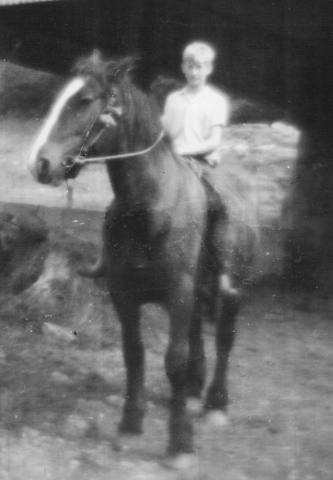
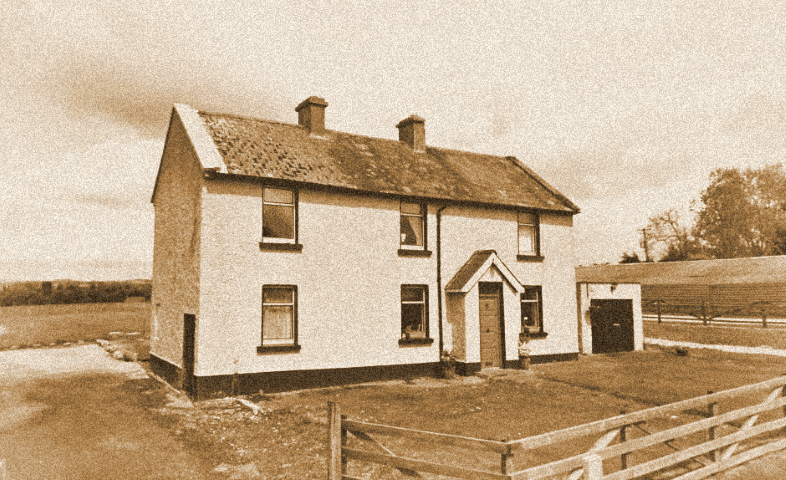
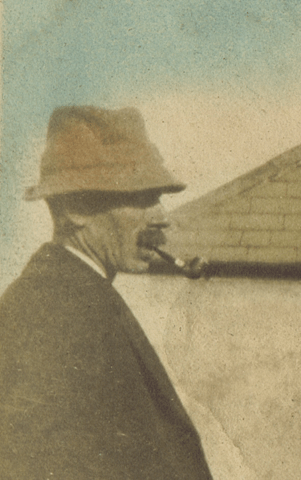
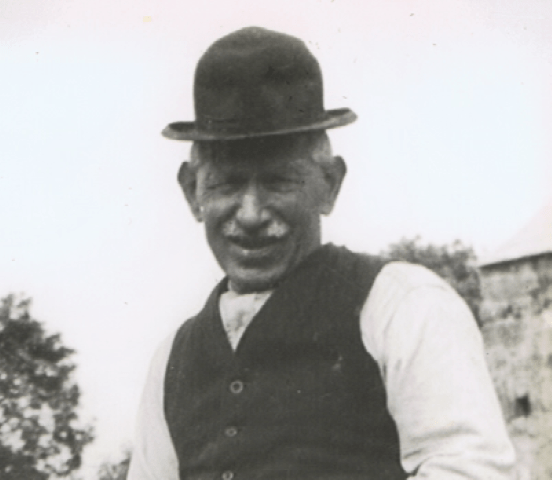
Bertie (Herbert Charles Gillmor 1893-1960) was my Grandmother’s brother, born at Boihy House near Manorhamilton. He emigrated to Alberta, Canada. Over the years I heard snippets of conversations about him when Granny would express her concerns about “Poor Bertie”, garnered from his letters. I remember mention of a big farm on the Prairie, living with a local woman but not married, things not being good, about some sort of conflict, and finally that he had tragically died in 1960, and that a gun was involved. She later believed that much his money had been taken. The distance between the siblings meant that communications had been very sketchy.

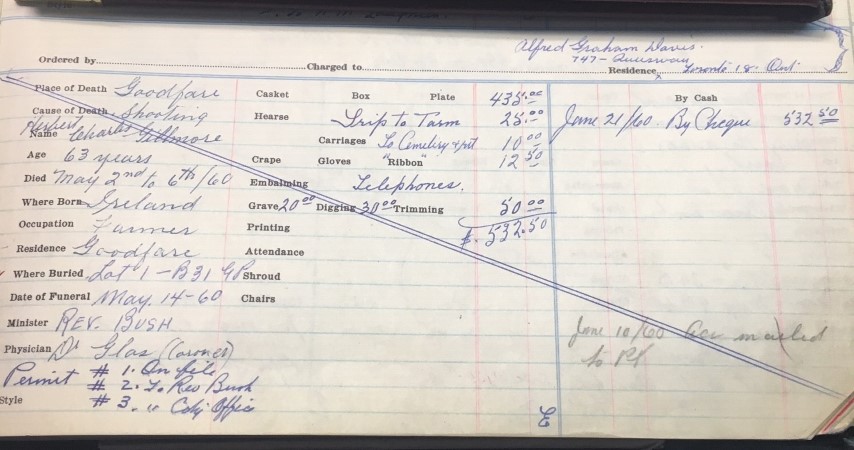
Bertie died intestate. Very recently his niece Etta Kerr sent me a copy of the distributions from his small estate. From it I gathered that he lived in Goodfare, Alberta. Yesterday afternoon I typed “Goodfare, Alberta” into Google maps and then looked for a possible burial location, the search brought me to Oliver’s Funeral Home in Grand Prairie. With no clear intent I sent message to them on their Contacts page and the following email conversation ensued.

Time 15:00

Hello

This is a long shot from Ireland!

My grand uncle Herbert Charles Gillmor, Goodfare, Alberta died on 5th May 1960. We have no idea where he is buried. He had no family. Any suggestions where we might find this out. Any suggestions would be most welcome.

Best Regards

Stan

AT 15:56

Good day Stan.  Thank you for your inquiry regarding your late Grand Uncle.  I checked our files and we did indeed do the funeral arrangements on May 14, 1960.  Date of death is listed as May 2-6, 1960 in our files.

I have attached what I have in our records and it appears he was buried in Lot 1, Block 31 of GP cemetery.  I should be able to get an opportunity to be near the cemetery in the next few days and will stop in to see if it the site is marked or not.  Let me know if there is anything else we can help with.

Best Regards,

Steve Logan,

Oliver’s Funeral Home,

10005 107 Ave, Grande Prairie, AB, T8V 1L8, (780) 532-2929

At 16:29

Good Morning Steve

Wow, you were fast with that! Thank you very much.

Where is the GP Cemetery? We knew that there had been a shooting. What newspaper should I look at to try and get a report on the incident?

I see my Uncle Alf is noted at the top, probably as the next of kin.

Thanks again.

Stan

At 17:17

Sorry Stan…that is local lingo.  GP Cemetery is short for Grande Prairie Cemetery.  An internet search will come up with that for sure but it is run and managed by the City of Grande Prairie and you can contact them phone at 1-780-538-0372 or by email at parks@cityofgp.com

Here is a link to their website:  https://www.cityofgp.com/city-services/services/cemetery

I have also left a message with the manager of the cemetery (Caroline) to confirm what their records say regarding the interment and will advise when I hear back.

The most likely newspaper to contact is the Daily Herald Tribune.  They were probably just the “Herald Tribune” that far back as I don’t believe they became a daily paper until later on.  Website link:  https://www.dailyheraldtribune.com/

Let me know if you run into any roadblocks and I will try and help out in any way I can.

Take care

At 17:18

Thanks Steve

You’re very helpful, given that you’re unlikely to get any of my business!!

I’ll follow up on the Tribune.

I’ve started writing a family history blog a few months ago and Herbert (Bertie) was my Grandmother’s brother. I heard her mention him many times but never know the real story. So now he might be in one of the future blogs.

All the best.

Stan

At 17:28

From Steve:

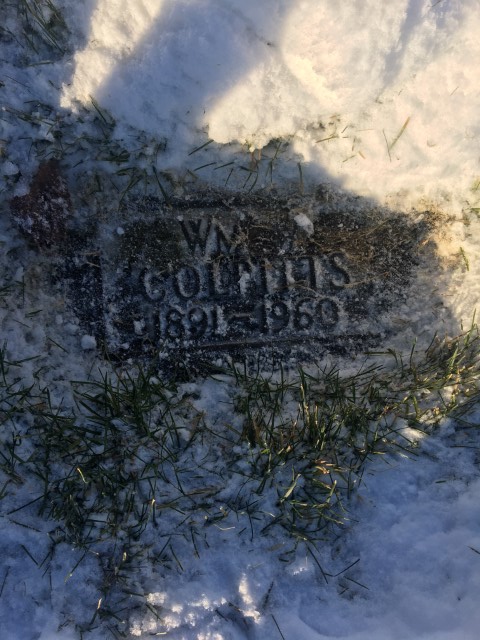
I visited the site he was buried and it is an unmarked graveside. I confirmed the plot immediately next to his from cemetery records online and will attach pics. His “neighbour” would be William Colpits. See below:

And you can see the records that he is confirmed in Block 31 Lot 2

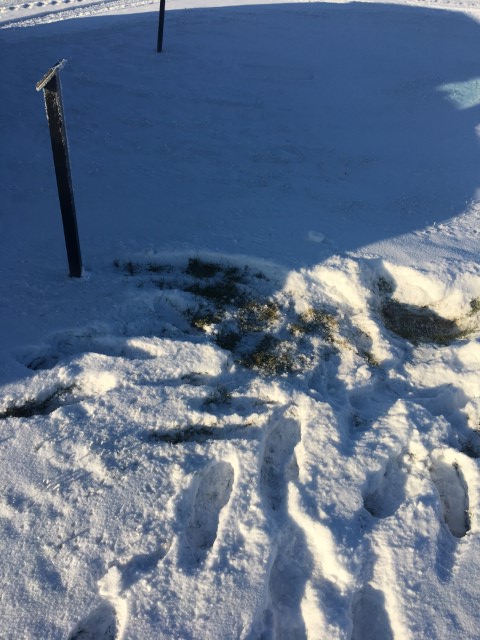
The following picture would be where Herberts remains are currently resting. 

Basically, the snow kicked away was me looking for his headstone which is not present. By way of an option, I could direct you toward the sale of a headstone if that’s something you feel you would want. 

Hope this brings some light to your curiosity. 

Steve Logan

At 21:34

I emailed Steve asking for a quote to provide some simple mark for Herbert’s grave. Bertie’s story will be continued at a later date.

Ends

Alec Davis, Part 2.

I was at the school beyond in Cloonaquin for a few years.  A small school set up by the Dromahair landlord, Mr LaTouche for his Protestant tenants. It was all right, I learned more outside of it than in, from newspapers or books that I could get my hands on. There were no more than eight of us there. Arragh, I was always getting in trouble, either fallin asleep or asking too many questions.  I got top marks all the same.

Alec Davis on an ass and cart circa 1934.
This is most likely the transport that took my mother’s generation to Masterson National School.

The memory is a great thing and mine has always been sharp. I just need to see or hear something wanst and I have it for good, a story, song, whatever. From when I was small the neighbours loved me coming in. They would question me up and down about what I knew. Maybe from the last paper I’d seen I would tell them how the army was fairing against the Boers, or about some strange part of the Empire. But divil the hate I knew what I was telling them. That’s where it all started.

I was working the farm here with Daddy for over 20 years, my brothers leaving one by one all the while. Richard and myself got the farm after Daddy died, we owned it for the first time then. Richard would have been a landlord himself if he could, starting with old Frank McLaughlin up there. Oh, he was smart like his father and was always hatching some new plan. Maybe cause I was older or that I’d already helped to build this place up, with the new house, I let Richard get on with it. I’d been a few times up to John in Meath then, and met Margaret.

Before I left, I fixed up the wee toilet for Annie. I gathered the water off the yard in a big drain, dug it down to the bottom of the haggard and built the toilet over it there.  And sure as not, once or twice a year some flood or other would clear all the dirt down into the meadow below, never blocked once that I remember.

I always had a feel for water. I could look at a farm of land or a field and knew which way it should be drained.  Where to catch the water or where the springs were rising. I set up the big tank at the top of the yard, found a good flowing spring not too far away, it rising not two yard from a ditch, runs the year round.

Alec and Margaret Davis’s home Corballis, Donore, Co Meath.
Image Google maps circa 2015

Home Rule troubled us at the time. We depended on England for everything, sure we were the one country. Richard and myself went to a few of the meetings that were opposing it. One of them in the market-house in Manorhamilton was packed to overflowing, we had to stay out in the street. The Orange lodges were active here too but there was nera one in Boggaun. I think my Uncle Thomas was the only one of us in it, we have his sash somewhere in the house, or I believe it’s his.

Everything changed after the Easter rebellion, it was never the same again. We didn’t get boycotted here but John did earlier, beyond in South Leitrim when he took that evicted farm, before he moved on to Meath. I heard some big houses around the country were being burned out then. And when I was at Corballis we heard the big – BOOM! – when the Boyne monument was blown up by the IRA, not more than a mile away from us. With all the changes and turmoil going on you couldn’t help but think the odd time, that they might come for us too.

Then Independence and a Border came. During those times some of our family and friends sold up and left for the North or went across the water. How and ever the sun kept rising, the cows were milked, dinners made to feed hungry bellies and the childer kept on growing.  At Boggaun, after the blaggard ran off with our money, they had their own troubles without looking beyond the gate. We worked with neighbours like we always had, worked the mayheals, and the hired man got a fair day’s pay. Before I knew it, the worst seemed to be past and I suppose looking back at it now, it caused us no real bother.

Alec’s brother Richard circa 1930

The radio’s the new thing now, even Mary Jane listens to it. And at last Annie and herself have made their peace.  The young ones grow up around me like nettles in spring, always wanting a story or a few riddles before bedtime. And sure, I’m more than happy to oblige.

Ends

Notes

1.  Alec and his sister Mary Jane are buried in Manorhamilton Parish Church Graveyard. Their names do not appear on the family headstone.

2.  Alec Davis features significantly in the Davises contributions to the Masterson National School addition to The Schools Collections. Many of his contributions of stories, riddles, lore and song can be seen  at the link – Alec Davis in The Schools Collection

3.  Frank McNally in the Irish Times discusses the origins of the ballad “The Rocks of Bawn” in the article and refers to Ena and Phyllis’s entry collected from Alec Davis in The School’s Collection. https://www.irishtimes.com/opinion/classic-rock-frank-mcnally-on-tracing-the-origins-of-a-famous-irish-ballad-1.3634782

4.  Thanks to Padraig Fitzpatrick for his recollection of Boggaun neighbours recounting of Mary Jane’s rows with Annie Davis including her comment to the effect – Twas my mistake to let ye in atall! 

5.  Alec, like a few others local story tellers, appears a number of times as a source to the stories and recollections in local school contributions to The Schools Collection. Alec is likely to have been the source of much of the very extensive contribution of his sister in-law Nan Gillmor living at Bohey House which is sourced to her. Nan Gillmor was a principal at Carrigeencor National School. Generally, these story tellers recorded in the Schools Collection, represent the final era of the oral tradition in Ireland. The School Collection can be searched and browsed at https://www.duchas.ie/en/cbes

6.  The article by Miriam Moffit, The Protestant experience of revolution in County Leitrim 1911-1928, is a fascinating paper on the Protestant experience of the period 1911 to 1928. https://www.academia.edu/39614775/The_Protestant_experience_of_revolution_in_County_Leitrim_1911-1928

7.  The Boyne Obelisk, not far from the Davis home at Corballis was blown up by the IRA on 23rd May 1923.

8.  The “Maytheal” I’ve used is an imagined Anglicised term used by Alec for the more proper “meitheal”. The word meitheal describes the old Irish tradition, current in Leitrim until the 1970’s, where people in rural communities gathered together on a neighbour’s farm to help save the hay, some other crop, or urgent or significant farm task. Each person would help their neighbour who would in turn reciprocate. They acted as a team and everybody benefited in some way. This built up strong friendships, social cohesion and respect among those involved in the meitheal. Modified from http://www.giy.ie

9.  For a commentary on agricultural broadcasts on early Irish public radio see https://www.historyireland.com/20th-century-contemporary-history/the-first-agricultural-broadcasts-on-2rn/

10.  Thanks to Padraig Fitzpartick and Dominic Rooney for their comments and encouragement.

Alec Davis (1869 – 1941)

It is 1934, Alec now 65, has returned to Boggaun after the death of his wife Margaret six years previous.  He has spent the ten years of his married life at Corballis, Donore in Co Meath farming beside his brother John. Mary Jane, his older sister is 70 years old. At Boggaun his brother Richard, aged 52, and Annie have eight children (Herbie, Reco, Ena, Cecil, Phyliss, Wallace, Alf and Jack, ages ranging from 19 to 2 years) The collapse of the cattle business some ten years ago still impacts on the family. Richard continues to pay off the debts as the bank attempts to sell the farm. This is part Alec’s imagined story, in two parts.

Alec Davis at Boggaun circa 1934

When I got back here it was almost settled between them – Mary Jane and Annie – they would sit side by side in the trap going off to church of a Sunday morning, like they were the best of friends. I’d been back a good few times and I knew what was going on between them. I tried to talk to Mary Jane, but it did no good. If ye ask me, the both of them, too serious, nera laugh or soft smile between them.

One of the McGoeys on the Rock was working here one summer. He told me that Mary Jane in the heat of a row would hurl her worst at Annie – Twas my mistake to let ye in atall!  I had to put my head down and clear off manys a time, he said to me.

But if Mary Jane could be a bit rough, she was a rock here over the years. She helped rear many of our younger ones including Richard, had some of them reading before they went to school. As Mammy got older, she took over the running of the house. When Mammy died and then Daddy all of a sudden, well, it was hers. Until almost ten years later Annie arrives.  

Sisters Maria and Margaret married to John and Alec Davis, repectively, circa 1925

I had a new start in Meath, one I never thought I would have. Not long after I married Margaret, we discovered that she had some sort of sickness. We were extending the house then and farming all the while, and with John’s help we were going along fairly well. Margaret was a fighter, but no one could tell us what was the matter, and she struggled on for a few more years. The poor cratur went very quick in the end. Her sister living beside us was a great comfort to her. We had a few good years together at Corballis and travelled to places I only read about, Dublin and down as far as Arklow in Wicklow.

But when I look back on it, I didn’t quite find my place there. Maybe I was too old when I got married, as many joked to me. Oh, Margaret and I were happy, we were comfortable enough. But I missed Boggaun, the welcoming neighbours and hills around me. I didn’t travel so much about the unfamiliar townlands in Meath. I never said anything to Margaret, but her sister Maria knew. She said to me one time that I was too set in my ways when I came to Corballis. We buried poor Margaret with her mother beyond in Duleek. Meath seems another life to me now.

Arragh what are we at all? Different lives in different places and we all end in the graveyard. And if not in the same graveyard, we’re facing the same way. God only knows the reason for it all. I’m sure I don’t.

John and Maria Davis, left, with others unknown. Behind is Alec and Margaret’s house. Photograph circa 1930.

Well I knew it was a bad situation here at Boggaun and when my affairs were tidied up at Corballis, I came back, left what I could to John and Maria, they were very good to us.

Poor Richard and Boggaun, ruined by the blaggard, took all we had worked for, our own kind too, God blast him. Put us back fifty year. Arragh, in spite of it all, I was glad to be back and helpin out, among the small army of childer around me. And I was soon back in my old ways.  The friends and neighbours hadn’t changed too much, I got a great welcome home.

Continues in Part 2

Mary Jane Davis, Part 4.

It all changed the year Richard got married. A year of turmoil it was. Sein Fein won the election, many of our men didn’t vote, a few difficult days with neighbours. I had to fight for my place here too, after more than ten years of runnin the house. And Alec was gone, married and livin in Meath. No one to back me up.

A drawing based a poor quality wedding photograph of Richard Davis and Annie Gillmor circa 1930.

Richard and Annie were married in Dromahair Church a month before the armistice was signed and the Great War ended. It was only startin here.  

She arrived her gosling wings barely gone, thinking it’s hers to run. Reading her books and poems, ways like the gentry, lucky to get Richard at all, she was. Oh, we’ve had it out manys a time, at it hammer and tongs sometimes. I had my ways, knowin the place like I do, she had hers. No Alec to come between us. Richard coming down on her side. Eventually she got her way, when the first childer were born; I suppose it was only right too. Arragh, I can be far too head strong for my own good.

Now they ignore me.  Alec smiles at me, asks am I alright? What does he think?

It was some shock ten year ago when Richard lost it all, everything, I mean all we had. It seemed to be goin so well. Settin himself up on his own terms, makin great profit from the cattle shippin.  Behind his back some said he was too soft, didn’t have himself covered well enough. But that blaggard, the crook, the, may God forgive me, the names I’ve called him, he ruined us.

Days of turmoil and tears, slowly seepin in what had happened. The loss of the money, yes, but the debts, God help us, we were finished, the Bank wantin everything. The Rector called, prayed like it was a death, didn’t make it any better.

Three of us and the childer, when it happened. We had a man as well, Robert, Robert Maxwell, but we had to let him go. The days passed and we learned to live with less, the childer knew nothing. A felt sorry for Annie now, a baby arriving almost every year. And fair play, she fell to it, what else could she do. Worked harder, made all our clothes, nothin too low for her now. Look at us, in our big slated house, puttin a brave face on it; sold what we could, worked ourselves harder, bought little. We ate so much salted herring in them first years, I’m sick of the sight of it.

And the bank keeps chasin us for more, putting the place up for sale every year, we could be on the road, God help us. But Richard dug in, his faith behind him. He would pay it all back, he said, the farmers, shippers, John in Meath, all of them, get going again, he said. God help us.  

I always kept the garden, you know, the big one up beyond the White Field. Loved my time up there, grew fine rows of cabbages, carrots and beans in the peaty loam, damp in the driest of years, I could be lost there. I often sung to myself. In bad times pleadin, and prayin to God. I still have a seat up there, although I don’t keep the garden. In the warm summer sun, I’ll go up there sit for a while, get away it from all here and thank God for the life I’ve had.

Ends.

Mary Jane’s brother Alec will feature in the next blog.

Notes

1.  I never knew my Grandaunt Mary Jane Davis. This imagined monologue is based on the circumstances and events surrounding her life and a few mentions my mother made of her. It does not reflect the complexity, vitality and colour of her life and I make apologies to her memory for any gross errors in her portrayal.

2.  The first note on the Valuation Office records in 1862 shows John Davis with 47 acres at Boggaun. Patrick McKay is noted as living here as a tenant in the haggard but not by 1880 valuation, it is presumed he had died.  The valuation of 1880 shows a significant increase indicating the new house was built by then. Griffiths Valuation circa 1850 shows John Davis at the same property.

The Valuation Office has a manuscript archive containing rateable valuation information of all property in the state from mid 1850s until the early 1990s; and commercial property only from that time. This archive shows the changes after the revision of properties and is recognised as a census substitute for the period from the 1850s to 1901 (the earliest complete census record for Ireland). The archive may be used to trace the occupiers of a particular property over a period of years. These records are not available online. https://www.valoff.ie/en/archive-research/genealogy/

3.  Mary Jane’s father was James Davis born at Glenboy (1833-1909). Her mother was Elizabeth Jane nee Mealy or O’Malley (? – 1910) from the nearby townland of Tawnymanus.

4.  Mary Jane’s siblings all born at Boggaun were: John (1861-1931), Thomas (1865-1920) James (1867-1894), Robert (1868-1915), Alexander-Alec (1869-1941), William (1872-1950), Richard (1882-1961).

5.  My Grandparents Richard and Annie were married on the 23 Oct 1918 in Drumlease Parish Church, Dromahair.

6.  Alec Davis married Margaret Taylor (nee Cartwright, a sister of his brother John’s wife Maria) in 1918 in St Kienan’s Church of Ireland, Duleek, Co Meath. Margaret died 30th December 1928 and Alec returned to Boggaun sometime after that.

7.  The blog on the boyfriends of Mary Jane is completely fictious.

8.  Neighbours at Boggaun recalled the fiery rows between Annie and Mary Jane and these accounts were recounted by Patrick Fitzpartick to his son Padraig. Thanks to Padraig for this story.

9.  I recall there was a large vegetable garden in the location described which had not be worked for several years and finding remnants there including a broken chair. The photograph of the chair above is staged.

10.  These blogs on the life of Mary Jane relate to other previous blogs particularly Richard Davis, Swindled.

11.  At a later time it is planned to provide a link to related documents where they appear unique, for example, the RIC record of the boycotting of John Davis at Garradice, and various army and RIC records.

Mary Jane Davis, Part 3.

There was a small army of us here growing up here. They were good times. But I suppose the place eventually got too small for us all. Thomas was the first to leave, he went to Canada in 1886, made a good life there for himself, I believe. John left soon after, I was sorry to see him go. Robert joined the Royal Artillery in Derry, came out alive, but poor James wasn’t so lucky. A few years after he signed up he was dead, at 26, we never did hear the right reason for it. William joined up too, in South Africa, came home to get married and we never saw him after that. It was just Alec, me and Richard then, the big house empty.

Richard Davis at Larkfield, Boggaun circa 1930.

Before Daddy died, he was buying Frank’s ground. It was the first time we could buy land, the laws had changed. Old Frank McLaughlin wanted to sell, no one left but him. We gave him his time up there, even gave him a stipend to look after the place. A grand man he was, came down often to ceile. It’s poor enough grazing but it mairned our ground, too good an opportunity to pass it up. It was just as the Land Leaguers were getting their way; they couldn’t say we took it away from him.

John, the oldest, was never content with our daubby soils. Him and John McCordock left for spoilt farms in Garradice, the year before Queen Victoria died it was. They were boycotted by the Land League. John moved on with his wife and childer to better lands in County Meath, in the Pale, a better place for the likes of us, maybe. He made a go of it, built up a fine place in no time. Made us feel the poor relation when they would come a visitin here; always well dressed, stories of progress and new houses. I went up to see them once, it was all true, a different country it was, soft rolling green hills as far as you could see, near the famous Boyne river. They took me to see where King Billy crossed on his white horse.

John and Maria Davis with their family at Boyne View Lodge, Corballis, Donore, Co Meath circa 1916.
Back row: Richard, Robert , Alfred
Front row: Maria, Thomas, George, Elizabeth (missing John James in USA)

Alec should have made more of it, no great ambition in him. Liked to ceile too much, he’d stay away some nights. I always thought he was a home bird and he proved me right in the end. John arranged a wife for him. His sister-in-law, Margaret, a widow woman; they were married in Duleek in 1918, a few months before Richard, it was. John, God be good to him, helped set him up in Corballis, beside his own place.  But then back he comes when she dies about 10 years later. Don’t understand it. He was nera one for the straight road, too much devilment in him.

When we got the ass and cart for to take the childer to school, he wanted to be the first up on it, like a child himself. And then Tommy Davis arrived from Meath with the camera, well, sure he couldn’t leave it till he got his picture taken up on it.

Always looked out for me though, after Richard got married and she took over. And wrote to me regular from the County Meath. Maybe he took a pity on us when we got into this trouble, and came back. I think maybe he just prefers it here.

Final Part 4 to follow.

Mary Jane Davis, Part 2

No, I never married, but it could have been different. The first fella, John, came up here lettin on to help out, but I knew Mammy and Daddy had arranged it. He wasn’t too long about when he made a grab at me from behind in the byre door, he got my elbow in his face from the fright of it; left here with an eye goin black. Arragh, a rough fella and they knew it too. Didn’t see him after that.

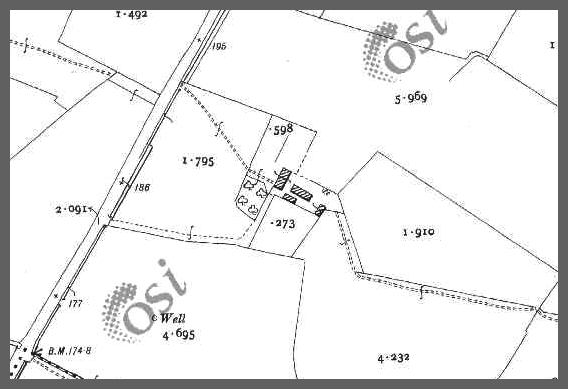
Davis farm Boggaun mapped in the early 1900s.

Robert was a thin rod of a young man, smart enough, and they liked him. I saw him at church a few times, smiled my way. He would come up to the house all dressed up, one time with a bunch a wildflowers for me. I walked with him down to the lane a few times. They said he had a goodly farm up on Benbo, but I told them this was as high up any mountain as I would go. Nothing up on that place; they just nodded. Maybe I was too head strong then.

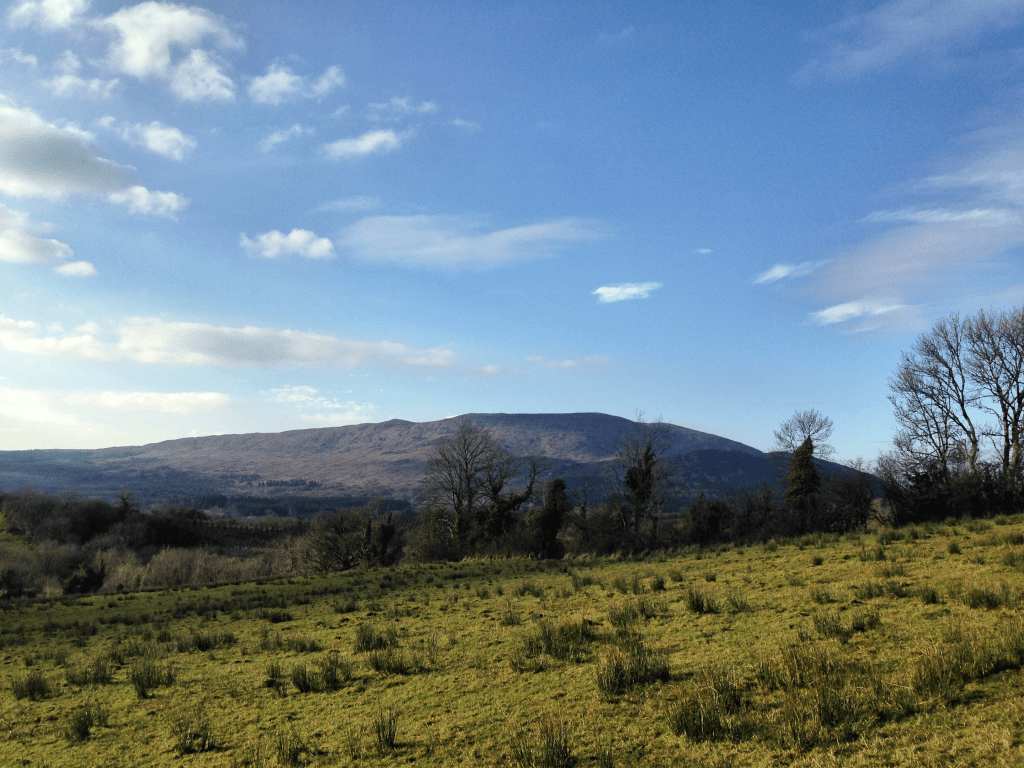
Benbo mountain viewed from near the Davis farmhouse at Boggaun.

But there was a lad, ahh, Henry, tall, we a big round smiling face, and a mop o wild hair, like he’d just stepped out of a gale. He was in the hay field first time I saw him. I brought them their tae, kept his eye on me the whole time. He helped us finish the new house too.  We rolled in the hay one summer when they weren’t lookin, aye, and a let him kiss me too. Like Ruth, I would have followed him anywhere, aye even to Benbo. But then, some ejit of a man took the poor cratur fishing, and my Henry drowned in a deep hole beyond in the Bonet river. A saw him laid out; his wild hair combed flat. I was sore for a long time after that.

I supposed a missed my opportunity or maybe it wasn’t meant to be, but that was the end of it. Anyways, there was plenty to keep my busy here.

Mary Jane Davis 1864 – 1937

Mary Jane Davis was my grandfather Richard’s sister, my grand aunt. She lived all her life at Boggaun, Co Leitrim. This imagined monologue is in four parts. It is 1934 and she is 70 years old. No photographs of her survive.

Part 1

I’m seventy years now, little value to no one. The young ones run wild; there’s too many to remember the names. Nera one listens to me; they pretend to ignore me, think my tongue’s too sharp, but they hear me. I’ve lived here longer that any of them, know it better. Seen it grow from a rough cottage to a fine slated house, the best around, doubled our land too. But now, we’re in a bog-hole of debt, God help us, where will it end. My father always said we got through the Great Hunger without missing a dinner, so I suppose we should manage now; maybe the worst is behind us.

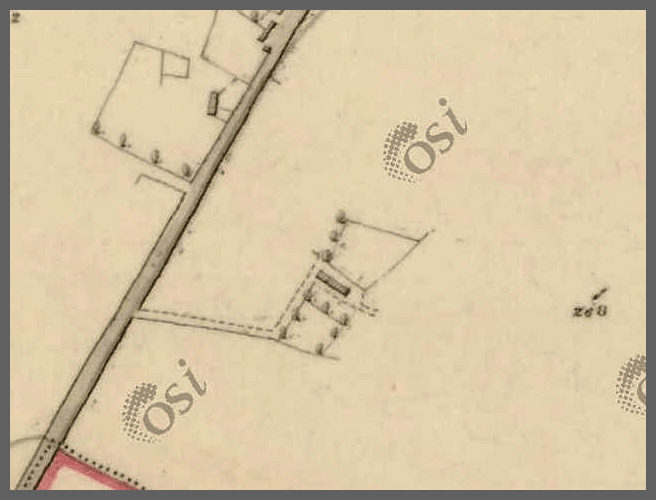
The Davis farm at Boggaun mapped circa 1850s. Source OSI.

I was born here, no, not in this house in the old house, where the byre is now. A rough place when they arrived in the 1840s, I heard them say. Couldn’t pay the landlord. Old Patrick McKay, his family gone and wife long dead, lived out his time in that wee house in the haggard; I used to take a dinner to him was he was near the end.

This place was got by my grandfather, John, for Daddy and his brother Thomas, but Thomas left for Canada a few years before I was born.

It was a grand place though, our old house. I used to sleep beside the big open hearth sometimes; I can still remember the smell and sounds of the kitchen. My mother, Lizzy, kept it tidy and clean, kept us well fed. All of us running around causin mischief. I was happy then. No great rush on me to work, they said. But I did my jobs and went to school over in Cloonaquin; the world seemed so big then. As I got older, I discovered everything changes, nothing stays the same, ye can’t go back.

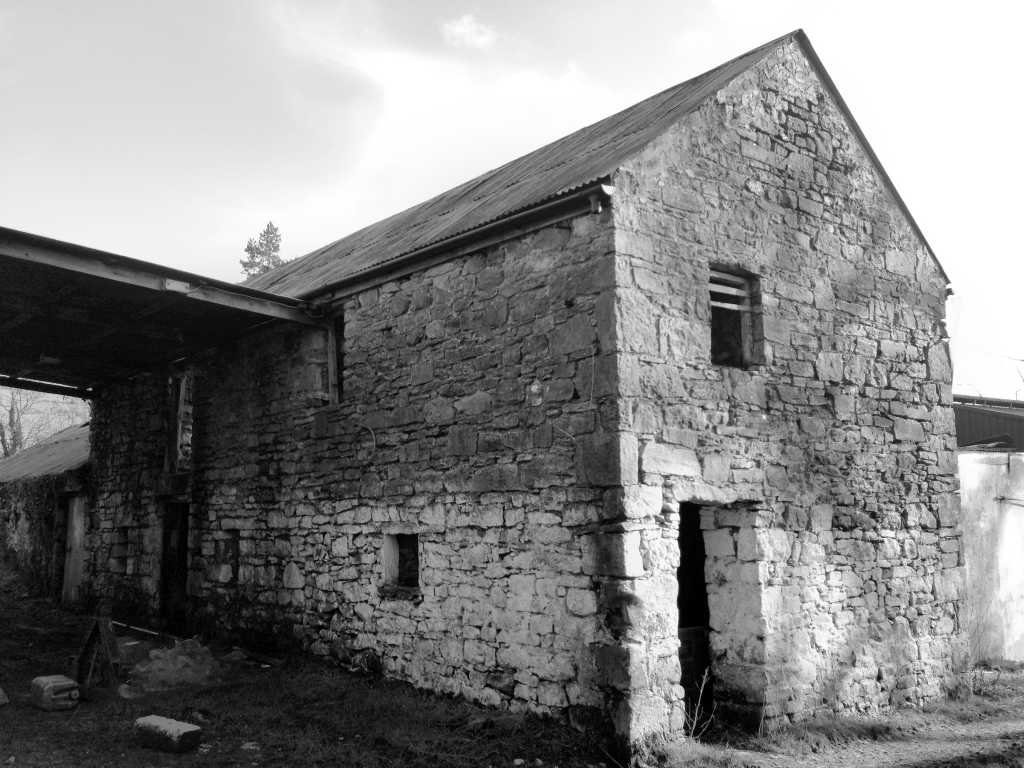
When I was a young woman my father started building the new house; Patrick was dead then and we tumbled his house for the stone. Everyday there were men about the place, building, cartin stone and the like. Daddy was making improvements to the farm, while buyin and sellin, cattle and horses. He always had some new plan; when the new house was finished he wanted to turn the old house into a byre and stable, with a hay loft over it.

Original thatched cottage where Mary Jane was born in 1864, converted to a byre and stable with a hay loft above.

The workmen quarried stone in the White Field, where the big hole is now; we used to play and hide in there, and in the river beyond at the Alt; I caught an odd fish there too. Daddy built a fine house; all the men worked hard and ate all we could put before them. A fine two-story house built about 40 years after the Great Hunger, the talk of Boggaun and around.

Of the eight of us only Richard was born in the new house, the rest half-grown or gone by the time he knew our names. He was 28, and still the baby to me, when Daddy and Mammy died within six months of each other, and Alex and him took over the farm. Still, when the census man came around the following year, in 1911, I was put down as head of the household.

Notes will appear at the end of the Part 4.

In Awe.

“A blackbird! A blackbird !” I shout pointing to the bird flapping weakly in the grass.

Daddy, rolled-up shirt sleeves, tie and waistcoat, leaves the old lawnmower, comes over and crouches down near the bird.

Tommy and Ena McWilliams with their children, from the left, author, baby Elaine and Ivor in the garden at Carninny Road, Ballymena, 1957.

We are in the garden of our house on the Carninny Road just outside the Ballymena town boundary. Daddy has cycled home from work as a bread man at Morton and Simpson’s bakery, and before our dinner he cuts the grass next to the vegetable plot.

“No, it’s a crow, bigger that a blackbird. Look at its big black beak.” he says, taking it up gently and showing it to me. I hesitantly stroke its feathers. Above the large sharp beak its beady eye blinks.

We have lived here for about two years. Against my father’s better judgement – a fear of debt mostly – he and my mother took out a mortgage on this 1940s bungalow on a large 2-acre site. There’s a big front garden, the lower half, next the road, a boggy meadow. Behind the house where the ground rises, there is a hen house for about 100 laying hens – my mother’s enterprise. A year or two later major cracks will appear in the front walls, the house is sinking on poor foundations.  He panics, believing his worst fears are realised. However, the house sells relatively easily, and they move the mortgage to an urban end-of-terrace house on the Ballymoney Road; it has small garden, back and front, and there is no space for laying hens.

“What’s wrong with it?” I ask.

“It’s a young one, maybe struck a wire, but we’ll fix it.” he says spreading the bird’s wings.

He takes a box of matches from his pocket, carefully holding the bird between his elbow and body, strikes the red top match, blowing it out to wave the sulphurous smoke under the bird’s beak.

Cupping the bird in his hands he rises from the ground slowly. Standing above me, he launches the bird skyward in a graceful arc of his arms. In the air it flutters briefly, catches its rhythm, and flies up and away from us. He picks me up in his arms.  We hear the crow’s call – Caw! Caw! Caw! – and watch until it can no longer be seen in the evening sky.

Two Schools Two Communities -2

The troupe of Gillmor children on their way to Carrigeencor school were always turned out well; with shoes and boots, and clothes clean; numbers varying over the years, they met up their friends from the other school along the way; William, Herbie, Jack, Emma, Stewart, Hilda, Chrisie, with my Grandmother Annie, the eldest, setting an example, keeping order. Their parents felt themselves fortunate that a Church of Ireland school was so close.

OSI map showing Boihy Ho. and Kilcoosey and Carrigeencor schools.

At the school Múinteoir Annie Gillmor’s contribution to The Schools Collection (1937-38) is significant. As the collector of her school’s entries she notes herself as the source of thirty five of the seventy five listings. She records details of many bird species, which she had clearly studied, over 140 riddles and much more, and displays a good local knowledge, despite being a relatively recent arrival. Her prose is simple and clear, and her contribution is available at this link – Annie Gillmor.

Carrigeencor and Kilcoosey NS operated under 1831 legislation establishing a non-denominational school system that ensured separate religious education. This was to replace the hotchpotch of hedge schools (then legal), church schools and a few official Royal National Schools. However, its primary purpose was the assimilation of the Irish population and as such the curriculum and teaching materials excluded Irish references, a common strategy throughout the colonies of the British Empire. For a variety of reasons, by the late 1800’s and despite the legislation, national schools had become denominational; being managed almost entirely by either the Catholic Church or Church of Ireland.  While the system was tuned to their mission, it facilitated separation and division, and arguably, in 1921 presented the new Northern Ireland state with a template for its own educational system.

Annie Gillmor (centre) with Mrs and Rev Coursey

Both Kilcoosey and Carrigeencor NS collected material for the folklore project, The Schools Collection. The stories and lore recorded by the two neighbouring schools are, as you would expect similar; cures, marriage customs, unusual events and happenings, games played, and folk lore, songs and poems. But there are differences with each school tending to reference their communities and its experience. Carigeencor NS provides one short piece on cholera during the famine, while the Kilcoosey collection has eight stories describing local famine memories. Here is one from James McMorrow, in 1937 then aged 88.

“In the townland of Carrigeen-cor on Dromahair, Roberts Blayers farm there is an old famine house. In the place where the house stood there still remains as big heap of stones and bushes. The name of the people who lived in the house where Bradleys. Two of the girls who lived in the house died from the Cholera and the others were afraid to stay in the house and the went out begging.”

Since my Grandmother was born in 1889 the population of Leitrim has dropped by over 70%, through emigration and resulting low birth rate; for her and those Protestants who remained their schooling helped fostered their sense of difference and advantage; culturally Irish as they were, they remained apart.

Of the nine Gillmor children of this generation who survived at Boihy, William (1892 – 1929) and Bertie (Herbert 1893 – 1960) emigrated to Canada, Jack (John 1895 – 1967) and Alexander (1898 – 1971) to England, Steward (1901-1987) and Chrissie (1906 – 1991) settled in Northern Ireland, while Hilda (1905 – 1971) and Emma (1886 – 1940) married and settled in Co Sligo and Annie, my Grandmother married Richard Davis and lived at Boggaun, Larkfield, Co Leitrim.

Notes

1.  Jane Gertrude Gillmor (August 1984 – Jan 1900) was the fourth child born into this family; she died aged 5 ½ years old. Their parents were William Hunter (1861 – 1926) and Margaret Gillmor (1862 -1933).

2.  My grandmother hung a coronation picture of Queen Elizabeth II in her kitchen in 1953. This has been updated in the previous blog. Thanks to Padraig Fitzpatrick for the correction.

3.  Essays in the History of Irish Education, edited by Brendan Walsh, Palgrave Macmillan Limited, 2016. See Chapter 2, The National System of Education, 1831–2000, Tom Walsh. http://mural.maynoothuniversity.ie/9689/1/TW-National-2016.pdf

4.  Mrs Annie Gillmor’s contribution to The Schools Collection, and a description of Bohey townland by Peggy Maxwell.  https://thecurlewscall.home.blog/extract-from-the-schools-collection-carrigeencor-national-school/

5. Carrigeencor NS contribution to The Schools Collection. https://www.duchas.ie/en/cbes/4602761

5.  Kilcoosey NS school contribution to The Schools Collection. https://www.duchas.ie/en/cbes/4602762

6.  See Gareth Byrne’s article on Carrigeencor and Kilcoosey national schools at Dromahair Heritage https://dromahairheritage.wordpress.com/2018/09/13/two-nearby-country-schools-that-closed/

7.  See Enda O’Flaherty’s entry on Carrigeencor NS, in Disused School Houses. Thanks to Enda for the use of his picture of Carrigeencor school. https://endaoflaherty.com/2015/01/09/carrigeencor-national-school-carrigeencor-townland-co-leitrim/

Two Schools Two Communities -1

When my grandmother Annie Gillmor (1889-1978) and her siblings walked 10 minutes downhill to their Carrigeencor National  School in the early years of the 1900s they passed a new school at the crossroads that none of them would ever attend. They looked in over the wall, in at the big tall windows behind which sat friends and neighbours, the younger ones somewhat confused.

Annie Boyce at school near Killybegs in 1923

“Carrigeecor School was first built by the landlord George R. Lane Fox, Esq. D.L. in the year 1850 for the education of the children of his tenants.” Says teacher Annie (Nan) Gillmor, née Boyce (1898-1944), my Grandmother’s sister in law, in The Schools Collection. The school drew pupils from the surrounding area including the mountain townland of Boihy, where there was a surprising number of small Protestant farms at that time. Today the derelict one roomed Carrigeencor school bears the date of 1857; it closed as a school in 1955.

For a time, there was another smaller Protestant a school in nearby Cloonaquin on the roadside opposite Middleton’s farmhouse, or Tom and Ethel Siggin’s as it is today. Two sisters, the Misses Goldens taught there, with their salaries being paid by Mr Latouche, a landlord in Dromahair. They taught six to eight pupils up to third class.  Alec Davis of Boggaun went there, and most likely his siblings; pupils got a basic education before going to Carrigeencor NS and it was enough, he reported, for anyone wanting to apply to the Constabulary.

Carrigeencor National School, Enda O’Flaherty, Disused School Houses.

The old Kilcoosey school was about 2km from Carrigeencor, south west towards Dromahair, had been in existence for many years, probably starting as a hedge school.  In 1913, due to overcrowding and poor repair, a new school was built by Fr Peter Galligan at the Kilcoosey crossroads. The new school was about 600 yards from Carrigeencor NS and was the one the Gillmor children passed twice each day. After Carrigeencor NS closed a few local Protestant families went there. Like Carrigeencor school, Kilcoosey took part in the National Folklore Archive, The Schools Collection during 1937-38.

Kilcoosey National School, buildingsofireland.ie

Nan Boyce, taught at Carrigeencor NS from about 1925 and married Stuart Gillmor in August 1928; they lived at Boihy House, my Grandmother’s home. She was a competent and motivated teacher. After the birth of each of her three children Alfred (Freddie, 1930-1992), Edith (Edie, 1932 – 2012) and Margaret (Etta) she was very keen to get back to her pupils. Her youngest daughter Etta, arriving to school with her mother at the age three, recalls her first day when her small school case spilled empty polish tins – her toys – on to the hard school floor to the full laughter of the class.

Tragically, in the summer of 1944 Nan was carrying tea to the workers in a hayfield when she collapsed. She never recovered and died the following December. Nan’s death had severe repercussions for the family. Her husband, unable to cope sent the girls to in-laws in Scotland, and shortly afterwards auctioned the family farm, home and contents, to take up the job of land steward in Co Down. Earlier Freddie, studying at Mountjoy School in Dublin, failed to get a medical scholarship and fell out with his father. Against his father’s wishes he joined the British Navy; after 30 years’ service he resigned and took up the post of a Maths teacher. Brought up in Edinburgh, Edie and Etta struggled with the dislocation from their father and their Leitrim home.

To be concluded in the next blog, with notes following.