The Glenade Police Hut

While preparing a story on my Grandfather, Richard Davis, I recently came across three newspaper articles which describe a relatively minor incident in North County Leitrim in 1902, when Richard was twenty.  The incident of “The Glenade Hut” illustrates the major political fault line of that time, local community tensions, and Richard’s family involvement. I post this by way on an introduction to the next blogs on my Grandfather.

Portable RIC hut Co Mayo (Mary Evans Picture Library)

Seven years after this incident Richard’s father, James died suddenly, leaving the farm, and the future, to his sons, Richard and Alex.

To help follow the newspaper articles below here is a summary of what was said about “The Glenade Hut” and those involved:

In 1902 in Glenade near Manorhamilton a claim of intimidation was made by an individual there, by inference, a Protestant. The authorities responded by planning to increase the police presence in the area, and to locate an additional hut near the existing barracks. Richard’s father, James Davis (called Jas in the article) was part of a group of Orange activists who transported the new police hut to Glenade, against local wishes. The incident was raised in the House of Commons in London. James lived in Boggaun and his family from nearby townland of Glenboy were also active in the Orange Lodge.

—–000—–

The Sligo Champion, Saturday, February 22, 1902

Correspondence – Removal of the Glenade Hut

To the editor of the Sligo Champion

Dear Sir

A paragraph in last week’s “Champion” re the above omitted to give credit to the following loyal gentlemen who were engaged in the removal of the hut to Glenade, viz: Tom Anderson, Donaghmore, who some time ago kept an Orange Lodge, at the meetings of which the stentorian voice of Tom, and the rounds of ‘Kentish fire’ would bear favourable comparison to the brethren in Sandy Row; Jas Davis, Buggaun, whose son grabbed the evicted farms in South Leitrim; C Dennison, Meenymore; Edward Trotter, alias the ‘Evangelist’ of Tullyskerney. Some of these men are the descendants of the Pound Peelers who, in days of yore, cut the cravats off the necks of their Roman Catholic neighbours on their return from Mass at the R.C. Church of Glenfarne. Those and several acts of Orange brutality, perpetrated on inoffensive Roman Catholics of both sexes, are fresh in the memory of some of the old inhabitants of the district today. At the formation of Pitt’s Police (circa 1790_smcw) which were exclusively composed of Orangemen of the most rampant type, the Orangemen about Glenfarne were subsequently known by the name of ‘Pound Peeler’ on account of their atrocious conduct towards Roman Catholics. I am, dear sir, etc

Signed: An anti Pound Peeler

From the same edition

Leitrim County Council, Quarterly meeting. (excerpt)

Extra Police in Glenade

A resolution was received from the KInlough District Council protesting against the action of the Government in drafting in extra police to Glenade.

The Chairman said it was an outrage to see police brought in there. There was a Police hut in Glenade, and that should be sufficient, for it was one of the most peaceful districts in Ireland. When neighbours fell out it was no reason why the Government should levy a tax on the people by sending extra police.

Mr McGuiness- and the hut is erected within a mile of the barracks.

Chairman- a copy of this resolution should be sent to the member for North Leitrim (hear, hear)

Mr Fallon said at the meeting of the Asylum Board one of the Committee bragged that there was one man in North Leitrim had the backbone to give land for the erection of the police hut. The hut was conveyed from the Manorhamilton railway station to the barracks by four or five boycotts, and it now remained there. He was glad to hear the chairman speak as he did. Mr O’Donnell was a J.P. for the county and one of the heaviest ratepayers in their district and he knew there was no necessity for this hut or these extra police.

Mr Gaffney asked would the County Council have to pay for the extra police.

The Secretary said that he got no account of it.

Mr Gaffney understood that the hut was erected in the district on the requisition of a certain individual. It was most unjust that they should be called on to pay. The council should adopt the resolution.

Mr Kearney- as a matter of fact the man whom they were supposed to protect refused them the site.

A councillor asked what was the party who gave the site of this in Glenade.

Mr Fallon said it was Mr Corscadden

Mr Keane- And his son is a solicitor in Ballinamore (oh!)

The resolution was unanimously adopted.

—–000—–

Donegal Independent 14 March 1902

Extra Police in Leitrim

In the House of Commons,

Mr PA McHugh – I beg to ask the chief Secretary whether his attention has been directed to a letter recently addressed to him by Mr Tottenham, of Glenade, County Leitrim protesting against the extra taxation about to be imposed on the people of Glenade by the introduction of extra police; is he aware that the Ballyshannon Rural District Council and the Leitrim County Council have recently passed resolutions against the imposition of extra police in Glenade; will he inform the House of the number and character of crimes committed in Glenade during the past nine years; and will he have the extra police withdrawn.

The Attorney-General – Representations have been made, as stated against the employment of an additional force was sent for the protection of individuals who were subject to intimidation, and the preservation of public peace. It will be withdrawn when no longer required. I am inquiring as to the number of outrages committed in the district during the period mentioned.

Ends

Notes

“Kentish fire” is vehement and prolonged derisive cheering. The practice is so called from indulgence in it in Kent at meetings to oppose the Catholic Emancipation Bill (when passed Catholic Emancipation Act 1829). Source: Wikipedia.

“Pitt’s Police” – The bill (Pitt’s 1785 Police Bill_smcw), though withdrawn in England was successfully introduced in Dublin the following year, to widespread acclaim from the governing class. It was here that Sir Robert Peel encountered the new system of police during his tour of duty as Chief Secretary of Ireland, 1812-18. As Emsley notes, “the uniform, the discipline, and the organization of the new force suggest that Peel had imported into London many of the policing policies developed in Ireland to deal with civil disorder”. Source: Wordsworth’s Vagrants: Police, Prisons and Poetry in 1790s. Quentin Bailey.

RIC portable hut: Stock Photo thumbnail Mary Evans Picture Library – Portable hut for police in County Mayo, Ireland. A Royal Irish Constabulary policeman stands outside a portable hut used for temporary lodging when the armed constabulary are sent into a district where there has been unrest. This one is in Newfield, near Newport in the county of Mayo, overlooking Clew Bay. Published Illustrated London News, May 1870

“A Great Jumper” at O’Donnell’s, Larkfield.

My Great Grandfather James Davis (1833 -1909) told this story about the O’Donnells of Larkfield in County Leitrim, which was recorded with the title “A Great Jumper” for The Schools Collection in 1937 by my mother, Ena. Larkfield is the neighbouring townland to Boggaun where the Davis farm was located. The incident was said to have taken place in the mid-1800s. To start there are a few paragraphs on the history of the O’Donnells. I include this story here as it relates to the last blog “Connor’s Line”, describing a trek up O’Donnell’s Rock, which takes its name from the family.

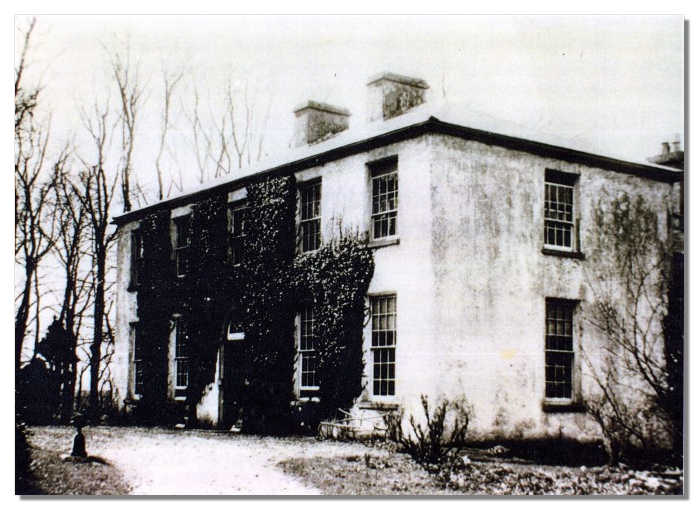
The O’Donnells house at Larkfield.

The O’Donnells of Larkfield were descendants of Red Hugh O’Donnell who died in Valladolid in Spain in 1602 and whose burial site and remains are currently, June 2020, the scene of an archaeological dig in that city. 

Following Red Hugh’s death and failure to raise support for the war with the English, his brother Rory O’Donnell, the Earl of Tyrconnell, with Hugh O’Neill, the Earl of Tyrone fled these shores at Lough Swilly in 1607 in what became known as the Flight of the Earls. This effectively marked the end of the resistance to the English conquest, and the Gaelic Earls would never return home.

Red Hugh was famous for having been kidnapped as a sixteen-year-old from his Donegal home and taken to gaol in Dublin Castle. After five years he escaped, having been recaptured on an earlier attempt, and went on to lead the Nine Year’s War against the English. He was buried in Valladolid as an Irish hero and with great pomp and ceremony.

Since Hugh O’Donnell arrived in the parish of Cloonlogher just outside Manorhamilton in the early 1700s, after being forced out of Donegal, the family have tenaciously held onto their small Leitrim estate.

Hugh adopted the title of “Earl” as the head of the Irish family, but as a Catholic he could not own property, but only lease the lands to which he gave the ‘fancy name’ of Larkfield. However, marriages into Ascendancy families, then and in future generations, secured their tenure.

While the Larkfield townland is the second largest in County Leitrim and the likely extent of their lands, their estate was a meagre one, being mostly unproductive mountain.  It is not improbable that the allocation of such lands was intentional in those times of Penal Laws.

Hugh’s first wife Flora, née Hamilton planted over 70,000 trees, suggesting aspirations to a colonist’s estate. Their sons, John and Con were soldiers of fortune in European wars during the 1700s, part of a group referred to as The Wild Geese.

Hugh, a scholar, and a patron of the arts, most famously befriended Turlough O’Carolan, the great harpist and composer and the modest estate house hosted many great occasions.

The last resident at Larkfield was Captain John O’Donnell, a WWI recruiting officer known to harangue many a young man on a Manorhamilton a fair day, was buried in 1932 in the graveyard at the old Franciscan Abbey at Creevelea near Dromahair. The large crowd of mourners, the Davises included, followed the coffin, eased and guided through tight turns around the ruins, to the family plot at the base of the abbeys walls, where they stood among the mounds of unmarked graves and in the open fields alongside. The last of this line would be buried here some 60 years later, the Earldom passing to the Spanish O’Donnell family.

Following the sale of the estate to the Land Commission in the 1930s, there was an auction of the house contents in October 1932. It was disrupted by the attending crowd who demanded acceptance of a bid by Captain O’Donnell’s son, on behalf of his mother and sisters, which had been initially refused. The crowd was addressed thus:

“The O’Donel so by the disgraceful proceedings … was the descendant of the great Tirconnell Chieftain in Queen Elizabeth’s time. Chasing chieftains from their Irish homes might have been a popular pastime in Elizabeth’s day but times had changed. This was the O’Donel’s day, this was the O’Donel’s property and his property it would remain.”

The speaker and O’Donnell were roundly cheered by the crowd and the auction abandoned.

“A Great Jumper” – James Davis

Years ago, The O’Donnell in Larkfield laid on a big dinner for the gentlemen of the area. These O’Donnells were the direct descendants of Red Hugh O’Donnell, famous in history.

After the dinner they retired to the drawing room where they began bragging and boasting of the super strengths and deeds that their men could do.

Old O’Donnell finally wagered five pounds that he had a man who could perform a great feat, that none of the others could match. If anyone could better his man, then the wager would be theirs.

O’Donnell sent for his man Lawrence Gallagher, who lived nearby in Larkfield.

In the meantime, the long dining room table had been arranged for the next dinner, deep decanters and glasses set all around.

When Lawrence Gallagher arrived, they went into the dining room, and in his bare feet he leapt high over the table leaving every glass standing.

The men cheered at the spectacular jump, knowing that none of their men could offer any challenge to match this, and thereby lost their bets.

End

Notes

1. The Schools Collection, Duchas, part of the National Archive. https://www.duchas.ie/en/cbes/4602749

2. Transcripts of the Davis contribution to The Schools Collection at this link.

3. The O’Donnell family:  The O’Donnell Brothers from Larkfield Manorhamilton, Leitrim Guardian, Dominic Rooney.

Hugh O Donnell of Larkfield – Patron of Gaelic Literature (1691-1754), Breifne 1986, Proinnsíos Ó Duigneáin

4. “Abortive Auction” The Sligo Champion, Saturday October 22, 1932.

5. Red Hugh O’Donnell, Valladolid archaeological dig. Irish Times 1 June 2020 https://www.irishtimes.com/news/ireland/irish-news/carrier-of-o-donnell-flame-waits-as-search-for-red-hugh-continues-1.4266976

https://www.irishtimes.com/culture/heritage/who-was-red-hugh-o-donnell-the-fiery-symbol-of-gaelic-resistance-1.4266919

Connor’s Line

In the late 1960s on regular summer holidays at my Grandmother Davis’s farm in County Leitrim, Uncle Cecil gave my brother Ivor and myself the job of leading a string of donkeys up to the turf bog on O’Donnell’s Rock, it forms the basis of this story. My mother, Ena, her brothers Cecil, Herbie, Reco and Wallace Davis feature.

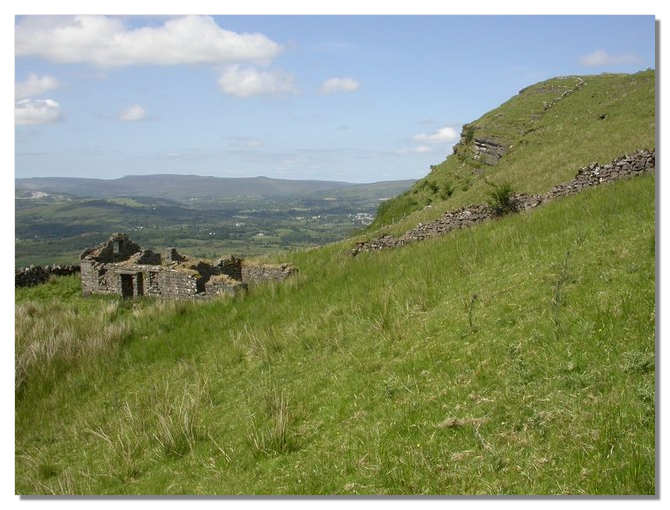
A ruin of one of the homesteads on O’Donnell’s Rock (The Rock)
Photo credit: Mike Simms, Georgaphy Ireland.

At Connor’s Line we lead the donkeys off the road and into a field to get our last instructions.

Sarah O’Connor’s house, is abandoned, the lights not long gone out, where the road twists into a series of dangerous bends. It was here the destitute Famine-starved on relief work, cut straight the bends, unfinished in the chaos of that time, and visible now, only to the buzzard’s eye.

“Go straight up The Line boys. Ye can only go up, or down. But ye’re going up, aren’t ye?” The smart aleck says sensing our unease.

“It’s steep at the end, no bother for the asses. The Line goes all the way to the top. When you come out of the bushes, we’ll be waiting for ye, at the top of the Rock Road.” He points to the mountain.

We look up Connor’s Line, its bushy trace runs straight up O’Donnell’s Rock and into woodland high up.  The escarpment, deceptively looking a long way away.

“Sure, if ye forget the way, boys, the asses will take ye there!” He says with a laugh.

“Don’t worry, it’s clear all the way.” Cecil, our uncle adds.

They set off on a horse and cart with creels, tools and provisions for the day, taking the gradual climb of the Rock Road, for a day drawing turf out of Rooney’s Bog. Cecil drives home in the opposite direction, to milk his cows and join us later.

We leave the road where my mother, Ena, church bound, tumbled off her chicken-stalled bike to lie unconscious on the road with the Carrick bus due, Sarah panicking to get her off the road, frantically waved the bus to a stop, then revived with a passenger’s smelling salts and a porringer of spring water in Sarah’s dark kitchen, she is recovered for the short walk home.

The path is no more than a goat track, the bushes soon close over above our heads, single file from here on. I lead the first two tethered donkeys and four others follow, their big eyes vacant. Now and again we come across a recently cut branch, our way cleared.

Splashes of dappled sunlight fall across us as we move through the green tunnel, marked more regularly by badgers and foxes. A small stream runs alongside sometimes crisscrossing the path, the air gets cool and damp as we climb. When we stop the donkeys graze on the shaded grasses and plants along the path.

It is less arduous than we expect, the donkeys more willing, as we get a measure of the walk, if not the place.

Some distance up and close to the track, “Flynn’s Line” to some, is the ruin of a family cottage of that name. It stood on five meagre acres of rough mountain land.  If they made it through the famine, they didn’t stay much longer.  This path, a painful shortcut scoured with human strain, was at one time in daily use by the few homesteads up on the mountain; the Colemans, the McLaughlins, and later the Sheridans, and those bringing down turf for fires in the valley. The alternative route, an easier climb but miles longer, until the Rock Road was built.

—O—

About 20 years after The Famine on a farm at the top of O’Donnell’s Rock a woman came out of Coleman’s isolated farmhouse.

“I’m goin out for turf!” she shouted back to the old man.

“I’ll bedammed if he heard me.

Blustery evening. Always blustery up on this mountain.

 Agh, the stack should be, here, but.

Whaaat’s the matter way me?

What am a out for atal?

The road goes down, easier, easier, than coming up, up to this lonely place, Colema-aaa-ns, Colema, well na matter.

where am a goin? down somewhere. down The Line maybe, for to get something.

a should be getting back. where? no matter now, a rest on this ditch might help. help whaat? no matta, soft, soft, settled now, agh, the fire will go out.”

—O—

Her remains were found in 1939, in rough ground, high up near Sheridan’s place, by Land Commission men building the Rock Road through O’Donnell’s Larkfield estate to the top of the mountain. About 30 of them, breaking rock, benching out the mountain near Connor’s Line, carting and levelling stone when there came shouts amid the ringing of crow bars, picks and shovels on hard stone.

They circle the skull and remains of the poor unfortunate, thinking, famine dead. Reco Davis at sixteen, on the mountain, his first paid job, drawing stone for the road dressing with the family horse and cart; staring at the nameless remains, missing his older brother Herbie who should have been with him, but who lay mortally ill at home. The ganger called a halt for the day, sent for the Guards.

The word came back in a couple of days, most likely a servant woman missing from Coleman’s years before; the Colemans long in America, Sheridans there now, where a young Wallace Davis would take sanctuary when he ran away from his nearby Boggaun home.

—O—

O’Donnell’s Rock from the Davis farm at Boggaun
(Connor’s Line runs upwards close to the conifer plantation)

We give the donkeys, and ourselves a short break, switch the lead, a slight tug on the lead rope enough to start them again. They appear the more familiar up here.

It gets much steeper as we enter the wood, cooler with little light filtering through. The path climbs through a corridor of hazel, rowan and small birch trees. Under foot rocks further slow our progress while the donkeys move  with short confident steps. Rivulets of water run in and out among the rocks, wet and flecked with blue. Little grows now on the rocky path.

Confined, we know little of where we are except that we are high up on the mountain. The track is always visible a short distance ahead, always rising.

We stop at a pool to drink, then continue upwards, seeping the damp green earthy scent. We could be anywhere. Up and up we go. 

There’s a shaft of light ahead, as the slope eases. We emerge, as if from a dream, into the blinding light of a summer’s mid-morning, to stand in a stone-walled field, the waiting cart up ahead in an open mountain vista.  A man sits on the cart smoking, waiting.

We follow the rattling cart in our untidy line, taking in the wide boundless space of the valley and the dark hump of Benbo mountain opposite, transformed, back among the living, to join the meitheal on Rooney’s bog.

Ends

Note:

I have inserted a link to related blogs for Ena, Reco, Herbie and Wallace Davis.

A Bishop in deep water – 3.

The final part of a story based on a fictional character Steve Wallace who in the late 1970s works in the Solomon Islands. The character and his further adventurers may appear again.

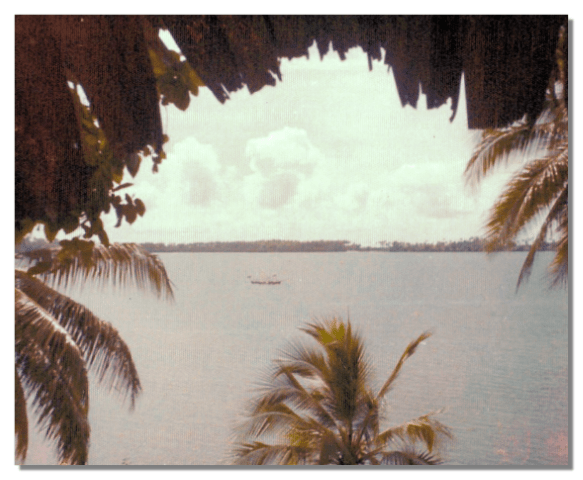
Maringe Lagoon at Buala

On the bright white sandy beach wearing a T-shirt and shorts, the Bishop is a big imposing man. Middle aged, thinning hair atop a broad smile, he vigorously shakes Steve’s hand and in prefect English says,

“Good to meet you again Steve. You were at my inauguration at Sepi last year. We’ll fit you in for sure.“

“That’s super, thanks. Yes, Sepi, what a special event that was. I stayed for the full two days.”

“The most white men I’ve ever seen on Santa Isabel!” he laughs.

His T-shirt has the logo “South Pacific Games 1975, Guam”. Behind him at the top of the beach Steve spots a stack of baskets, mostly potatoes and garden produce, gifts, beside big bundles of their personal baggage.

Silas sees Steve taking in the pile and says to him,

“Don’t worry. It’s a big load, but we’ll be ok.”

While the Bishop and his family say their “goodbyes” to a crowd of villagers, the long dugout canoe is loaded in the shallow water leaving just enough space for the Bishop at the prow, his wife, daughter and Steve, separated by the baskets of food and their belongings.

On the shore the villagers sing in multi-part harmony as Silas cranks the outboard motor to life and steers the laden canoe away from the shore, waving.

In open water the canoe cuts cleanly through the swell, the outboard settling into a steady drone. With a balmy wind and occasional sea spray there is little chance for conversation.  Silas puts out a trawl line hoping to catch a bonito or sword fish.

Once they are out of the bay and past the Fulakora Point, it is a straight 25 mile run up to sheltered lagoon at Buala.  Silas sets a course close to the headland where he believes the swell is big but not choppy. Seeing where he is going, the Bishop in the prow calls to him, indicating with a sweep of his right arm to go much further outside, to the open sea beyond the choppy waters.  Silas looks to rougher water, hesitates, shaking his head slightly. Again, the Bishop waves his arm, Silas swings the loaded canoe around seaward.

Suddenly it gets very choppy, Steve thinks the wind may have picked up, the canoe is rocking, he feels more spray in his face, water comes in over the side and he starts to bail with a wooden cup. The Bishop waves his arm again, more urgently this time and looks back at Silas, who nods.

The wave comes at the canoe slightly to port, there’s no time to react. Steve sees the wall of water block the horizon before it hits him, his cup and cap swept from him.  It washes over them in turn from the Bishop in the prow to Silas on the outboard. The engine coughs and splutters. Water fills the canoe. Steve has images of being thrown into the deep among baskets of potatoes and baggage. But they are still upright. Only a few inches of free board. The outboard continues to splutter. He bails water frantically with his hands. Sees nothing but water, tastes the salt. Bail. Bail. Bail.

The canoe continues to lurch through the confused sea, spray coming from every side. He bails and bails. Eventually the outboard settles to steadier drone. He doesn’t see the others, but knows they too are bailing water.

In the confusion Silas has changed course to stay close to the headland. He’s gunning engine in the troughs, turning to meet the bigger waves, all the while bailing when he can with one hand, his eyes searching for calmer water.

By the time Steve takes in his surroundings the canoe is in a heavy swell, waves breaking on the headland’s reef close by, ahead open sea.  The water is well below his seat now, there is little coming in, his heart eases.

Soon the headland is behind them, the swell lighter, their wide vista of sea and sky bristling with light; the tree-lined shore with thick bush and distant mountain peaks, a constant companion.

In about two hours they will be in the Maringe Lagoon, Fulakora Point almost forgotten. The Bishop, framed in glistened sea spray, turns to Silas and raises a hand. Silas nods in return, keeping a steady course.

Ends

A bishop in deep water – 2.

Continuing the story based on a fictional character Steve Wallace who in the late 1970s works in the Solomon Islands. This is the second part.

Steve arrived by canoe on Tanabuli island four days ago. The village of about twenty houses is located on the landward side of the small island. After a morning surveying for a water source with Moses, he now waits for transport back to Buala.

The Tanabuli water supply, one of the simplest, will be a corrugated roof and a storage tank. It is one of a number coordinated and managed by Steve, alongside training his local replacement.  To his great frustration he has no budget for transport so his travel arrangements are ad hoc. His Buala base is about 30 miles along the cost to the north where a small contingent of Solomon Islanders work as civil servants.  He is the only white man there, living in the “Doctors” house, that is until there is funding for a doctor.

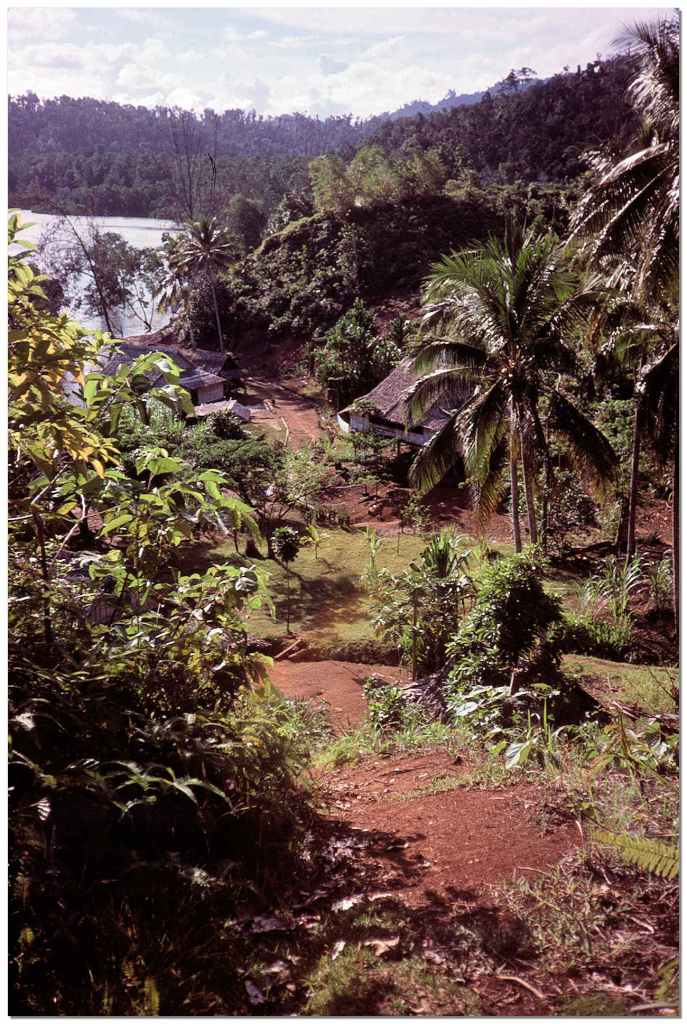
A village near Tanabuli Island.

Yesterday a boat came by, the MV Ligomo, the sound of its diesel engine carrying miles across the water before it came in sight. It was going south to Honiara, the wrong direction for Steve. Anchoring just offshore it was quickly circled by children in canoes, shouting back and forth with the fifteen or so passengers. A villager loaded some bags of copra and left with them for the capital.

The Ligomo would be back in four or five days, or maybe seven or eight, depending on which way it circles the island on its return, there will be a message on the radio. Steve hopes he is long gone before then; maybe a plantation boat or a canoe from the Malaria Control Team, who have given him many a ride.

During the morning he sits on the split cane floor reviewing his field notes, reading or playing cards.  In the late morning he has a short swim and returns to doze in the heavy oppressive heat. Patience, patience, patience, he tells himself, my yoga mantra.

The village is quiet. Now and again he hears distant shouts and whoops from islanders in their gardens on the hills across the bay, and sees smoke rising from their fires.

After midday Steve hears a canoe arriving.  Silas, a villager comes to tell him he is taking the Santa Isabel Bishop, back to his Buala home next morning; he thinks Steve should get a lift with him and his family. Silas and Steve will leave first thing to pick them up from a nearby village.

“That’s great!  At last! I met the Bishop at the Sepi festival last year.” Steve says suppressing excitement. Silas leaves a pineapple and a parcel of cassava and returns to his canoe. 

In the afternoon as the intense midday heat has waned, Moses arrives to take him fishing. They paddle away from the village, into turquoise waters on the seaward side of the island. There is a little swell, no wind and in about 10-foot of water Moses drops anchor. With goggles and a hand slung catapult spear Steve clumsily gets out of the small dugout canoe into the warm water, Moses follows with barely a splash.

They swim in the vicinity of the canoe looking for small fish on the bottom. Moses spears one, two, three, as Steve struggles to stay down for any length of time. Finally manages to spear one but must catch a breath on the surface before recovering it. After some more unsuccessful forays Steve sees a small reef shark and heads for the surface. Moses signals him into the canoe. There is no great danger but with fifteen small fish of various colours they paddle back to the village.

That evening before night fall Steve sits on Moses’s veranda eating an evening meal with his young family, the roast fish a welcome addition the sweet potato and cabbage. Moses’s wife, Evi was very shy at first but now is comfortable and engages with him easily in pidgin. Their 18-month-old blond haired daughter treats him like a big toy and Steve plays along. After he’s finished eating, he picks her up on his hip and walks through the village to the shore. Great belly laughs come from some of the houses as they pass.

“My Mrs says you, manevake, are a fast worker. You’re only here a few days and got a pickinny quick time.” Silas’s shouts to him.

“Your Mary knows too much!” Steve retorts in pidgin, to more whoops and laughs, enjoying the joke is on him.

The tropical darkness falls quickly in a kaleidoscope of pinks, mauves and deepening blue.  When Steve returns the child is asleep on his shoulder. Silas and some others come and join them to sit or squat on the veranda. They have heard that Steve can tell a story or two.

Evi produces some betelnut which Steve manages to chew until he feels a mild buzz, then to great amusement, he coughs and spits out the acrid red mixture over the edge of veranda.

He needs a drink of water before starting his version of the Finn McCool and the Scottish giant, stomping and roaring in frustration as their causeway refuses to rise from the sea. When he finishes, there’s more betelnut, Steve refuses this time, and Silas starts a stream of funny bawdy stories.

Steve yawns, moves to leave, and with him the small crowd dwindles.

Concluding part in next blog.

A Bishop in deep water.

This is a story based on a fictional character Steve Wallace who in the late 1970s works in the Solomon Islands, providing engineering support to two local councils, on Guadalcanal and Santa Isabel. The Solomon Islands are on the verge of independence from the UK and are at that time called British Solomon Islands Protectorate or BSIP. Steve is from Ballymoney in County Antrim. The character and his further adventurers may appear again. This initial story is in three parts.

Even in this tropical paradise the nightmares rarely stay away for long. It’s pitch black and Steve is sitting up on his mat in a thatched leaf hut on Tanabuli island, having woken up sweating from another unsummoned dream; the images have already faded, nothing remains but the residual adrenaline of the escaped, the hunted, a sense of some deathly dread avoided yet again. Do they follow me, or do I carry them with me? he muses. He had hoped his antipodes would have given him a fresh start, a clean slate, but now he doubts it. By torchlight, his watch reads 3 am; he sweeps the beam around the thatch walls, pulls a sheet over himself hoping to sleep again.

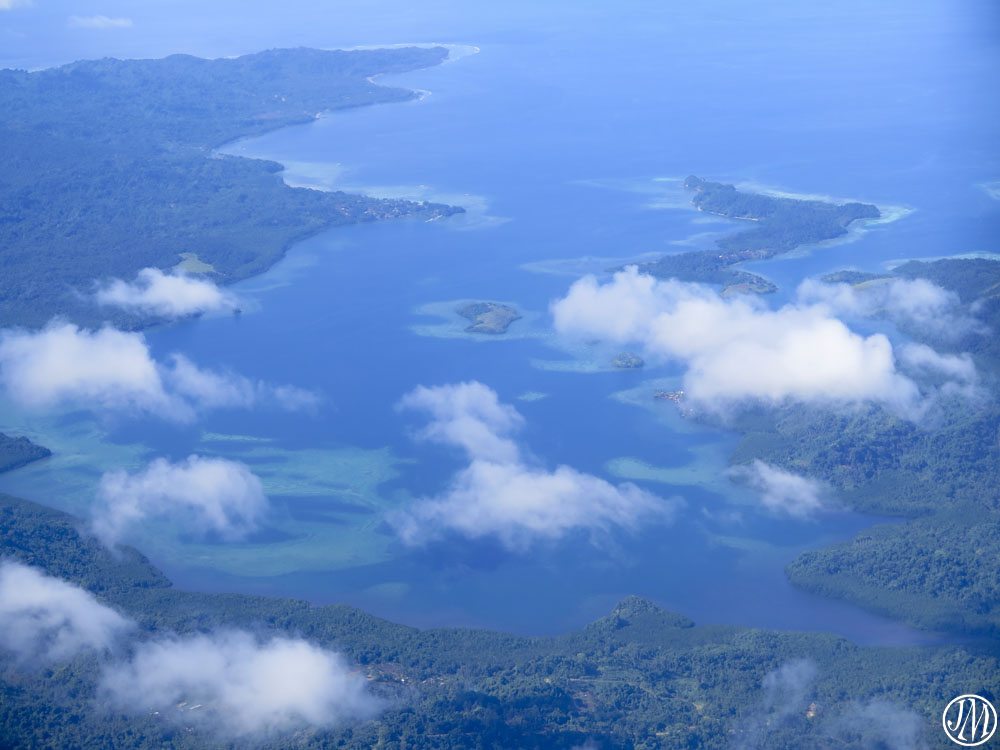
Tatamba Bay, Santa Isabel. (photo credit Joanna Maclean, see link below)

Through the dawn’s stillness a cock crows and there is a baby’s faint cry. The first villagers move slowly through the rising light, walking around the leaf houses to the nearby shore. Fires lit in small rough kitchens leak smoke through the door and roof as children wake with hunger and a spark for the new day. Older ones will have breakfast and paddle their small canoes to the school at Tatamba on the mainland of Santa Isabel, a short distance across the sheltered bay.

Steve gets up pulls on his shorts and stretches, his dreams forgotten. Behind the Rest House, he washes from a bucket, soaping his face and beard. The water is refreshing as he spills it over his head and rubs himself down.

On the sandy soil between the houses a few papaya, betelnut and banana trees grow.  Away from the water behind the houses is a dense wall of greenery; large leaf shrubs and tangled vines which if left to nature would quickly envelop the houses, and further back tall palms. A gentle lapping of waves on the white sand beach is never far from earshot.

As Steve comes round the corner of his hut some children scream, running away, playing an ongoing game of peek-a-boo with the white stranger. The morning sun slips under the overhang as Steve listens to Solomon Islands radio hoping to hear news of a passing boat that could get him back to Buala, when Moses arrives, wearing a colourful patterned lap-lap against chocolate skin, his body compact with powerful shoulders typical of costal islanders.

“Eh Manevaka! What’s up?” he says in jest, having taught Steve their word for white men – “men who came on ships”.

“Do Bongi!” Steve returns in local language.

“You speak my language well.”

“Do Bongi – that’s all I know. You’ve got a different language in each village I go to.” Steve jokes, returning to pidgin. There at least five distinct languages on Santa Isabel alone, but his pidgin is good.

They walk along the shoreline, coconut palms sweeping up to the blue sky, the salt water’s tang fresh against the wafts of humid night air drifting from the bush, to where three men stand laughing.  They wait in turn to walk along a felled coconut trunk to a small thatched leaf toilet on stilts over the blue water. As Steve approaches they fall silent, diffidently moving aside for him, but he waves them back.

“Do Bongi!” he calls.

“Morning Masta, you go back to Buala today?” asks an older man.

“I’m no Masta of yours!” Steve replies forgetting his usual touch of humour. He tries persistently to counter this deference, have them treat him as an equal. Sometimes making a better job of it than others, he reflects. He understands its roots, knows no harm is meant.  He’s probably first white man to have stayed in the village, but he detests being called “Masta”.

“Suppose canoe come, I’ll go.” He adds with a broad smile.

Back as his hut Moses brings him tea and some of last night’s cooked sweet potato, and suggests they go fishing in the afternoon.  Steve takes hard tack biscuits from his rucksack hung from the rafters away from climbing rodents and eats alone.

The village is bustling now that breakfast is over.  Children leave for school, families, mostly women and young children, prepare to go off to their gardens by canoe, while men go fishing or harvesting copra. Only Steve and a few others, old and very young, remain behind.

Continues next blog.

Photo credit http://www.joannamaclean.com/revisiting-solomon-islands-50-years-3/

To the end of the line.

As an end piece to the Ulster Revival stories here is short story on the imagined journey of my father, Tommy McWilliams, to a mission tent at Ballachulish in Scotland.

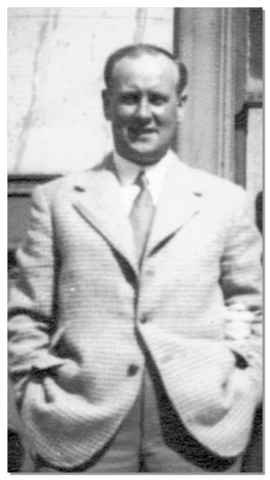
Tommy McWilliams 1950.

Tommy hauled his case off the Glasgow train just before noon. The branch line from Oban to Ballachulish would leave in an hour. There was enough time for a cup of tea and a sandwich in the simple station cafe before he boarded the narrow-gauge steam train and settled into an empty carriage, the case taking up a good deal of space. A couple joined him, holiday makers by the cut of their summer clothes. They would get out a few stops along the line.

The prospect of a trip to the remote Highlands near Glencoe had filled him with excitement, but now on the last leg of the journey this was tempered by concerns of leading the mission services for the next fortnight. He had been well prepared and coached, done it all before, but this was far from home on his first trip to Scotland.

The train chugged and swayed its way northwards on the 27-mile journey, the line often hugging the coast, a road squeezed close by. The carriage window framed islands and lochs he didn’t know the names of; water that changed colour in the summer light and passing showers; steep rock cuttings, and the endless trees. The stations and villages were small, a few scattered homesteads in between, with names that were vaguely familiar, Benderloch, Creagan, Duror, Ballachulish; names he repeated in his head in what he took to be a Scottish accent.

When the couple got off, he opened the case and thumbed through his notes, closed it again and looked back to the window.

The landscape became more barren and rugged, the mountains rising to the sky. After the station at Ballachulish Ferry the train swept into Loch Leven and towards the mouth of Glencoe.

Three sharp blasts from the train’s whistle broke through his daydream and there, as the train slowed, was the pegged mission tent in a field between the track and the loch, with its signs “Faith Mission”, “Prayer meetings 7pm”.

Lugging his case down the platform he stopped and through the smoke took in the mountain peaks that dwarfed the large slab faces of the old slate quarry beyond the station. He was thinking of his Glasgow friend and his story of this once thriving quarry village now dwindled to quarter of its size, less than five hundred souls, when he was grabbed by the arm, the suitcase taken from him, and his hand vigorously shaken.

“Guid efternuin. You must be Tommy? A can tell be that case.”

Ends

Our Revival peters out.

My family’s connection to the Ulster Revival continued down another generation as I recall my father, Tommy McWilliams and his travels with an old brown suitcase.  

My father, Tommy McWilliams circa 1995.

A large brown battered suitcase appeared to follow us each time we moved house in Ballymena. It was too large and heavy to be of any use to us and lay under a spare bed, rummaged during spells of boredom. The solid clunk of the rusting clasps released the lid with its musty smell, inside there were never any surprises. Over the years the books, tracts and handwritten notes became jumbled, aging in the darkness. Some forty years after its first outing, my father’s case was dumped, a few mementos saved.

As a young man of about thirty Tommy carried the heavy case to villages in Scotland and Ireland. His mission was simple “by all means to reach the lost for Christ”, and he had been taught to “live by faith” and put his “trust in God to provide the necessary resources”.

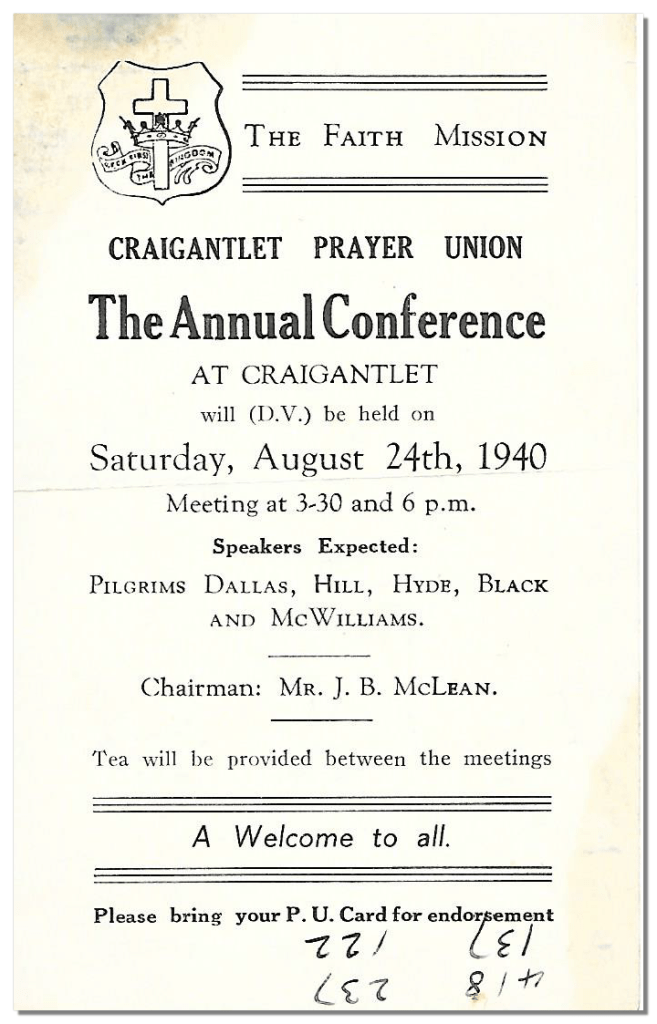
A leaflet from the brown suitcase, Tommy listed as a speaker at a Faith Mission conference.

Since its formation after the Christian Revivals of the mid-1800s The Faith Mission had organised summertime tent missions. Tommy led some of these services, took bible study and welcomed those willing to commit to their lives to God. His rich tenor voice leading the hymn singing perhaps turned as many heads as his preaching.

Opposition came as a surprise to him, something he had not experienced in his native mid-Antrim and the hostility eventually wore him down. He had a change of heart, or at least a softening of his spiritual mission, and returned home.

Back in Ballymena he began an apprenticeship as a motor mechanic at Moore’s Garage, but left shortly afterwards; the experience put him off tinkering with cars for the rest of his life. He found a vocation as a bread man with Morton and Simpson’s Bakery where fresh bread and his warm personality found a welcome among communities on either side of the River Bann, in Antrim and Derry.

His Wellington Street Church elected him as an Elder, a Christian counsellor to the congregation, in 1951, a role he retained until he retired to Co Leitrim in the late seventies.

One summer Sunday evening I am in church with him, the warm sun slanting through the church’s large plain windows and across the half empty pews. We stood to sing, his mellow tenor voice soaring above the worshippers, through the melancholy of the evening; he too was soaring, fulfilled, without doubt.

Unlike him I would not continue the legacy of the Ulster Revival. Not then, beside him in the church that evening, but after a few years as a leader in various church groups when increasing doubt would set me on the path of the unbeliever.

Tommy as his Princess Street home circa 1950.

If Tommy the missionary, the church elder, portrayed his serious side, Tommy the joker was never too far away. Even as a child he would regularly fool his sisters into mischief, while entertaining with pranks and impressions. The photograph of his mimic from a scene in a Laurel and Hardy film, at his Princess Street home is typical, funny and a little scary. While it was likely he used these skills at his mission meetings, the big brown case divulged no such secrets.

Ends

The next blog is a short story based on my father’s travels to Ballachulish, in Scottish Gaelic,  Baile a’ Chaolais or “Village of the narrows”. It is pronounced Ba-la-hoolish.

The Ulster Revival – 2

The second and concluding half of the story of the repentant Robert set during The Ulster Revival.

James McQuilkin, one of the first converts at Connor, Co Antrim.

“By harvest time a had seen many fall down, the preacher takin them up as new men and wemen, born again in Jesus. But some had tay be carried away we little sense about them. A saw a few baduns amongst them too a must say, as well as a papist or two. A was holdin back then, not takin ma final step, a suppose the Devil was still whisperin that a was alright, tay thole it a while longer.

One stormy night after the harvest was in, an like ma first prayer meetin, I felt the Preacher lookin straight at me. I started to sweat, ma clothes itchin on me.  A heard him say loudly and slowly

“The Holy Spirit’s talkin to you and you alone! Jesus or the fires of Hell? You must decide! There’s no other way. This could be your last chance. You might never hear these words again.”

His hand came down on the big Bible way a slap.

“The Holy Spirit’s chosen you! Now’s your time!” and bowing his head he finally says.

“Let us pray together, for the lost souls, that they come to Jesus tonight.”

A chatter a voices filled in the room.

“A’m a poor sinner. Save me. Save me” a hear maself say. A feel a light above me, the heat is awful.

“A’m a poor sinner! Save me Jesus! Save me!” a called out.

Around me amid the babble I hear shouts of “Praise the Lord” “The Lord’s working.” and other voices a canay fathom.

A’m on ma knees afore the preacher ma forehead and arms on the cold earth floor, his arms out above me like the Archangel Gabriel. Tears are flowin freely as I feel the light of Holy Spirit and see the waitin arms of Jesus.

Someone helps me tay ma feet. The Preacher wipes ma tears away with the flats of his hands.

‘Do you repent your worldly sins brother?’

‘A do. A do.’ A say, catchin ma breath.

‘Will you follow Jesus tay the ends of the earth?’

‘A will, a belong tay Jesus.’

‘Your every sin is washed away by Jesus’ blood. Robert, join us, the Saved, Happy in Jesus. By the grace of God you’ve been touched by the work o the Holy Spirit.’ He said and moved on to others and a didnay hear him anymore.

A think am sobbin like a baby as hands touched ma shoulder and ma head, then it’s James way his arms around me.

‘Welcome Robert, into the fold where you belong.’

About twenty of us were saved that night, and many more after. We were full o our new lives, excited an joyful, ready tay praise God.  Some took the prayer meetins but a wasnay cut out for it. A helped out and witnessed ma life’s story and conversion as often as a could.

 A heard that not all the clergy were for The Revival, but none preached agin it, in the Presbyterian churches anyway. They didnay like the strange happenings, the fainting and the like, but that was God and the Holy Spirit workin among us. I heard too that some of them spoke out agin the few women preachers we had and some even suggestin to raise the black man to a higher station than God intended.

West Church Presbyterian Church, Ballymena completed 1863. (Ballymena Old Photos, facebook)

A was a Christian man after that, nere backsliding. An a joined with ma family again. When the Revival spread to Ballymena there was a great excitement, folks meetin everywhere, even in the streets we many youngsters among them. Thousands more were born again in the Lord Jesus. The old churches couldnay hold them all, an in 59 a helped build Ballymena’s new West Church. And a was witnessin whenever a could at some of the hundreds of meetins goin on at the time.

The Lord was good to me and a was never short of a day’s work again. A met a young Christian woman, Eliza from ma homeplace, and we were married in 1867. Although a was getting on in years by then we had four fine children. God blessed our union. They were raised in the strict Christian faith.  Way us, they kept the Sabbath day and went tay Sabbath school, and way all had regular Bible study and prayed together often. Every one of them grew up to have a trade, so they wouldnay end up a day labourer the likes a me. This town values their trades, with honest work and effort, for it is the will of God too.

A hope you hear, and heed this story of an old man, a lost sinner who repented and earned the rewards of a life with Jesus.”

End

Notes

1.  Robert McWilliams was born in 1822 died about 1906. He was a widower of about 45 years when he married Eliza Bamber, aged 25. Both were from Kildowney, Glarryford, 5 ½ miles north west of Ballymena. In 1901 the family were living at 8 Alexander Street in Ballymena.

2. The Ulster Awakening, John Weir, published 1860. A contemporary and sympathetic view of The Revival, with many eyewitness reports.

3. A pictorial History of 1859 Revival, Stanley Barnes, Ambassador Publications, 2008.

4. The 1859 revival and its enemies: opposition to religious revivalism within Ulster Presbyterianism, Daniel Richie, 2016 https://www.academia.edu/26768268/The_1859_revival_and_its_enemies_opposition_to_religious_revivalism_within_Ulster_Presbyterianism

5.  Medicine and religion: on the physical and mental disorders that accompanied the Ulster Revival of 1859, James G. Donat, published in The Anatomy of Madness, Essays in the History of Psychiatry, ed. Bynum, Porter and Sepherd, Vol III, first published 1988. Donat refers to The Lancet’s response to the Revival: “The Lancet saw no redeeming features in the movement, viewing it instead as an exercise in ‘fanaticism’ and the direct cause of an epidemical outbreak of disease.” Concluding, Donat says that “For the former (the critics, smcw) all cases of ‘religious excitement’ were indicative of faulty religion. And the latter (the apologists, smcw) were obliged to accept the fact that the Ulster Revival did have a few serious mental casualties.”

The Ulster Revival

The Ulster Revival began near Ballymena in 1857 and over the following two years reported one hundred thousand conversions, not ten thousand as I incorrectly noted in the previous blog. The more I read into this religious and social upheaval, the more I realised I had underestimated its influence on lives of my father and his family, and indeed on my own. One hundred and fifty years later an upbringing in the Presbyterian church still resonates with this revival. This story, in two parts, could be that of Robert McWilliams, my Great Grandfather born in 1822 and who died around 1906.

The Connor National School house (from Connor Presbyterian Church website).

“In the year of 1858, all that time ago, at a prayer meeting in Connor of a Saturday evening, a saw the Light, was saved by the Grace of God. A changed man a was, many didnay believe it. At the start of that year the Master a was workin tay said he’d give me one more chance, told me if a went to those meetings in Connor maybe they would turn me around, cause he coundnay.  A took his word and a wheen of us went down tay Connor one fine Saturday afternoon in December. A year later a was born again in Jesus, ma terrible sins all washed away.

On a wee farm a land near Glarryford there were nine of us born and reared, more an two hours walk from the town. A wet patch of ground where the flood would oft come up tay the house. We were workin as soon as we able, some going tay the weavin, an always plenty a food on the table for young an old. A good Christian family we were. But a got one scutch on the ear too many from Daddy and cut out for the town on me own, way nothing but the clothes a was standin in. A had a fierce temper then, an no respect. But a felt a was well able tay look after maself, went tay Ballymena an took the first job a was offered. A was big and strong, any work was easy and a always had pennies in ma pocket.

A had no interest in God or any church an was soon dallyin way Kathleen, a wee catholic girl, she worked in the kitchen up in the Castle. We were well got up tagether, livin as man an wife, in the wee room we had in Bridge Street.  When I think on it now, the Devil blindin me tay ma sins.

When she left tay go home tay Moneyglass a sore missed ma family.  Afore long a started runnin after the wee still, anywhere a could find it. Of a fair day there be nay work atall and likely none the next either.  Daddy sent ones after me, but they had no say over me. A was committin sins then a donay want tay think about in this life, or the next. An then the Master put it up to me and by the Grace of God a found salvation in that house in Connor.

In the Connor School House a met the Reverend Moore and first converts who were taking Bible study and prayin, about thirty of us all tagether. They told us tay read the Bible, see the truth of it ourselves, an pray that Jesus would save sinners like us from Hell’s eternal fires. It was like they were talkin just tay me that day, a felt ma heart swell, beatin in ma chest, and a knew a had come tay the right place. James, one of the converts, said he would teach me how to read.  He showed me the words and gave me the understandin of it. A held the Holy Book in ma rough hands that night, a grown man tryin hard tay stop frae shakin.

A was soon able to read a few words, an in no time a could read the first verses from John Chapter 3. James stood me up at one of the prayer meetings, a read a few verses, everyone listenin, tay me – a drunkard, a fornicator, a terrible sinner.

‘Jesus answered and said unto him, Verily, Verily, I say unto thee, except a man be born again, he cannot see the kingdom of God.’

Ma head was spinnin when a sat down, the crowd murmurin “Praise the Lord”, a’ll never forget it tay ma dyin day.

When the Spring came prayer meetings and bible studies were goin on all day and night. In the school house, in the church, in folks houses, and sometimes in barns or outside. Those uns already saved were takin the meetins.  They hadnay much learnin themselves but they all knew their Bible. The ones with big strong voices did the best preachin, a think. Boys a dear, what nights there were, sometimes a didnay get home tay near dawn.”

Concludes next blog.